
24 Stunning Spring Decor Ideas to Refresh Your Home Instantly
Spring is a natural invitation to make your home feel lighter, fresher, and more welcoming. You don’t need a complete makeover to create that seasonal feeling. A few thoughtful changes—fresh flowers, lighter fabrics, natural textures, brighter artwork, or a simple rearrangement of furniture—can make familiar rooms feel completely different.
The best spring decor ideas balance seasonal color with pieces you’ll actually want to live with beyond April. Soft greens, warm whites, pale blues, sunny yellows, and natural wood can work beautifully without making a room feel overly themed. From small apartment updates to more polished dining-room and entryway refreshes, these ideas offer a range of ways to bring spring indoors while keeping your existing style intact.
Layer Fresh Greenery on a Console Table
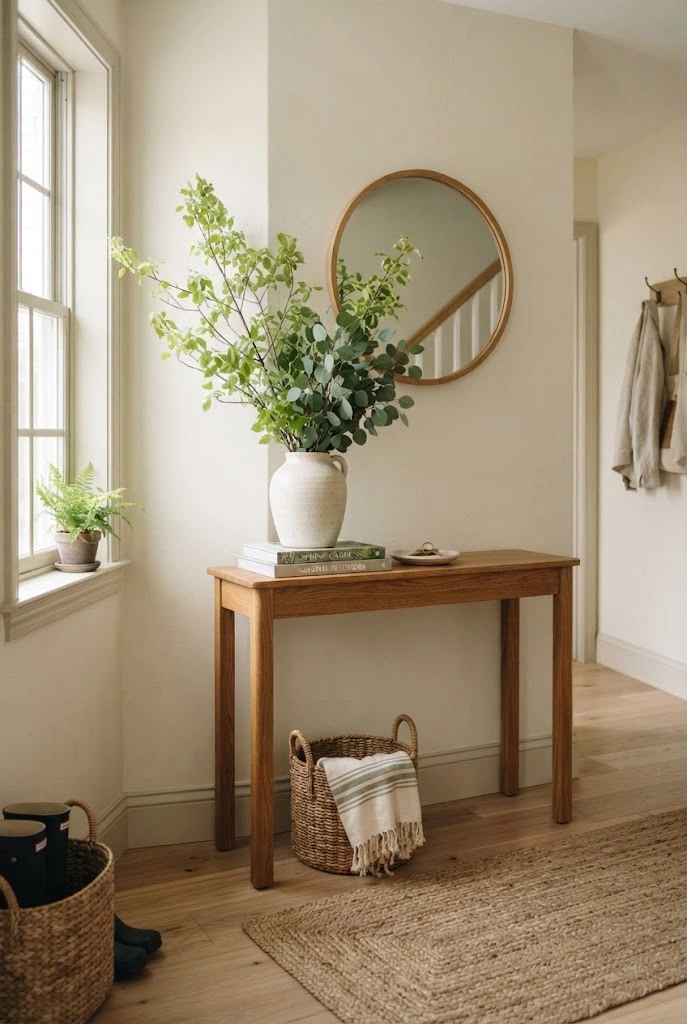
A simple console table can become a natural spring focal point with a combination of leafy branches, a ceramic vase, and a few understated accessories. Instead of filling the entire surface with small decorations, give the greenery enough breathing room to stand out.
Choose branches with an airy shape so they don’t visually overwhelm the furniture. A woven basket underneath or a small stack of books can add texture without competing with the arrangement. This approach works especially well in entryways because it introduces a fresh seasonal note right where guests enter the home.
Swap Heavy Throws for Lightweight Linen
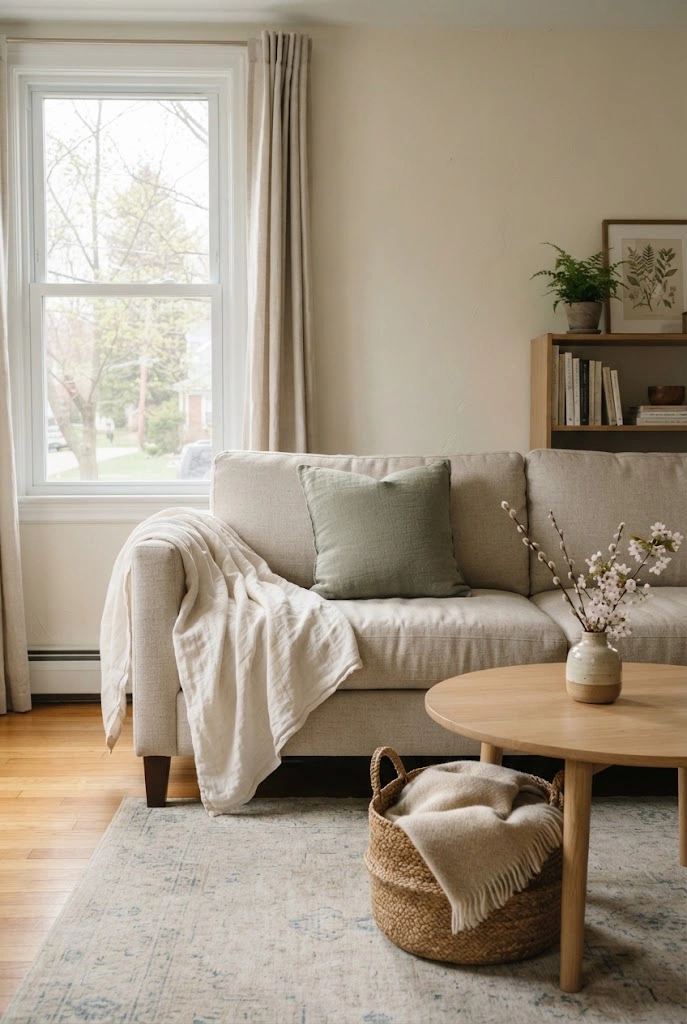
One of the easiest seasonal changes is replacing thick winter throws with lightweight linen or cotton blankets. Look for breathable fabrics in ivory, sage, dusty blue, or muted yellow to introduce spring color without overwhelming the room.
Drape a throw casually over the arm of a sofa or fold one neatly at the end of an accent chair. The goal isn’t to remove every cozy element, but to change the visual weight of the textiles. Natural fabrics with gentle wrinkles can make a living room feel relaxed and seasonally appropriate.
Create a Soft Pastel Dining Table
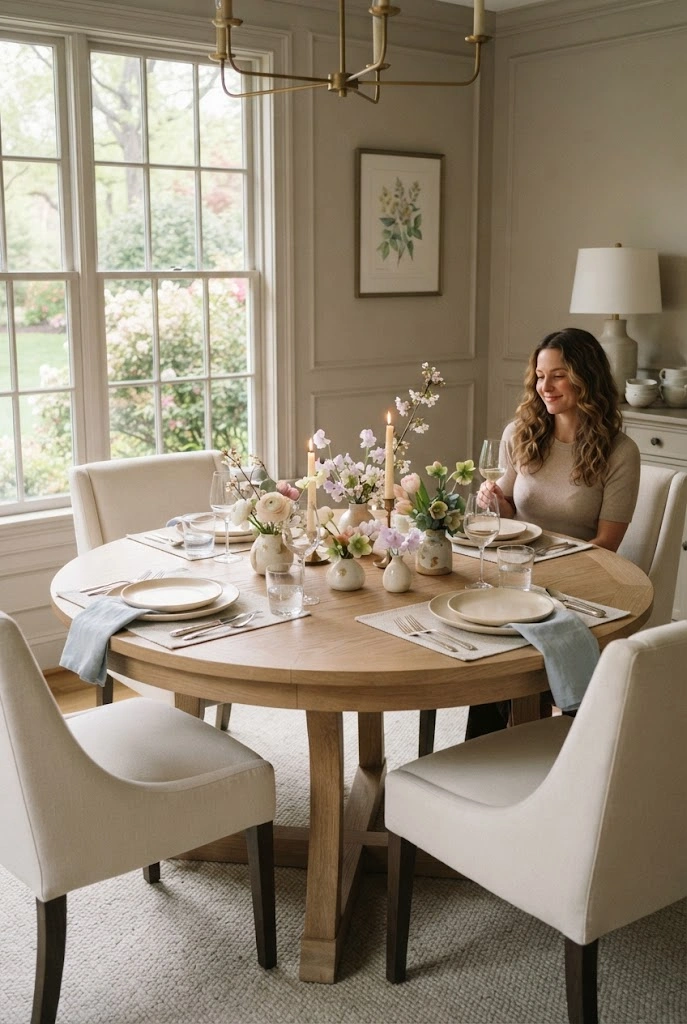
A spring dining table doesn’t need elaborate decorations. A simple arrangement of pastel-toned napkins, understated ceramic dinnerware, clear glassware, and small floral stems can create a fresh seasonal setting.
Try mixing two or three soft colors rather than using every pastel shade at once. Pale blue with butter yellow, blush with sage, or lavender with warm ivory can create a cohesive palette. Keep the centerpiece low enough that people can comfortably see across the table.
Bring in a Statement Floral Arrangement
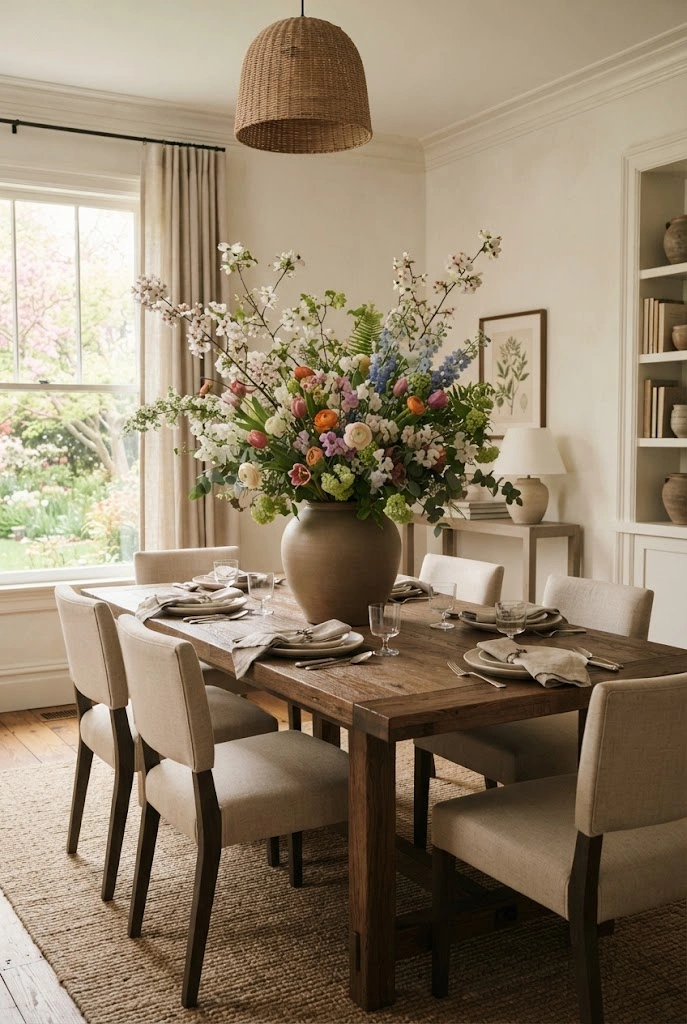
A larger floral arrangement can instantly change the mood of a room. Rather than scattering tiny bouquets everywhere, let one generous arrangement become the focal point.
Place it on a dining table, kitchen island, coffee table, or entry console. Choose flowers that complement the room’s existing colors instead of forcing a completely new palette. An oversized arrangement can feel especially beautiful in a simple neutral room where the flowers provide the main seasonal color.
Style Open Shelves With Spring Colors
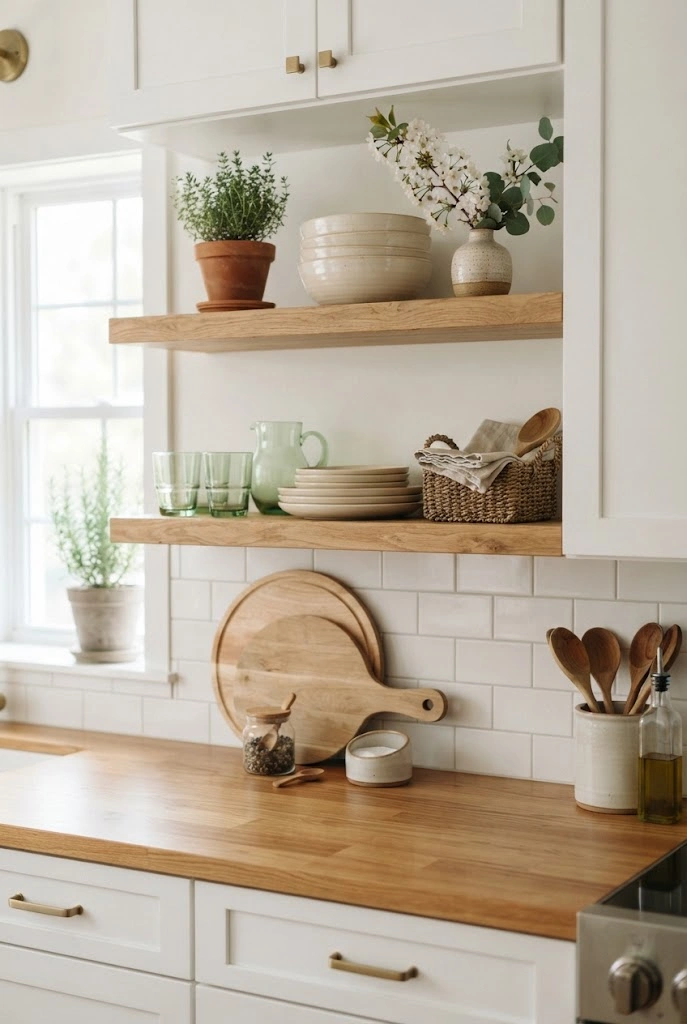
Open shelving gives you an opportunity to introduce seasonal color without changing permanent finishes. Replace a few darker winter accessories with light ceramics, pale glassware, small plants, and natural woven pieces.
Avoid filling every shelf. Leaving open space allows the lighter colors and textures to breathe. A balanced arrangement might combine stacked dishes, one small vase, a trailing plant, and a few wooden objects rather than a collection of unrelated decorations.
Add a Botanical Gallery Wall
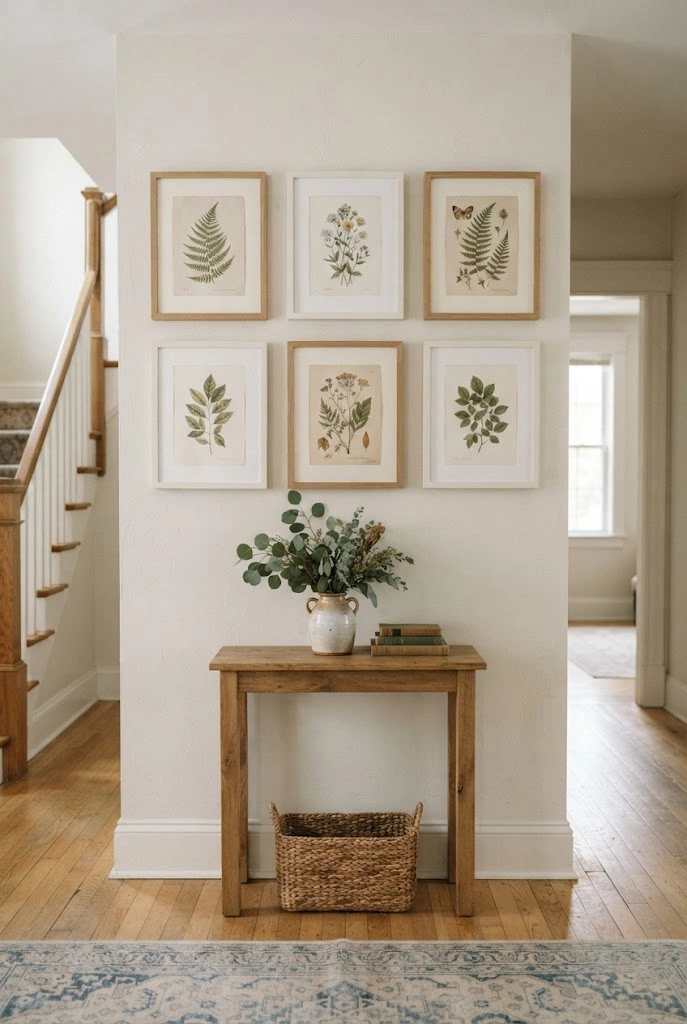
Botanical artwork can introduce spring character without relying on literal seasonal decorations. Choose a coordinated collection of pressed-flower prints, botanical illustrations, or nature-inspired artwork in simple frames.
For a rental, use removable hanging solutions where appropriate. In a permanent home, a more structured gallery arrangement can create a polished focal wall. Keep the frame finishes related so the collection feels intentional rather than assembled randomly.
Refresh the Front Door With a Natural Wreath
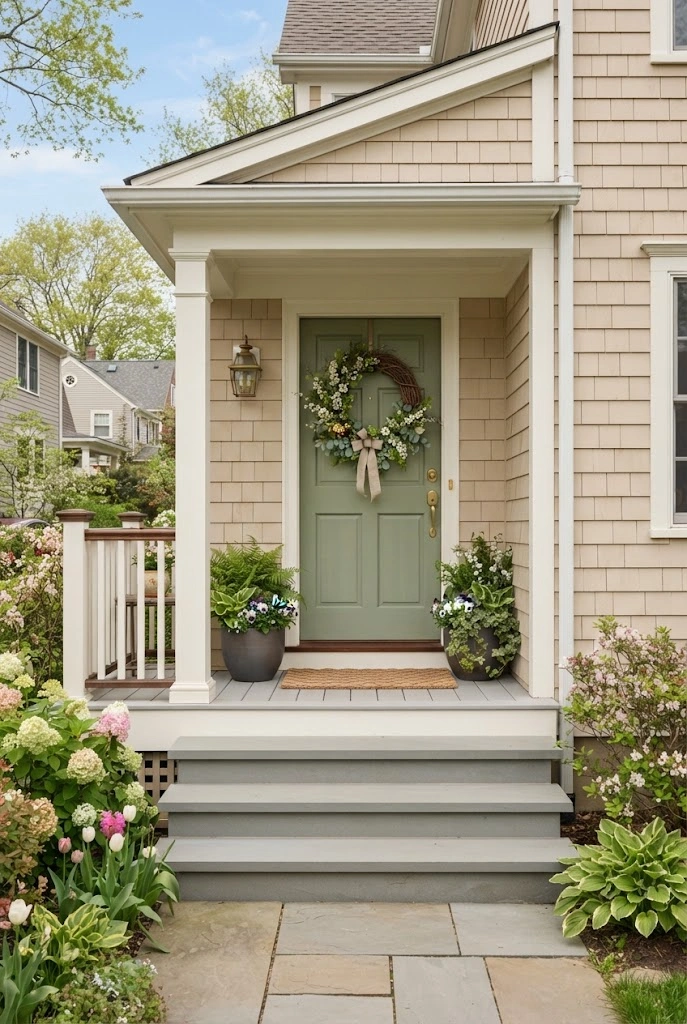
A spring wreath can make the exterior feel refreshed before anyone enters the house. Instead of an overly elaborate design, try eucalyptus, olive branches, small white blossoms, or other airy greenery arranged around a natural grapevine base.
A simple wreath pairs particularly well with painted doors because the organic texture creates contrast. Add a seasonal doormat and one or two planters to complete the entrance without making the porch feel crowded.
Use a Woven Basket as Seasonal Storage
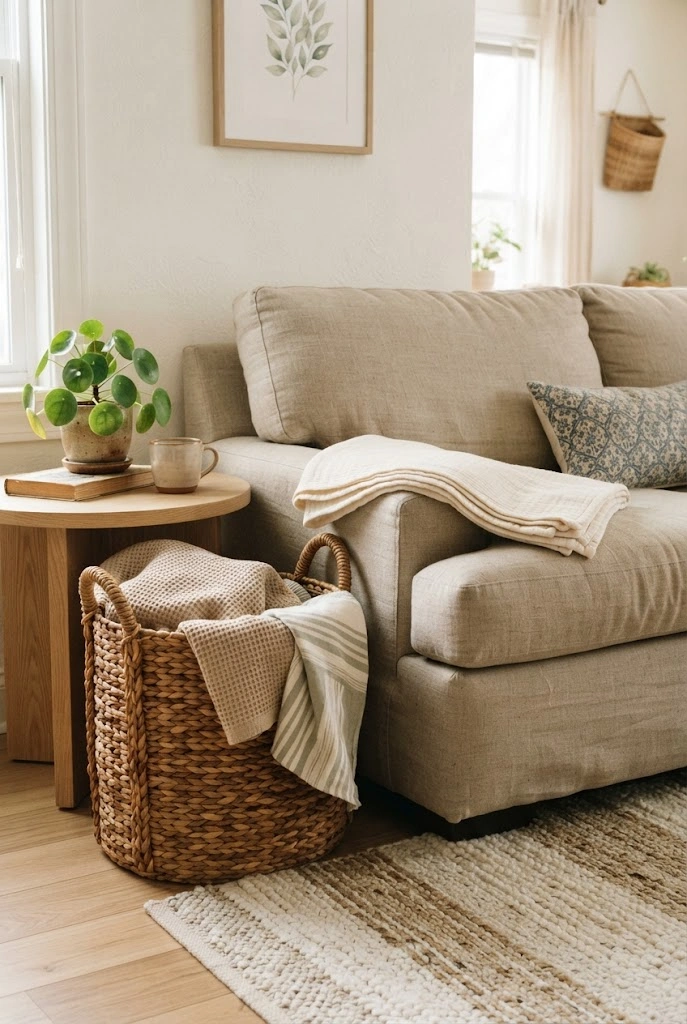
Spring is a useful time to hide away heavier winter accessories, and attractive baskets can make that transition feel intentional. A large woven basket beside a sofa can hold lightweight blankets, while smaller baskets can organize entryway accessories.
Natural rattan, seagrass, and woven water hyacinth introduce texture while keeping the room visually light. Choose basket sizes based on what they actually need to store rather than buying decorative containers with no practical purpose.
Brighten the Kitchen With Fresh Herbs
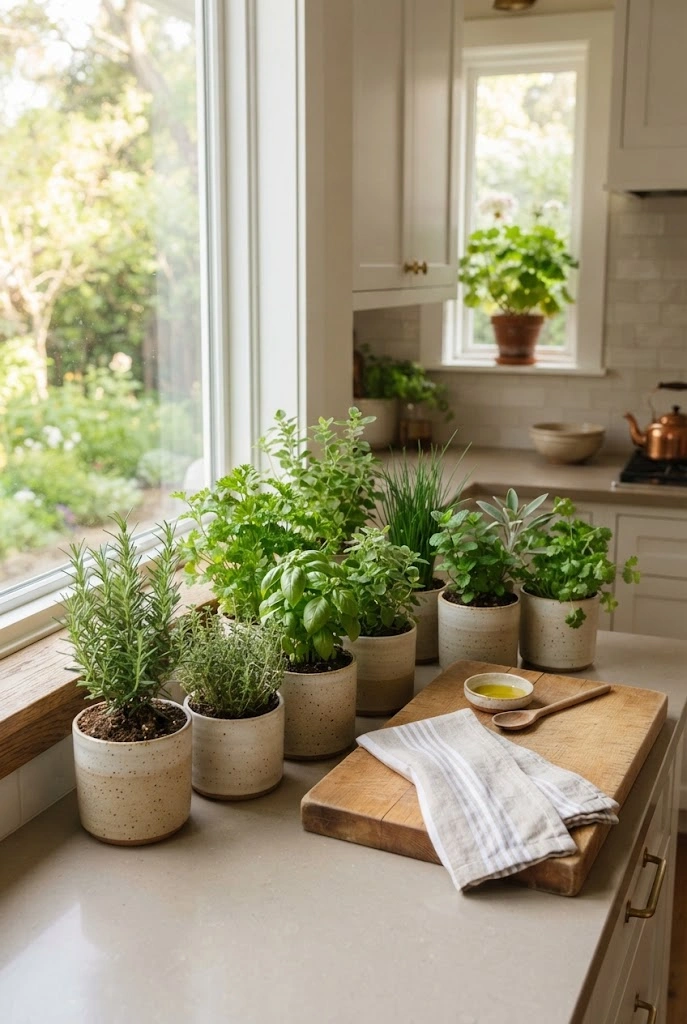
Fresh herbs can function as both useful kitchen ingredients and attractive spring decor. Place basil, mint, rosemary, or other suitable herbs in simple pots near a bright kitchen window when the growing conditions are appropriate.
Use matching or coordinated containers to make the arrangement feel intentional. A wooden cutting board, linen towel, and small ceramic utensil holder can reinforce the natural palette without turning the counter into a crowded display.
Introduce a Pale Blue Accent Chair
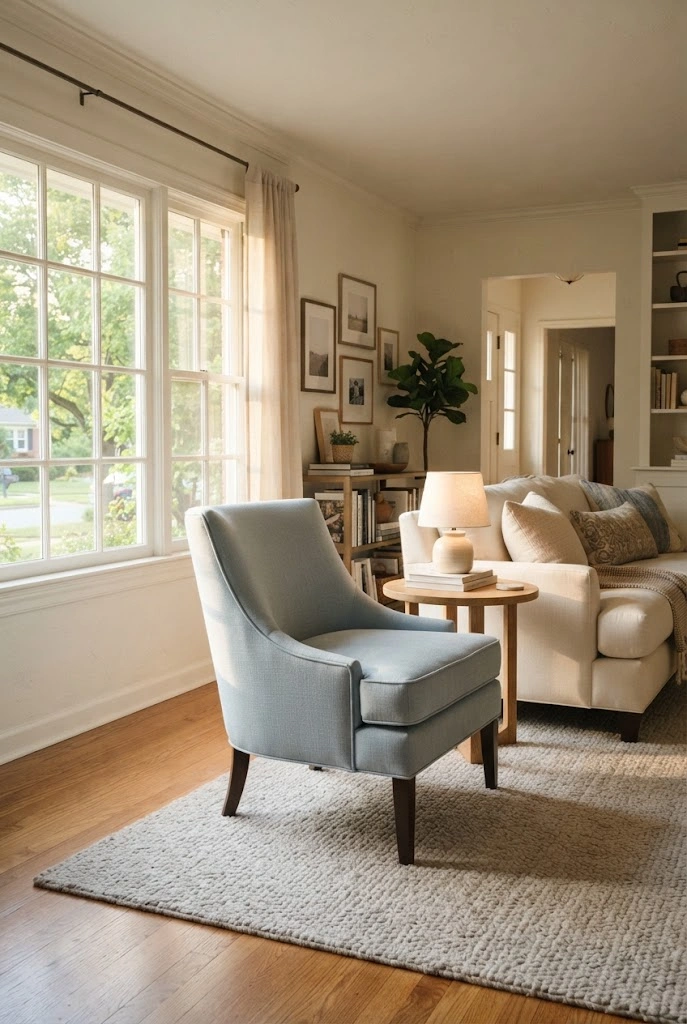
A single accent chair in a soft spring color can change the personality of a room without requiring a complete furniture replacement. Pale blue works especially well with warm whites, natural wood, beige, and soft gray.
Place the chair where it has enough visual space around it. Add a small side table and one textured cushion, but avoid over-accessorizing the piece. The chair should function as furniture first and seasonal color second.
Layer a Floral Runner on the Dining Table
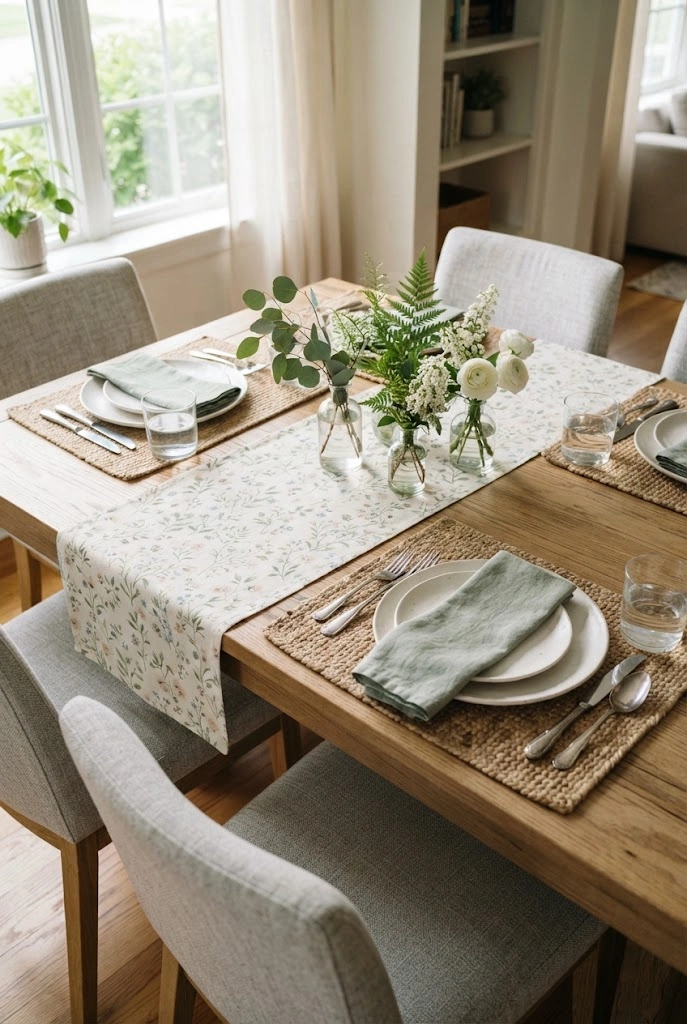
A floral or botanical table runner provides seasonal character without requiring a complete tablescape. Choose a print with a restrained background and colors that connect to your dinnerware.
For a more modern look, keep the rest of the table simple. Natural wood, white ceramics, and clear glass allow the runner to provide the visual interest. For everyday dining, choose a washable fabric that can handle regular use.
Swap Winter Artwork for Nature-Inspired Prints
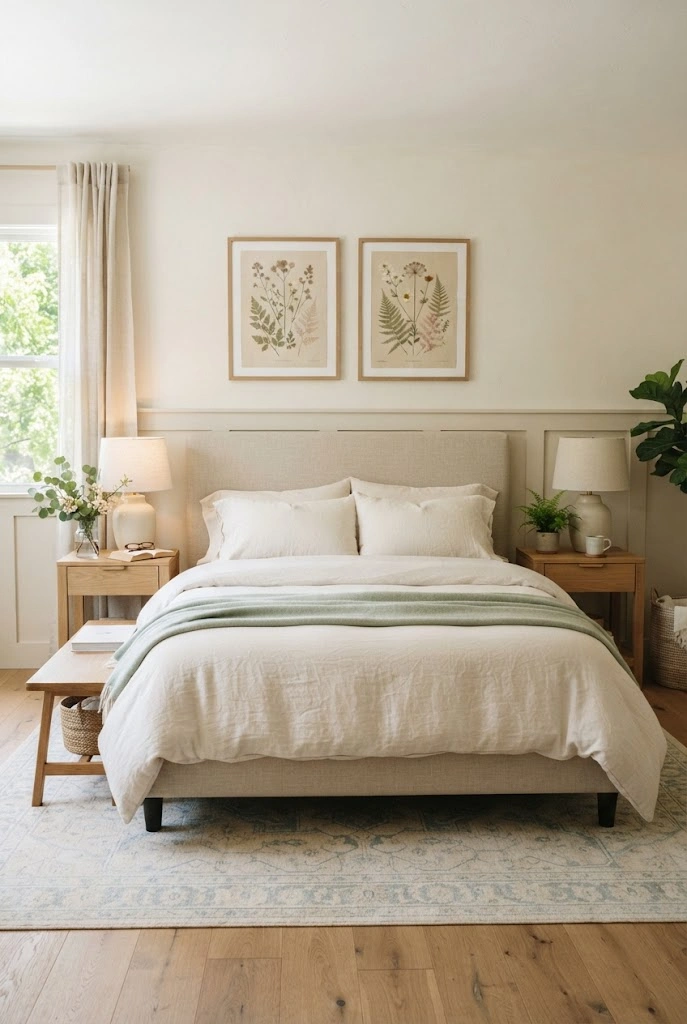
Changing artwork is one of the fastest ways to alter the atmosphere of a room. For spring, consider landscapes, botanical studies, abstract pieces with soft greens, or artwork inspired by blue skies and natural textures.
You don’t necessarily need new frames. Reusing the same frames with different prints can make the update more affordable and environmentally conscious. Choose artwork that works with your permanent furniture and wall colors so it remains useful after the season changes.
Style the Coffee Table With Citrus Tones
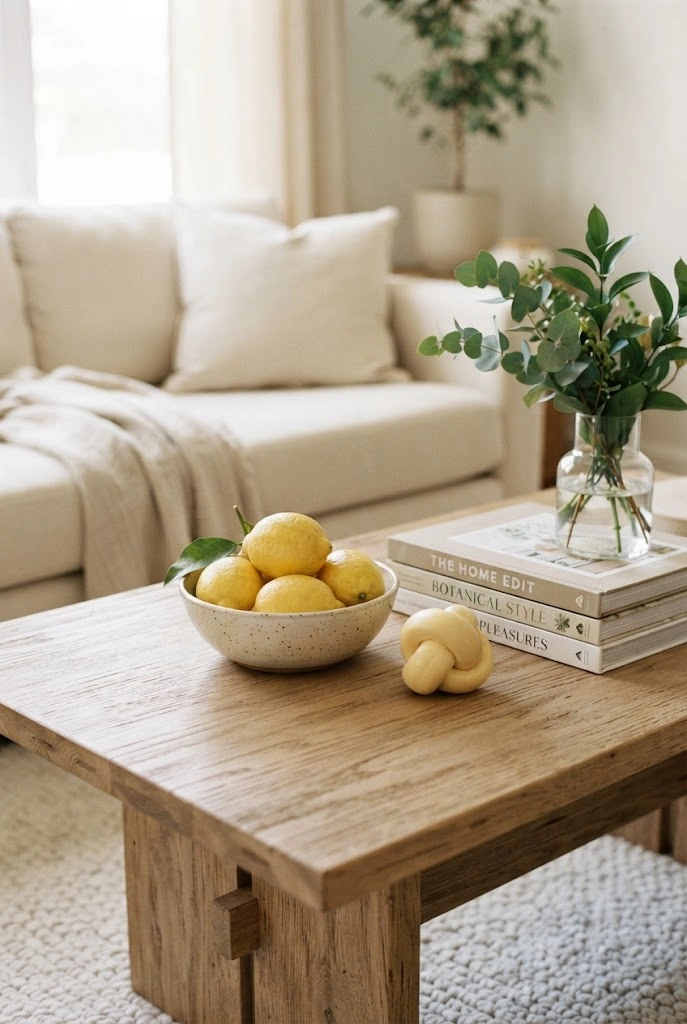
A few citrus-inspired accents can bring cheerful spring energy to a neutral living room. Think lemon yellow, soft orange, or fresh green used in small doses through books, ceramics, flowers, or a decorative bowl.
The key is restraint. One or two bright elements can create a focal point while the rest of the room remains grounded in warm neutrals. This is especially effective when the existing space already has plenty of natural wood.
Add a Soft Green Bathroom Accent
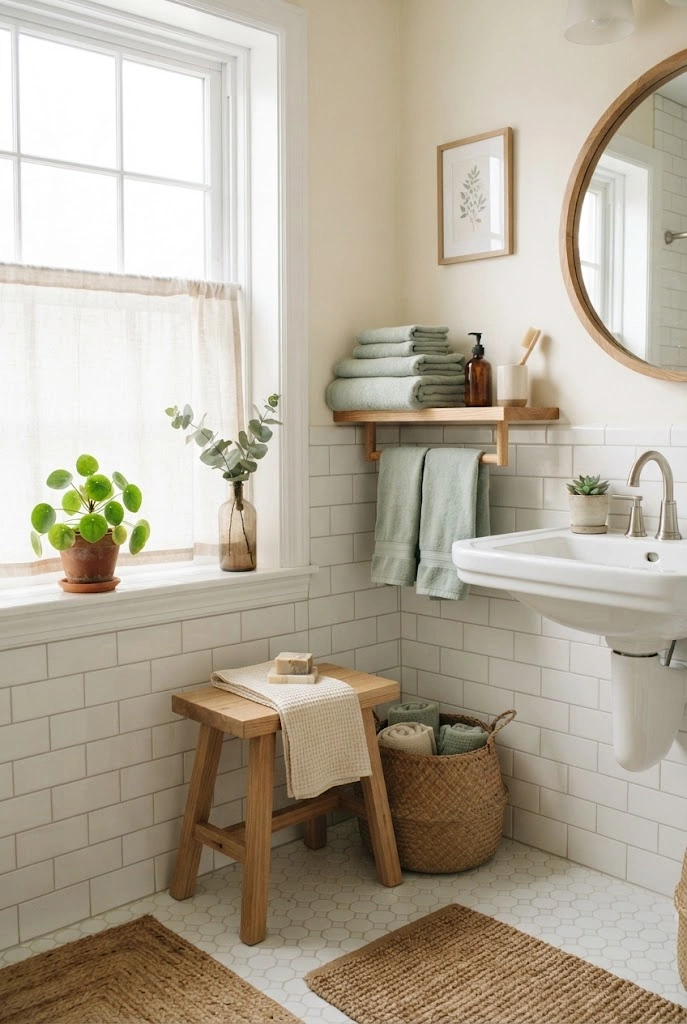
Bathrooms are often overlooked when decorating seasonally, but even a small change can make the room feel fresher. Add a leafy plant suitable for the room’s light and humidity conditions, a pale green hand towel, or a simple botanical print.
Keep the palette restrained so the bathroom continues to feel clean. Natural wood accessories and woven storage can soften a space dominated by tile and hard surfaces.
Create a Spring-Inspired Bedroom Layer
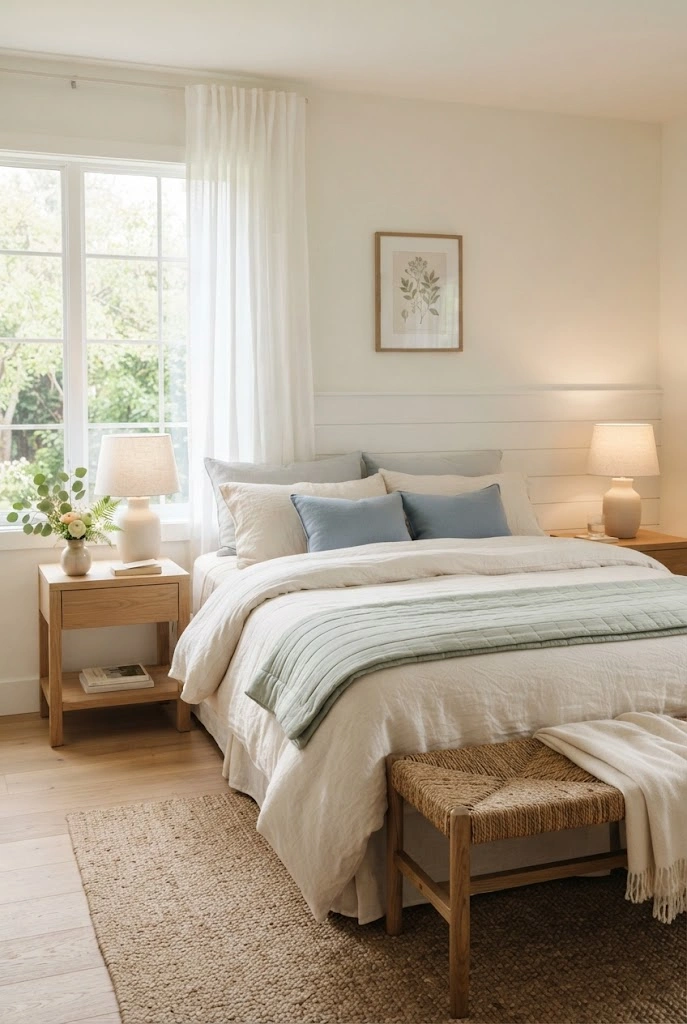
A bedroom can feel noticeably lighter with a few textile changes. Replace heavy bedding layers with breathable cotton or linen, then add one soft spring-colored throw or cushion.
Instead of matching every piece, combine related shades such as ivory, sage, pale blue, and warm beige. This creates a relaxed layered look that feels seasonal without becoming overly coordinated.
Hang a Natural Fiber Pendant
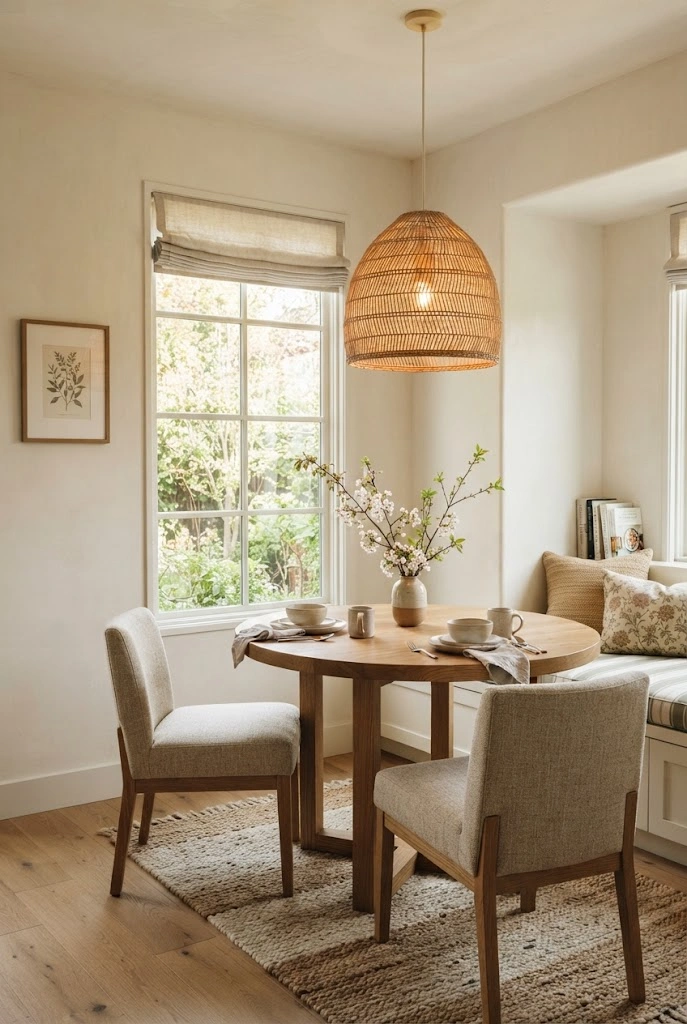
A natural-fiber pendant can add warmth and texture while visually lightening a room. Rattan, woven grass, or other natural materials can work particularly well above a breakfast table, reading nook, or small entryway.
Pay attention to scale. A fixture that’s too small can disappear, while one that’s too large can dominate a compact room. The best choice relates naturally to the furniture underneath it and the ceiling height.
Refresh the Entryway With a Floral Runner
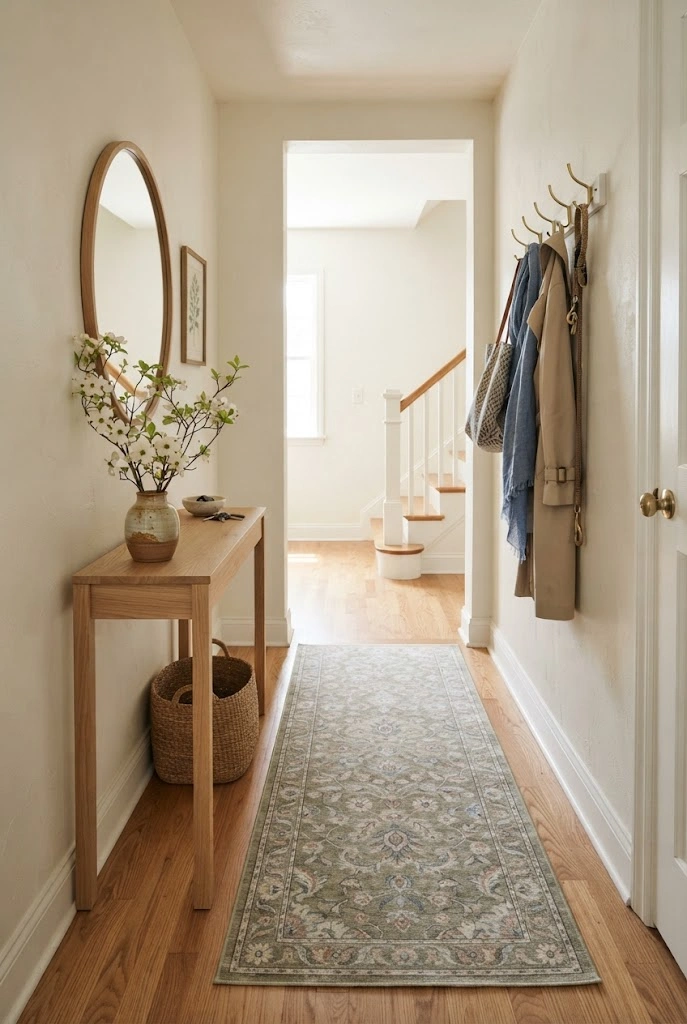
A washable floral runner can give an entryway a completely different feel while also defining the path through the space. Choose a pattern with enough neutral background to keep the area visually calm.
If the hallway is narrow, avoid a runner that’s too busy or dark. Pair it with a slim console, simple mirror, and one seasonal arrangement to create a welcoming entrance without restricting circulation.
Build a Simple Spring Mantel
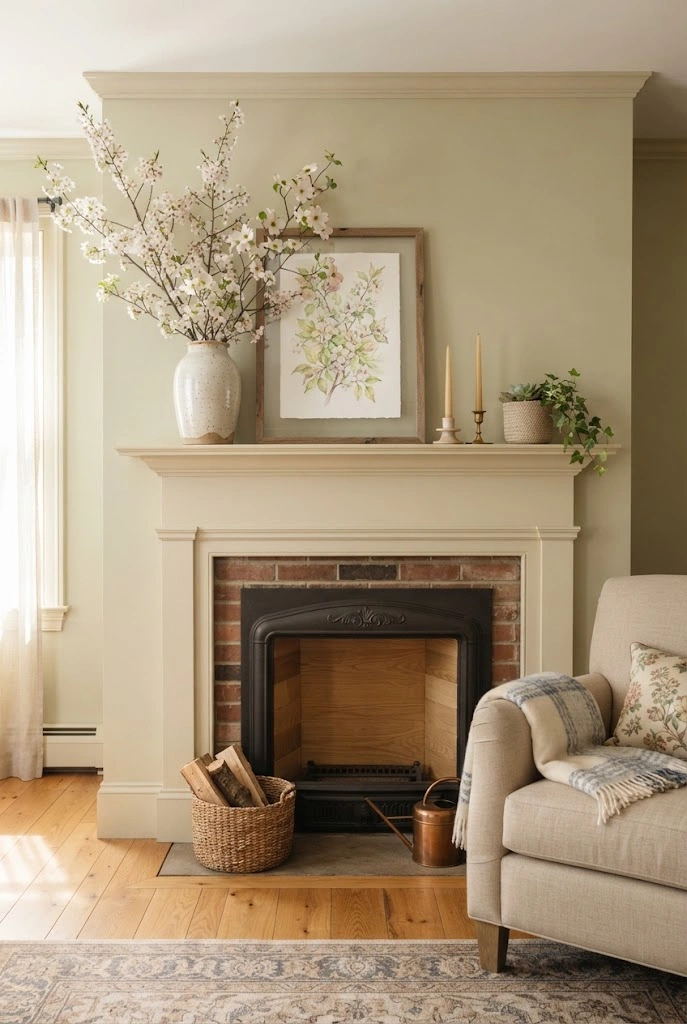
A mantel can become a seasonal focal point with only a few carefully selected pieces. Start with greenery or flowering branches, then add two or three supporting objects at different heights.
Avoid creating a perfectly symmetrical display unless that suits your room. An asymmetrical arrangement can feel more natural, especially when using organic branches. Keep enough open mantel surface visible to prevent the display from looking crowded.
Use Lemon-Themed Kitchen Accents Sparingly
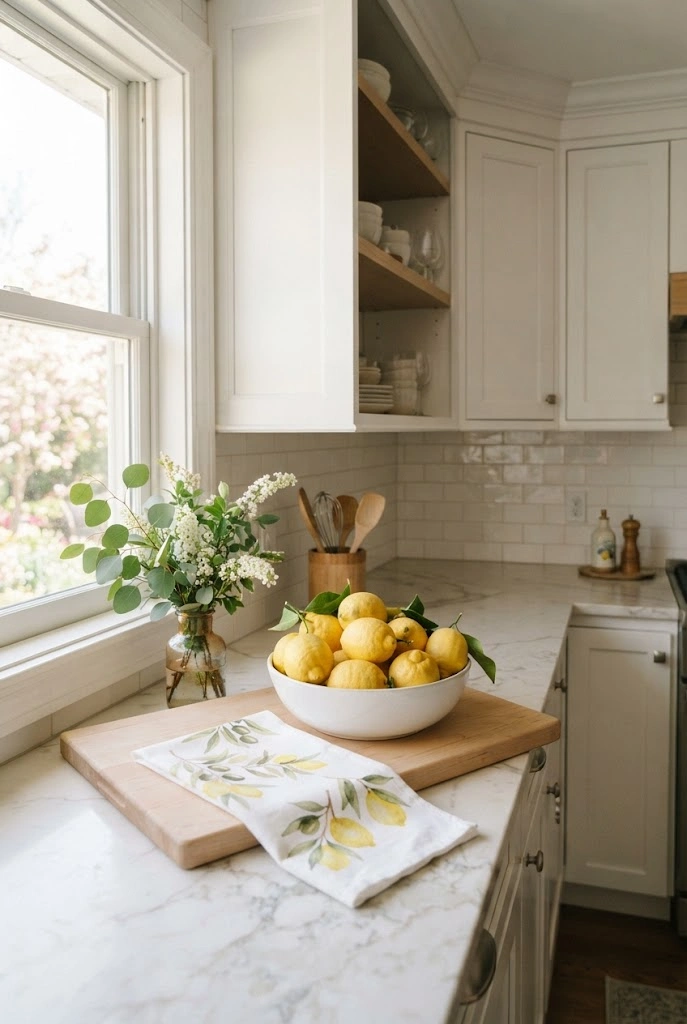
Lemon motifs can bring a cheerful spring feeling to a kitchen, but they work best when used as small accents rather than a complete theme. A printed tea towel, ceramic bowl, artwork, or a few real lemons can be enough.
Keep permanent finishes neutral and let the yellow accents provide the seasonal contrast. When spring passes, the accents can easily be swapped for another palette without changing the room itself.
Introduce a Light-Colored Area Rug
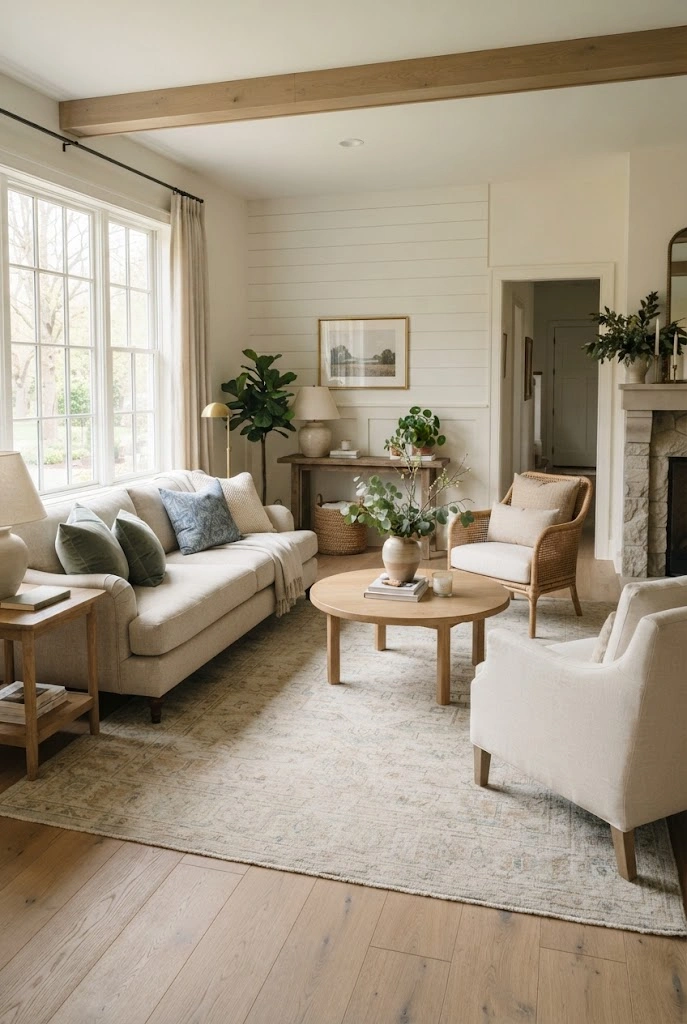
An area rug in a lighter spring palette can change how an entire room feels. Look for patterns that incorporate ivory, muted blue, sage, or warm tan rather than choosing a completely white rug that may be difficult to maintain.
Make sure the rug is appropriately sized for the furniture arrangement. In a living room, at least the front legs of major seating pieces should generally relate to the rug so the seating area feels connected rather than scattered.
Style a Spring Breakfast Nook
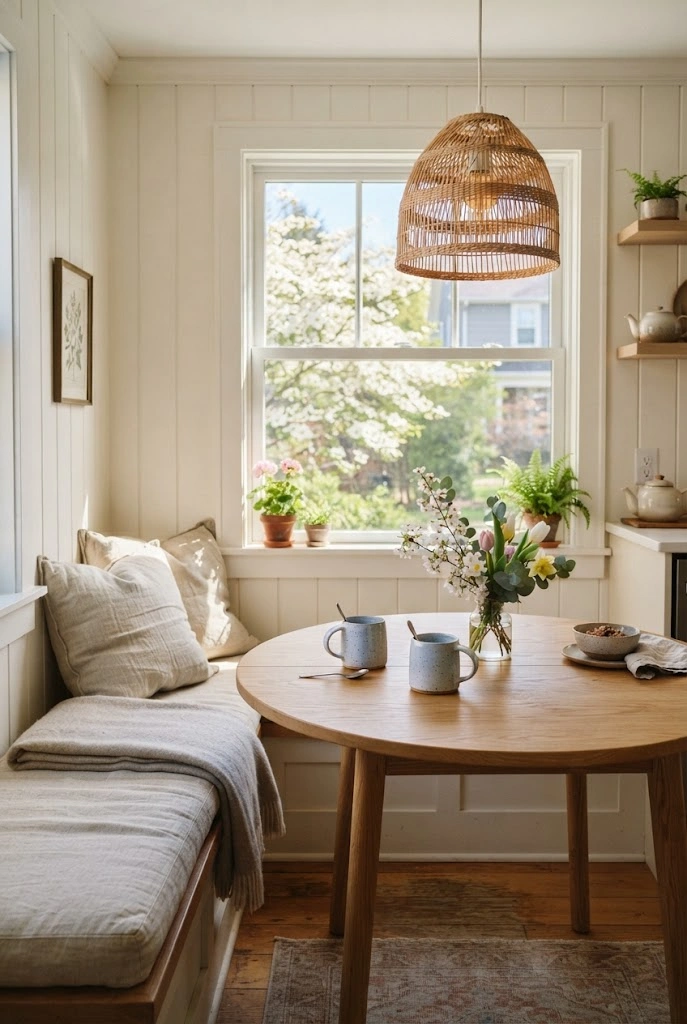
A breakfast nook is an ideal place to introduce seasonal details because it naturally supports flowers, textiles, and tableware. Add a small vase of fresh stems, linen napkins, light-colored cushions, or a cheerful piece of artwork.
Keep the arrangement practical enough for everyday meals. The best breakfast nooks look inviting rather than staged, with enough clear table space for plates, mugs, and conversation.
Add Natural Wood Accessories
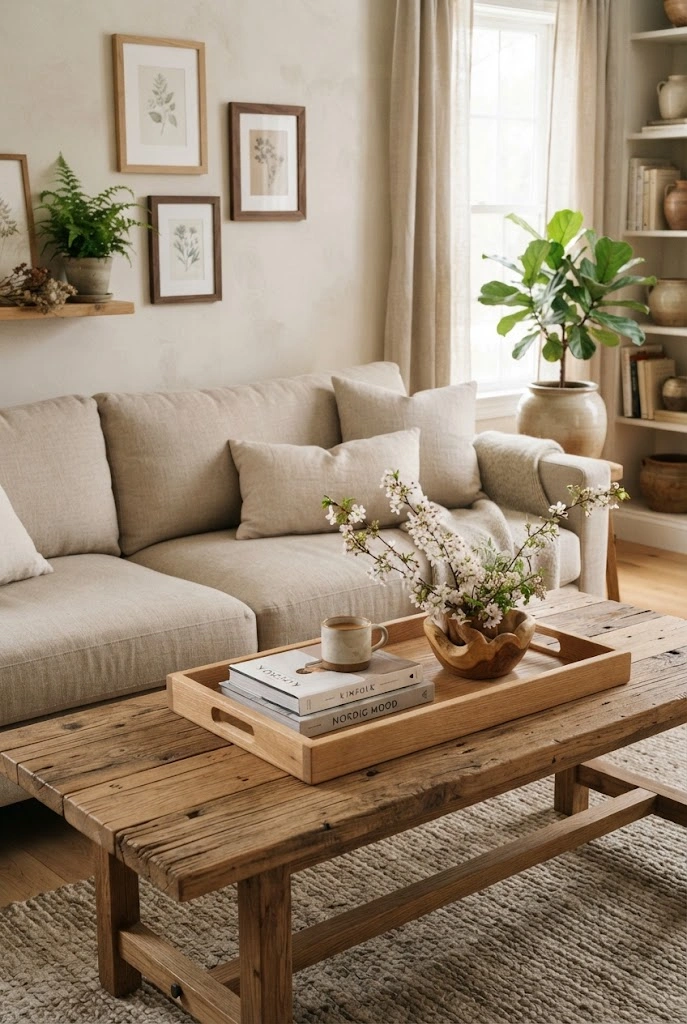
Natural wood is an easy way to warm up lighter spring palettes. Introduce it through trays, stools, picture frames, bowls, cutting boards, or small side tables.
The goal is to add organic contrast without turning the room into a rustic theme. Choose one or two wood tones that connect naturally with existing flooring or furniture. This creates continuity and makes seasonal accessories feel integrated rather than temporary.
Create a Fresh Outdoor Seating Corner
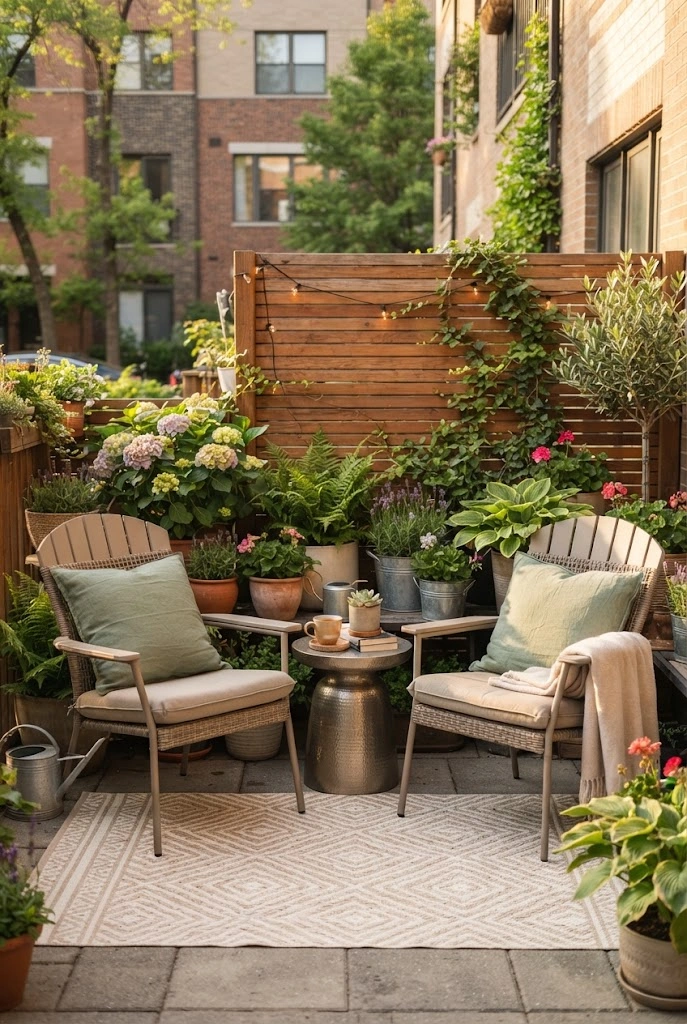
Spring decor doesn’t have to stop at the front door. A small patio, balcony, or porch can become an inviting extension of the home with weather-appropriate cushions, a compact outdoor rug, potted greenery, and a small side table.
For a smaller space, prioritize flexible furniture that doesn’t block movement. A folding bistro table or compact chair can create a useful sitting area without requiring a large outdoor setup.
Create a Calm Spring Reading Corner
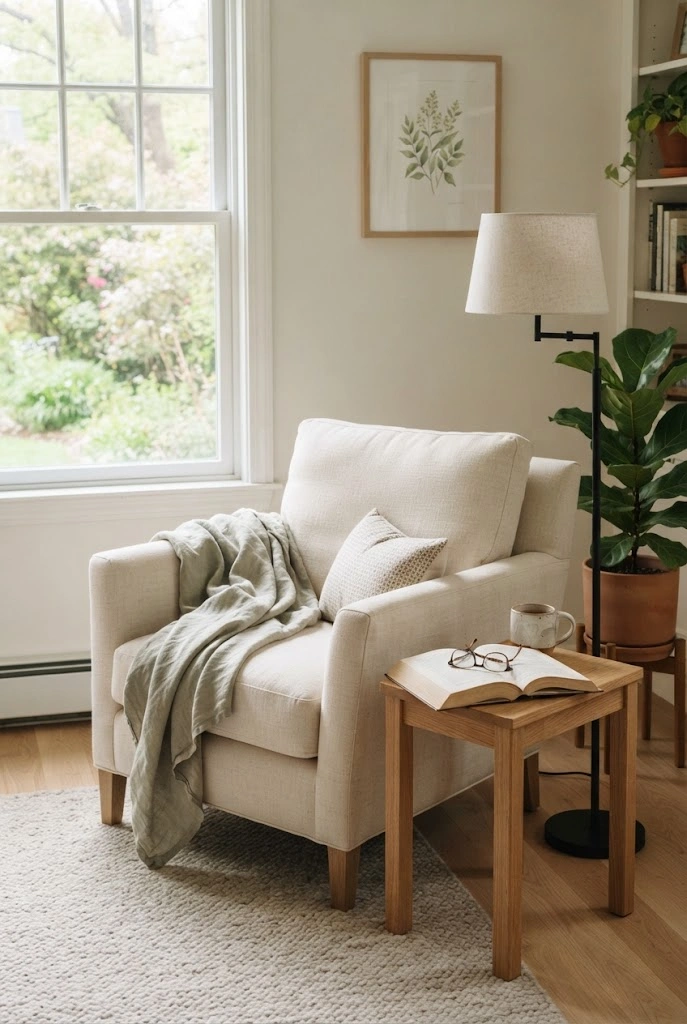
Finish your seasonal refresh with a dedicated corner that feels restful rather than decorative. A comfortable chair, small table, lightweight throw, floor lamp, and fresh greenery can turn an unused corner into a functional retreat.
Choose one spring accent color and repeat it subtly through the cushion or throw. The rest of the area can stay neutral, allowing natural light and greenery to create the seasonal atmosphere. This idea works in bedrooms, living rooms, home offices, and larger hallways.
A Simple Way to Start Your Spring Refresh
You don’t need to tackle all 24 ideas at once. Start with the spaces you use most and choose changes that make a visible difference without creating unnecessary work. Fresh greenery, lighter textiles, a brighter arrangement of artwork, or a few natural accessories can be enough to shift the mood of an entire room.
For a larger refresh, build a consistent palette around two or three spring-friendly colors and repeat them subtly throughout the home. Keep permanent pieces neutral where possible, then use flowers, textiles, artwork, and small accessories for the seasonal layer. That approach makes spring decor feel intentional, comfortable, and easy to change when the next season arrives.