21 Stunning Coastal Bedroom Decor Ideas to Transform Your Space into a Beachside Haven
A coastal bedroom doesn’t need seashell-covered walls or an overload of nautical decorations to feel connected to the beach. The most inviting spaces borrow from the coast in subtler ways: sun-washed colors, natural wood, breezy fabrics, woven textures, soft lighting, and an uncluttered arrangement that makes the room feel easy and relaxed.
Whether you’re decorating a compact apartment bedroom, refreshing a guest room, or planning a more polished primary suite, coastal bedroom decor can work at almost any budget. The key is layering materials and colors rather than relying on a single beach-themed accessory.
These 21 ideas explore different ways to bring that atmosphere indoors, from soft blue-and-white bedding to weathered wood, linen curtains, rattan furniture, and more sophisticated coastal finishes.
Layer Crisp White Bedding With Soft Ocean Blue
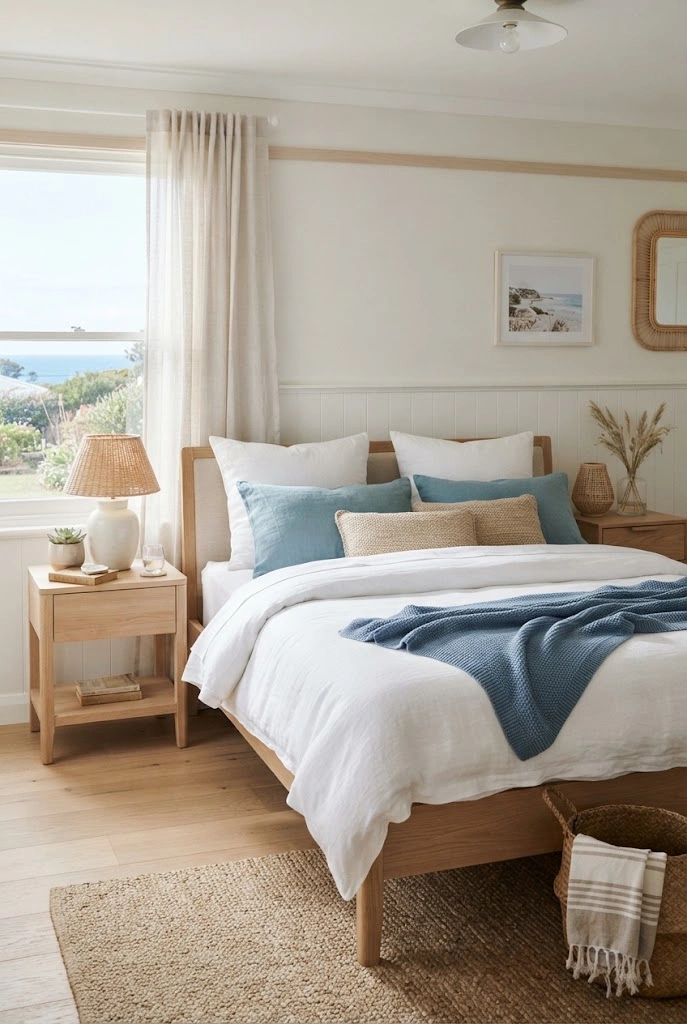
Start with a simple white bedding foundation and introduce ocean-inspired blue through pillows, a lightweight quilt, or a folded throw. Instead of using one intense shade throughout the room, combine muted blue tones such as sea glass, dusty aqua, soft denim, or pale blue.
White bedding keeps the room feeling bright while the blue accents create the visual connection to the water. Natural wood furniture and woven accessories help keep the palette from feeling overly crisp or formal.
For a rental-friendly update, changing the bedding alone can establish much of the coastal character without touching the walls or flooring.
Bring In Weathered Wood for a Sun-Washed Feel

Weathered wood immediately adds character without making the room feel overly themed. Consider a lightly distressed headboard, reclaimed-looking nightstand, wooden bench, or dresser with a naturally aged finish.
The most convincing coastal rooms use wood that looks subtly worn rather than artificially distressed. Pair it with white, cream, sand, or pale blue textiles so the wood becomes a grounding element.
If authentic reclaimed furniture isn’t practical, a quality piece with a naturally textured or washed finish can provide a similar design direction without pretending to be antique.
Use Natural Rattan Beside the Bed
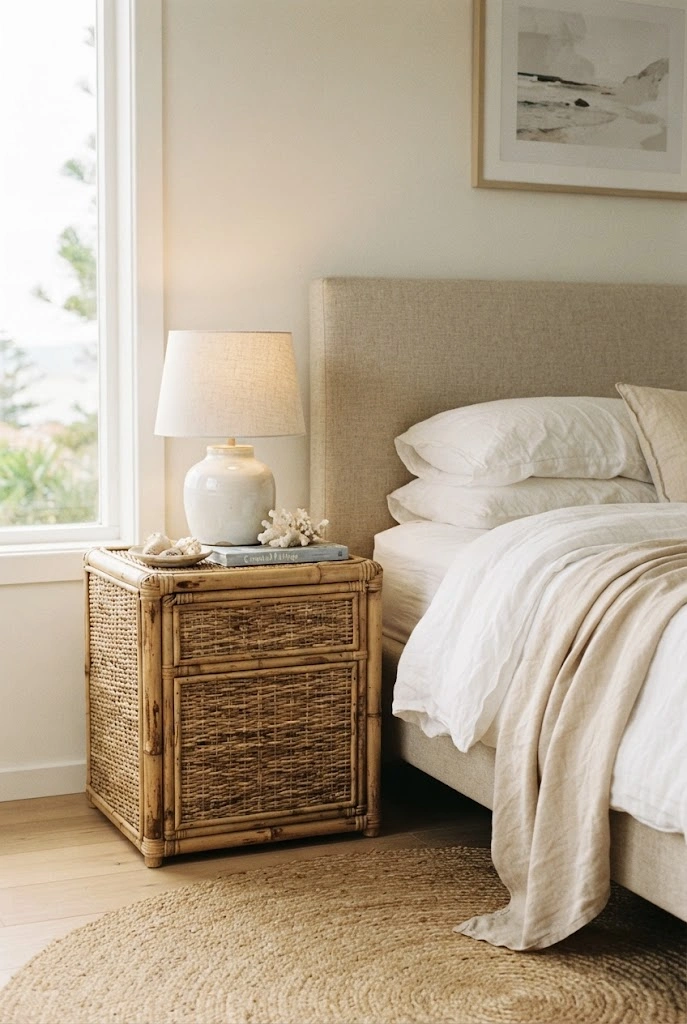
Rattan introduces the kind of tactile texture that makes a coastal bedroom feel relaxed rather than staged. A woven nightstand, cane-front cabinet, or small rattan chest can serve as the room’s natural-texture focal point.
Keep the surrounding pieces relatively simple. Too many competing woven objects can make the room feel busy. One or two substantial pieces usually have more visual impact than a collection of small accessories.
Pair rattan with linen, cotton, light wood, and softly faded colors for a cohesive combination.
Install Linen Curtains for a Breezy Window
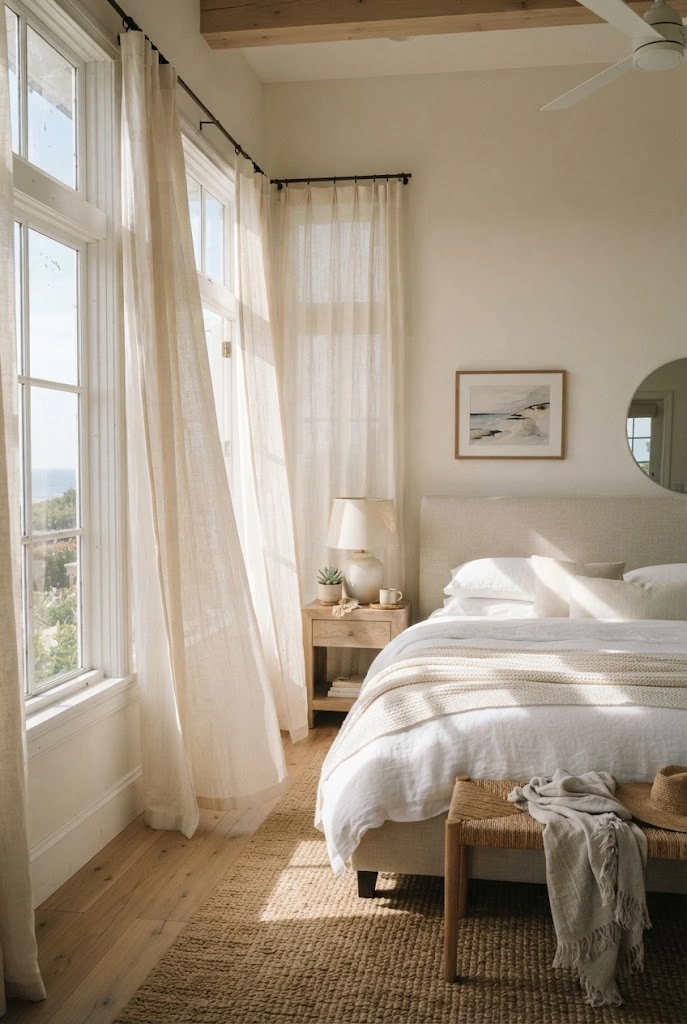
Window treatments can change the atmosphere of a bedroom without requiring major renovation. Floor-length linen or linen-look curtains soften hard window lines and filter daylight into a warmer, more relaxed glow.
Choose white, ivory, oatmeal, or very pale beige rather than heavily patterned panels. Let the fabric fall naturally instead of creating a stiff, formal arrangement.
In a bedroom with strong natural light, sheer linen panels can also provide privacy while maintaining the airy quality associated with coastal interiors.
Add a Jute or Natural-Fiber Area Rug
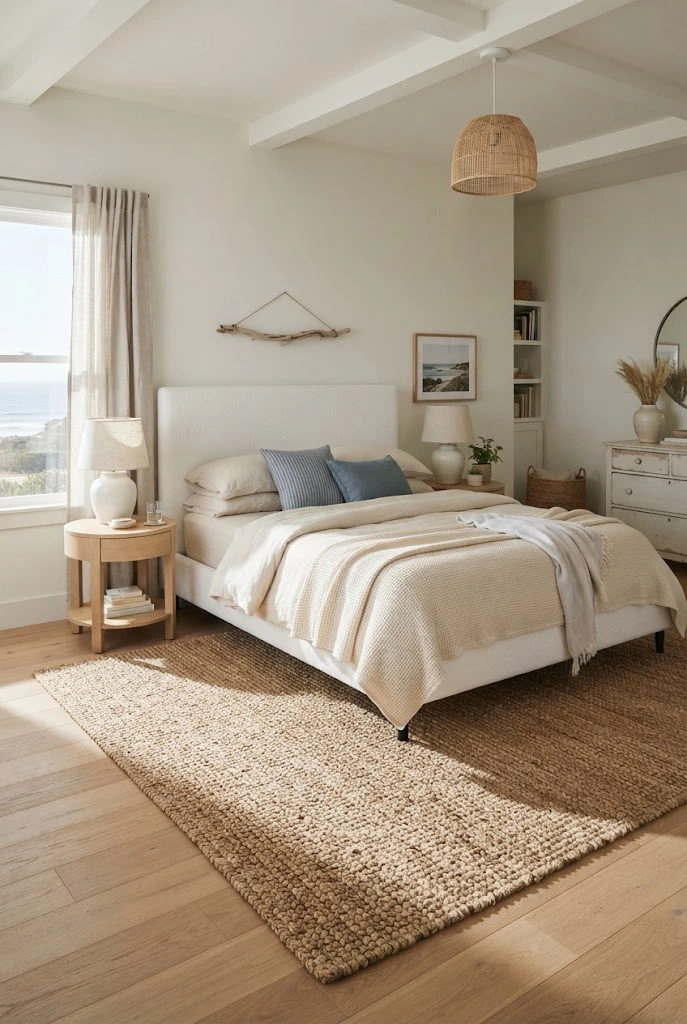
A natural-fiber rug gives a coastal bedroom a tactile foundation and works especially well against pale wood or light flooring. Jute, sisal, or other woven-look rugs can introduce warmth without adding another strong color.
Choose the largest practical size for the room so the rug visually connects the bed and surrounding furniture. If the floor is already warm-toned, a lighter natural fiber can keep the palette balanced.
For added softness, layer a smaller cotton or flatwoven rug partially over the natural-fiber base.
Create a Subtle Sea-Glass Color Palette
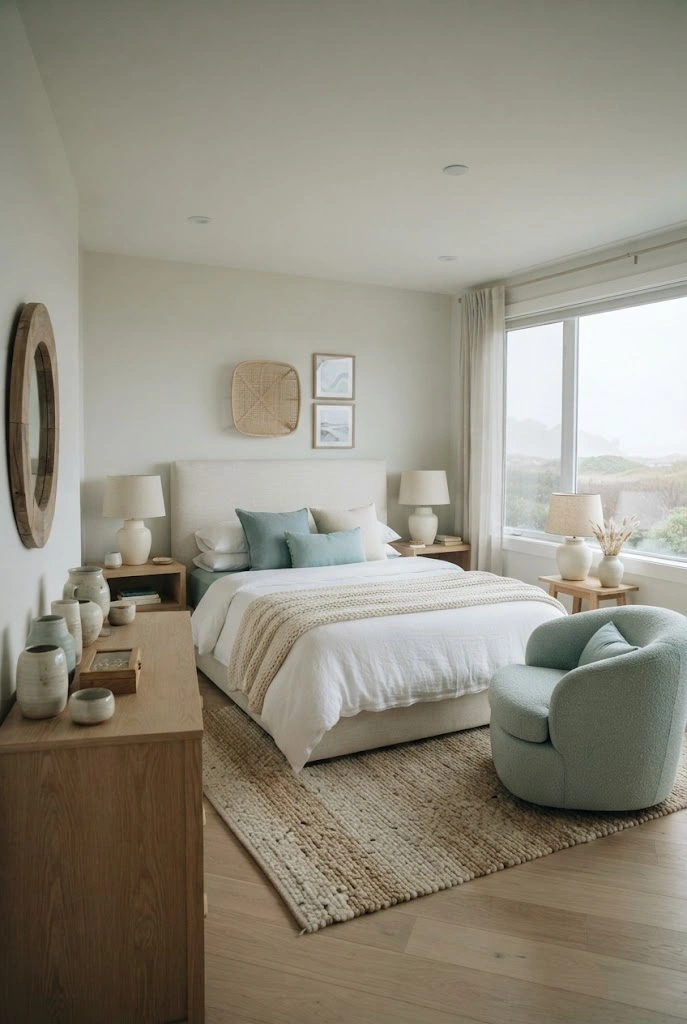
Sea-glass tones offer a softer alternative to traditional navy-and-white coastal decorating. Think muted aqua, pale blue-green, frosted turquoise, and washed sage.
Use these colors selectively through a painted accent wall, quilt, pillows, ceramic pieces, or upholstered furniture. Keeping the majority of the room neutral allows the sea-glass shade to feel intentional rather than overwhelming.
This palette is particularly useful if you want a coastal bedroom that feels modern and slightly organic rather than traditionally nautical.
Choose a Cane or Woven Headboard
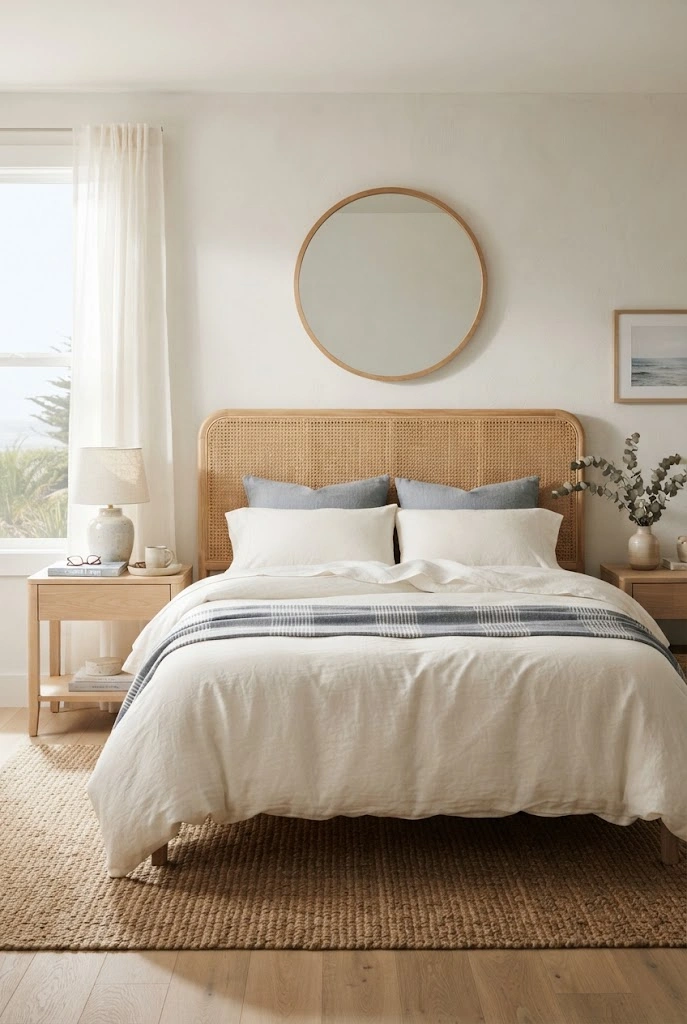
A cane headboard can become the defining feature of a coastal bedroom without relying on obvious beach motifs. Its open woven pattern creates visual texture while keeping the bed from feeling visually heavy.
Pair the headboard with simple bedding and clean-lined nightstands. If the headboard has a strong pattern, keep nearby accessories quieter so the room retains a calm rhythm.
This approach works particularly well when you want a coastal look that overlaps with relaxed modern, organic, or transitional interiors.
Paint the Walls a Soft Coastal Neutral
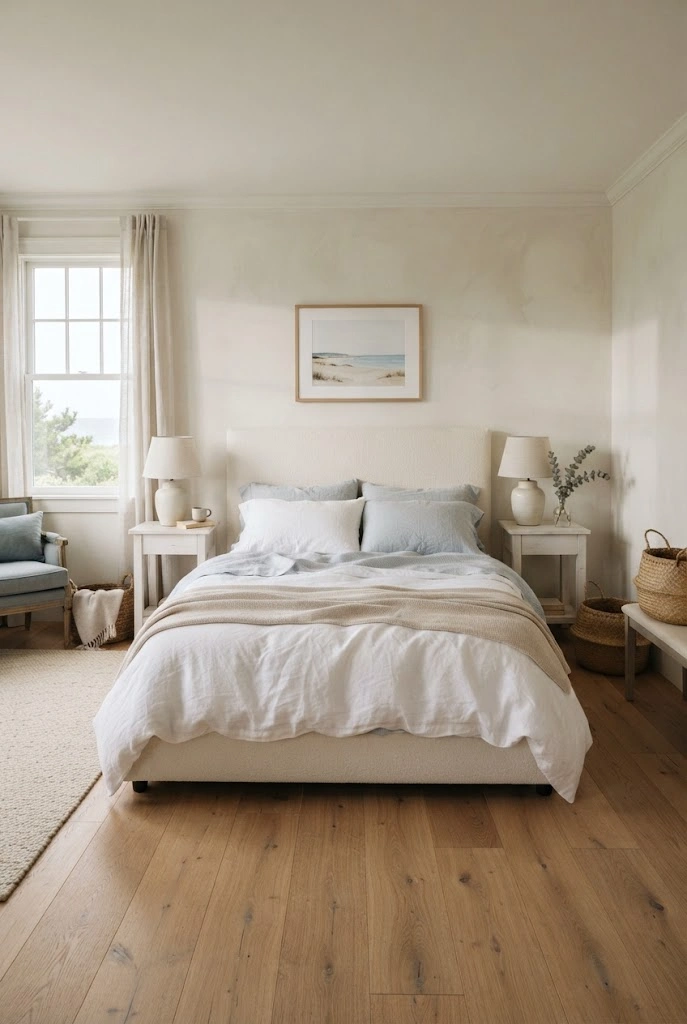
Coastal decorating doesn’t require blue walls. Warm white, pale greige, sandy beige, and soft gray can create an understated backdrop that lets natural materials and textiles provide the beach-inspired character.
The advantage of a neutral wall color is flexibility. You can change blue or green accessories seasonally without repainting the entire room.
For a particularly calm effect, choose a wall shade that relates closely to the undertones of the flooring and larger furniture pieces.
Hang Oversized Coastal-Inspired Artwork
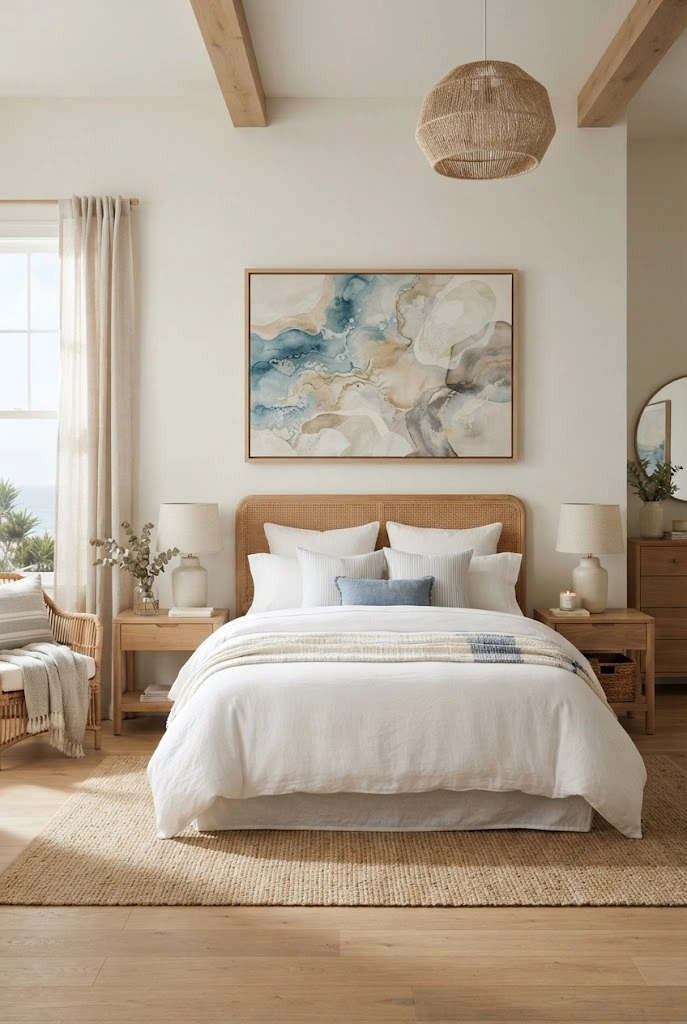
Instead of filling the bedroom with small nautical signs, use one large piece of artwork to establish the theme. An abstract piece with soft ocean blues, sandy neutrals, or horizon-like shapes can provide a visual focal point above the bed.
Keep the frame simple—light oak, natural wood, white, or understated metal can work well. The goal is to suggest the coast rather than literally illustrate it.
For a smaller bedroom, one oversized artwork piece can also make the wall feel more intentional without requiring numerous accessories.
Add a Weathered Bench at the Foot of the Bed
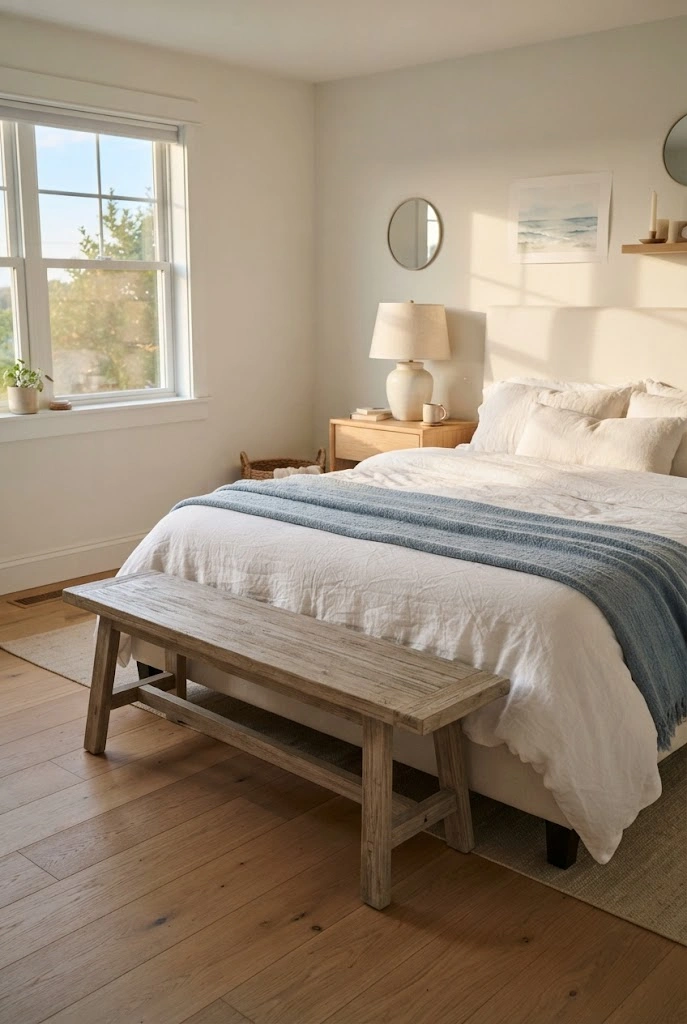
A bench at the foot of the bed can add both function and visual structure. For coastal rooms, look for a simple wooden, woven, or upholstered bench with a relaxed finish.
The bench should be scaled to the width of the bed without extending dramatically beyond it. Leave enough space around the bench for comfortable movement.
A folded throw or single textured cushion can soften the bench, but avoid turning it into another heavily decorated surface.
Style With Oversized Woven Baskets
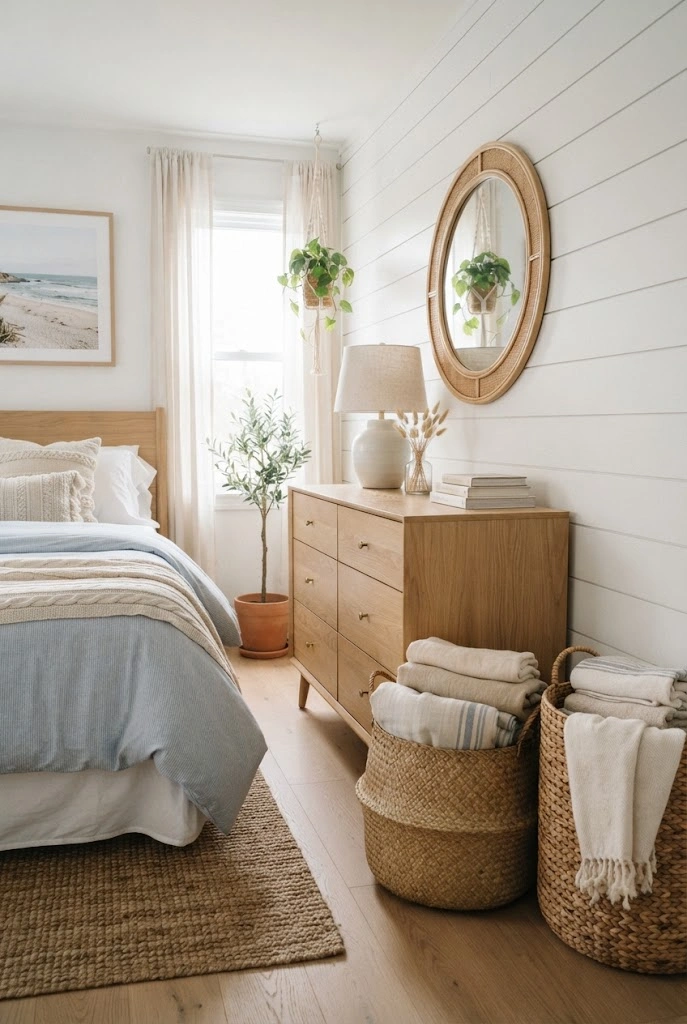
Woven baskets are one of the easiest ways to combine coastal texture with practical storage. A large basket beside a dresser can hold extra blankets, while smaller woven containers can organize everyday items.
Choose natural straw, seagrass, rattan, or similar materials in their natural tones. Their irregular texture adds warmth to a room dominated by smooth painted surfaces and crisp bedding.
The best placement is usually where the basket looks useful rather than purely decorative.
Mix Navy Accents With Warm Sand Tones
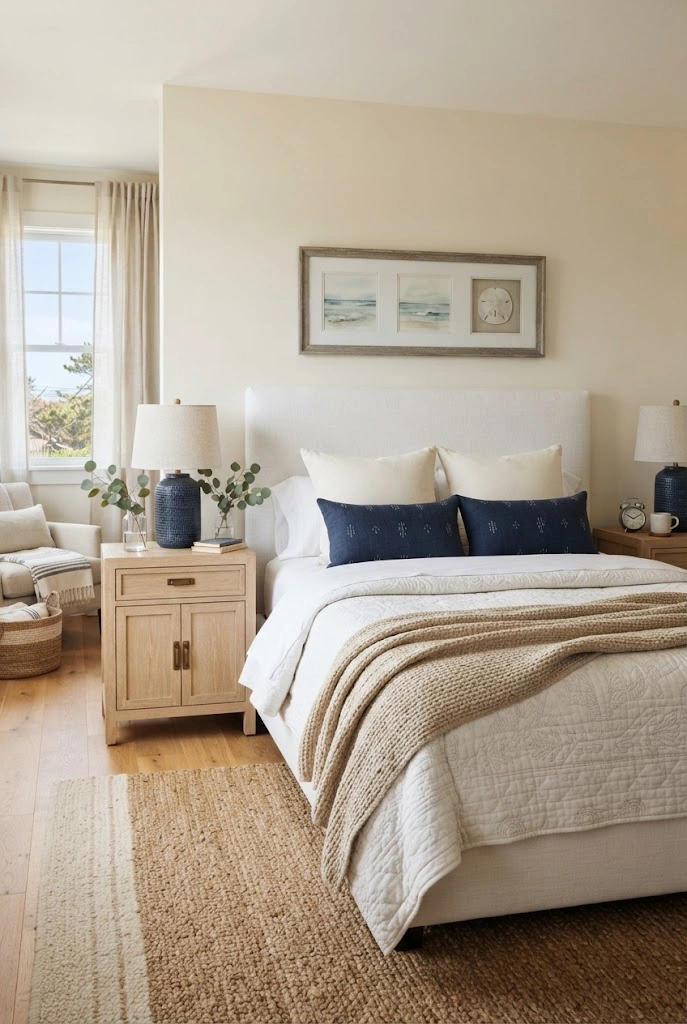
Navy can give coastal interiors more definition, particularly when the rest of the room is pale. Rather than covering the bedroom in dark blue, use navy selectively through a lumbar pillow, throw, upholstered chair, artwork, or small accent.
Balance it with warm sand, ivory, natural wood, and woven materials. This prevents the darker shade from making a small bedroom feel visually compressed.
The contrast also creates a more tailored version of coastal style for readers who prefer stronger color.
Introduce Soft Stripes Without Going Nautical
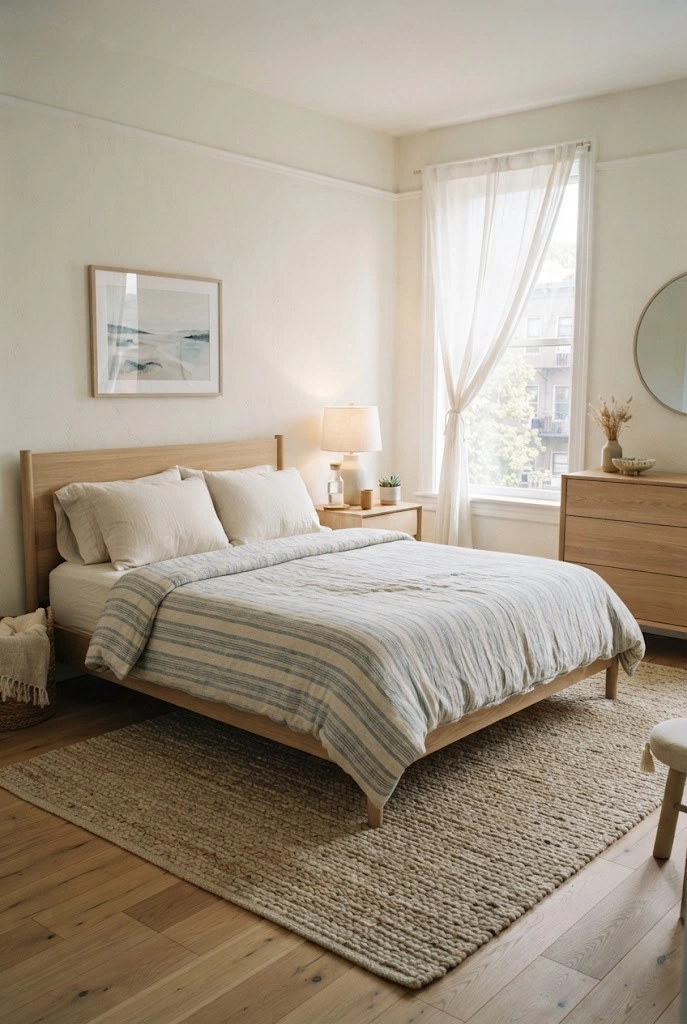
Stripes are a classic coastal pattern, but they don’t have to make the bedroom feel nautical. Choose wide, faded stripes in muted blue, gray, beige, or cream instead of bold high-contrast patterns.
A striped duvet cover or lumbar pillow can provide just enough pattern to break up solid bedding. Keep other textiles relatively quiet so the stripe remains the main pattern.
This is an easy option for renters because bedding can change the room’s personality without permanent modifications.
Use Aged Brass for a Warmer Finish
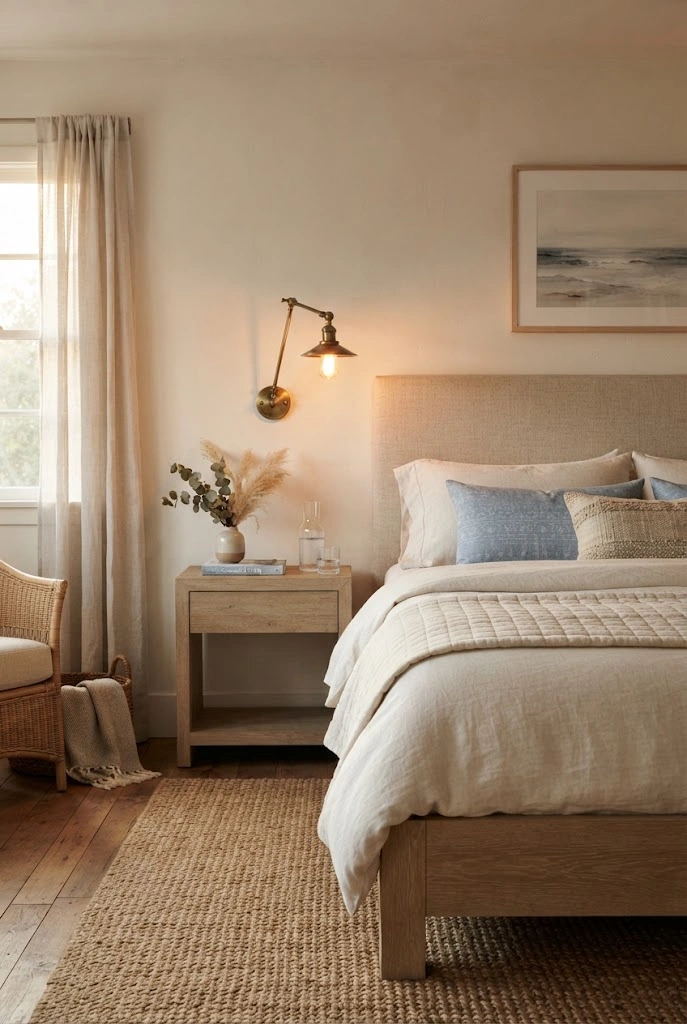
A small amount of aged brass can warm up a predominantly white and blue coastal bedroom. Consider brass bedside sconces, drawer hardware, a mirror frame, or a small lamp.
Choose brushed or aged finishes rather than highly reflective polished metal if you’re aiming for a relaxed residential feel.
Because brass catches light, a little goes a long way. Repeating the finish in two or three locations can create cohesion without making the room feel overly decorated.
Add a Small Upholstered Reading Chair
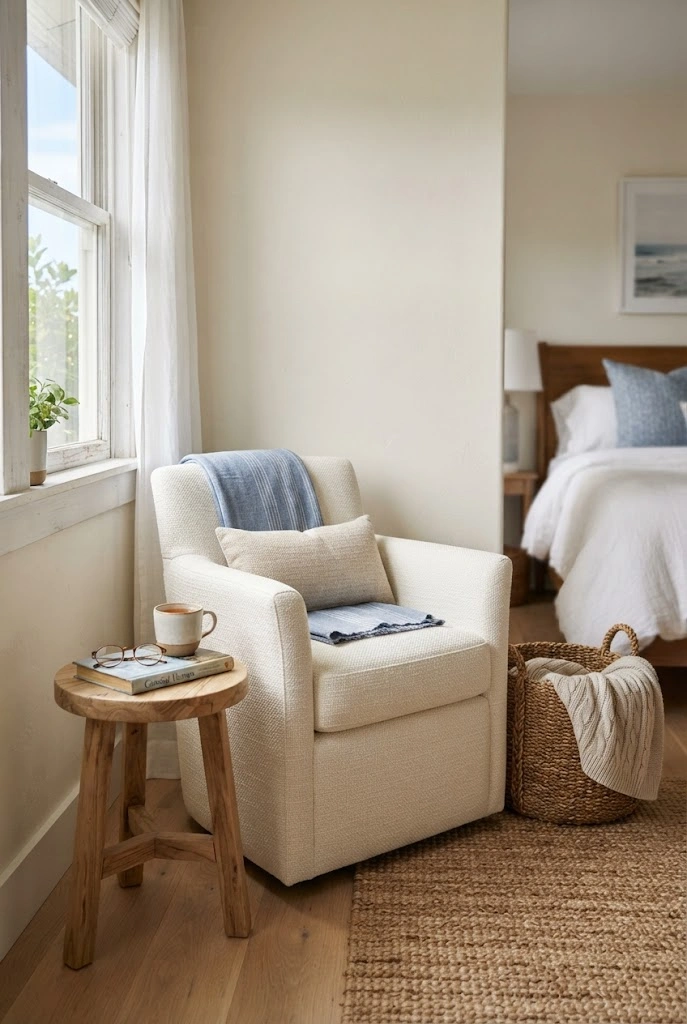
If space allows, create a quiet reading corner with a compact upholstered chair. Linen, cotton, or textured performance fabric in ivory, oatmeal, pale blue, or muted gray works naturally with coastal palettes.
Place the chair near a window when possible, then add a small side table and a warm reading lamp. The arrangement should feel useful rather than like a staged decorative corner.
In a small room, a compact slipper chair can provide the same function while taking up less floor space.
Try a Relaxed Whitewashed Wood Ceiling
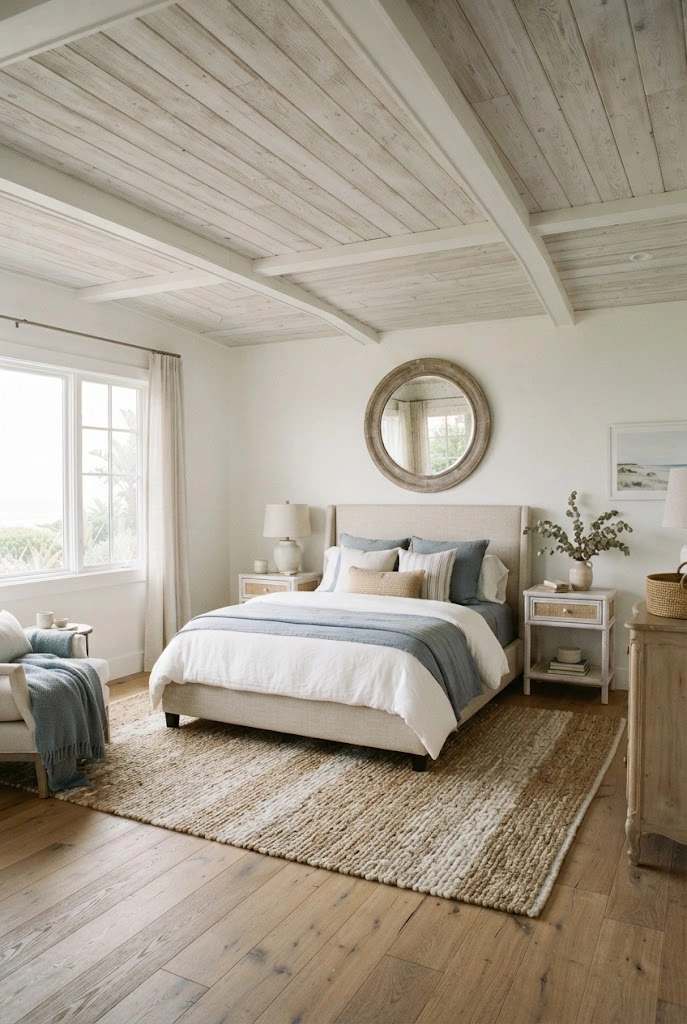
For a more architectural coastal treatment, consider a whitewashed wood ceiling or light-toned ceiling planks. This approach adds texture overhead while preserving the room’s bright appearance.
The treatment can work especially well in homes with existing architectural character, but it doesn’t need to be overly rustic. Keep the plank profile clean and the finish subtle.
If a permanent ceiling treatment isn’t realistic, you can borrow the same visual principle through a wood-paneled accent wall or light wood architectural details.
Layer Organic Textures Instead of More Decor
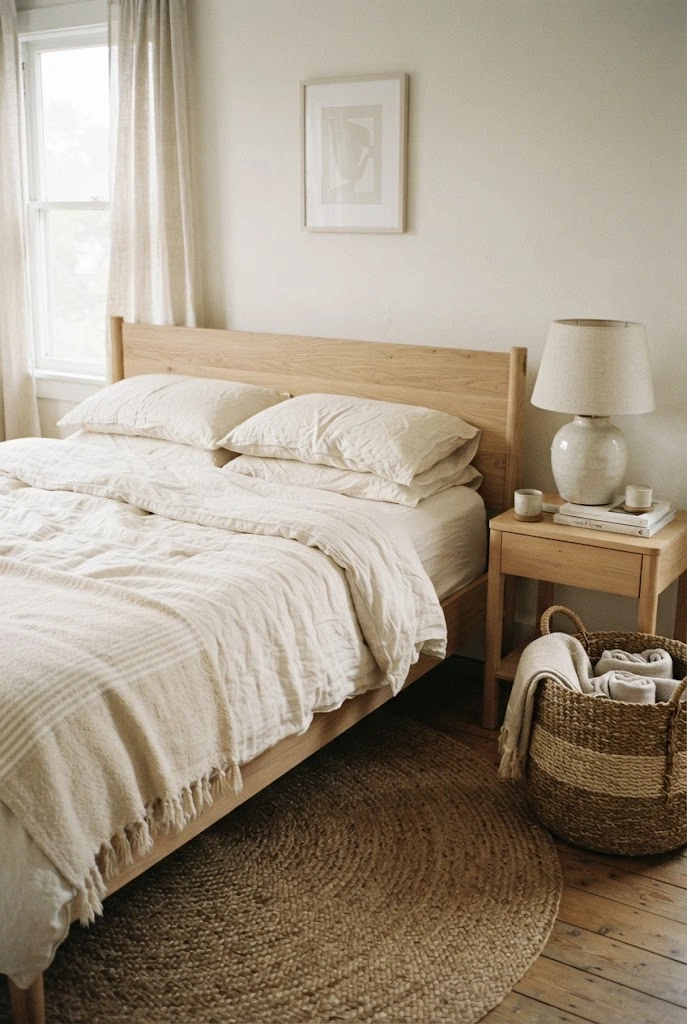
Sometimes the most effective coastal styling comes from materials rather than additional decorations. Combine linen bedding, a jute rug, woven baskets, natural wood, cotton throws, and textured ceramics.
The variety of surfaces gives the room depth while keeping the color palette restrained. This is especially helpful if you prefer minimalist interiors and don’t want obvious beach accessories.
Aim for contrast in texture rather than contrast in color. A room can remain almost entirely neutral while still feeling layered and visually interesting.
Frame the Bed With Simple Coastal Sconces
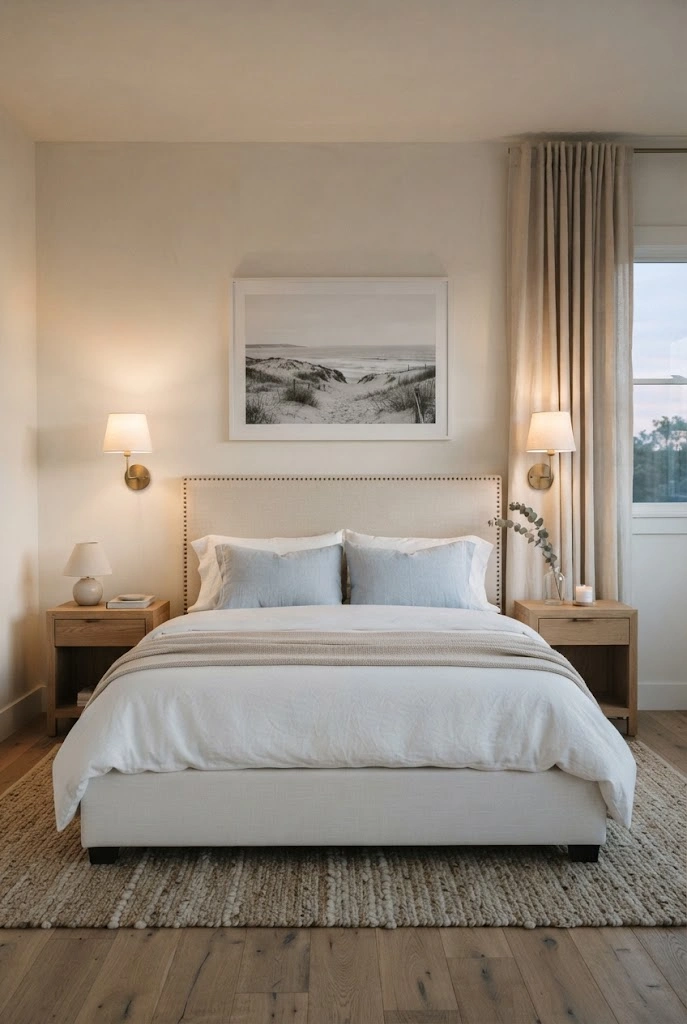
Wall-mounted sconces can make the area around the bed feel more intentional while freeing up nightstand space. Choose fixtures with linen shades, aged metal, ceramic, or understated natural finishes.
Symmetrical sconces create a classic arrangement, while slightly more sculptural fixtures can make the room feel contemporary.
Before installing hardwired fixtures, consider whether your home and electrical setup allow it. Plug-in sconces offer a flexible alternative for renters or temporary updates.
Style a Coastal Guest Bedroom With Simple Layers
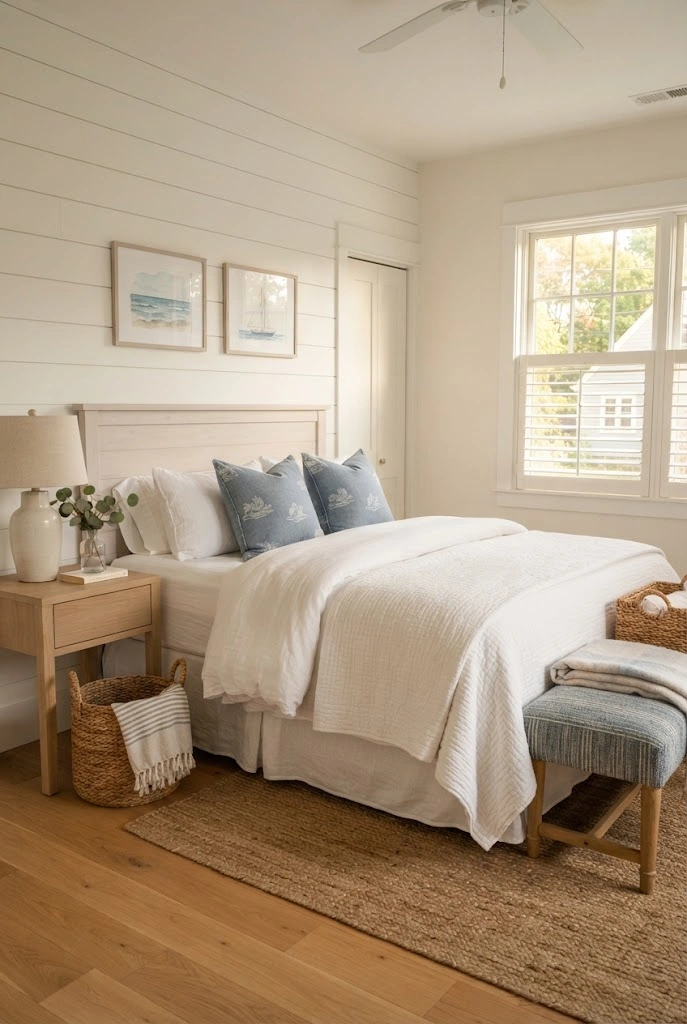
A guest room doesn’t need extensive decorating to feel welcoming. Start with comfortable-looking white bedding, add one or two blue accents, and use natural textures to give the room personality.
A small bench or luggage-friendly surface can make the space more functional for visitors. Keep decorative objects limited so guests have room for their own belongings.
This version of coastal bedroom decor is particularly useful for smaller homes where the guest room also needs to function as an office or occasional-use space.
Create a Refined Coastal Suite With Custom Millwork

For a more premium interpretation, use architectural details rather than adding more accessories. Custom wall paneling, built-in nightstands, integrated lighting, or carefully proportioned woodwork can give a coastal bedroom a tailored appearance.
Keep the finishes restrained. Light oak, painted millwork, natural stone accents, linen upholstery, and soft blue-gray textiles can create a sophisticated coastal atmosphere without turning the room into a themed resort.
This approach is most useful for homeowners planning a renovation rather than a quick seasonal refresh.
Finish With a Minimal Beach-Inspired Styling Moment
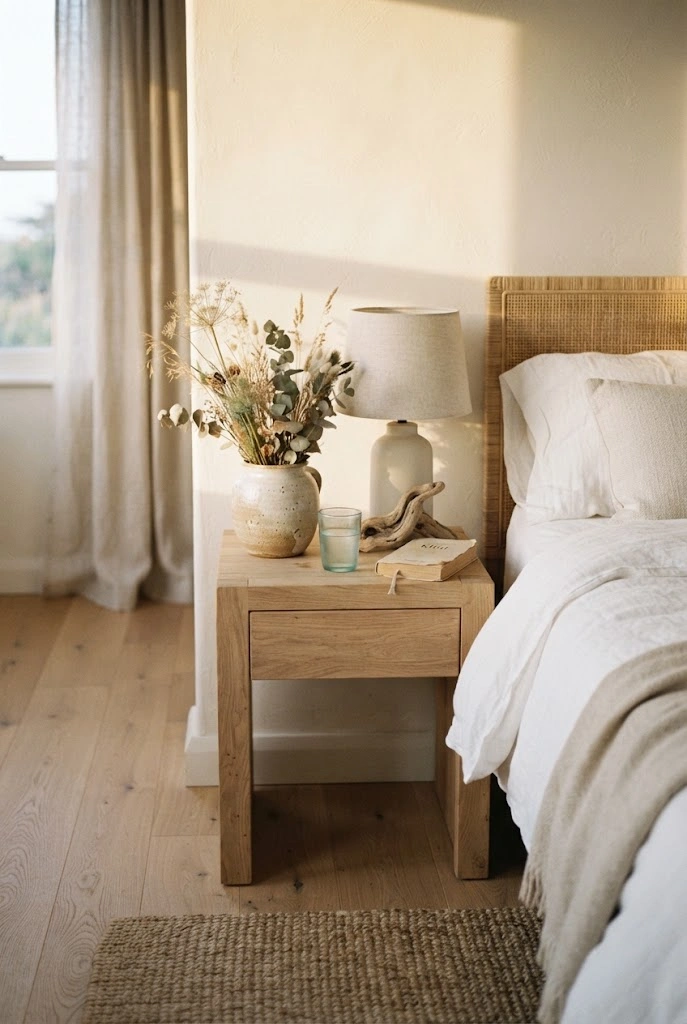
The finishing touches should reinforce the coastal mood without making the bedroom look like a souvenir shop. A small piece of naturally shaped wood, a textured ceramic vessel, a simple glass object, or a restrained botanical arrangement can suggest the shoreline without becoming literal.
Keep the final styling concentrated in a few intentional places—perhaps the nightstand, dresser, and one shelf. Leaving some surfaces open is just as important as adding objects.
The result should feel like a peaceful bedroom influenced by the coast rather than a room decorated around a beach theme.
How to Keep Coastal Bedroom Decor From Feeling Overdone
The difference between a relaxed coastal bedroom and a heavily themed one usually comes down to restraint. You don’t need anchors, ropes, seashells, or nautical signs on every surface to communicate the idea.
Instead, build the room around a few recurring characteristics:
- Keep the base light: White, ivory, sand, pale gray, and soft beige provide an airy foundation.
- Use blue selectively: Muted ocean blue, navy, aqua, and blue-gray can add depth without dominating the room.
- Prioritize natural materials: Wood, rattan, cane, jute, linen, cotton, and textured ceramics provide much of the visual interest.
- Mix textures: Combining smooth, woven, soft, and slightly rough surfaces keeps a neutral palette from looking flat.
- Leave breathing room: Coastal interiors generally benefit from an uncluttered arrangement and visible floor space.
- Choose scale carefully: Large furniture and oversized artwork should still suit the actual dimensions of the room.
- Let function guide decoration: Baskets should store things, benches should provide seating, and bedside tables should remain usable.
The strongest rooms don’t rely on one obvious beach symbol. They recreate the feeling of the coast through light, texture, color, and an easy sense of space.
Start With One Coastal Layer
You don’t have to redesign the entire bedroom at once. Start with the element that will make the biggest difference in your particular room. For some spaces, that’s fresh white-and-blue bedding; for others, it may be a woven headboard, natural rug, linen curtains, or a weathered wood piece.
Once that foundation is established, repeat two or three materials or colors throughout the room. A little consistency goes a long way. The goal isn’t to make every corner announce “beach”; it’s to create a bedroom that feels light, comfortable, natural, and quietly connected to the coast.