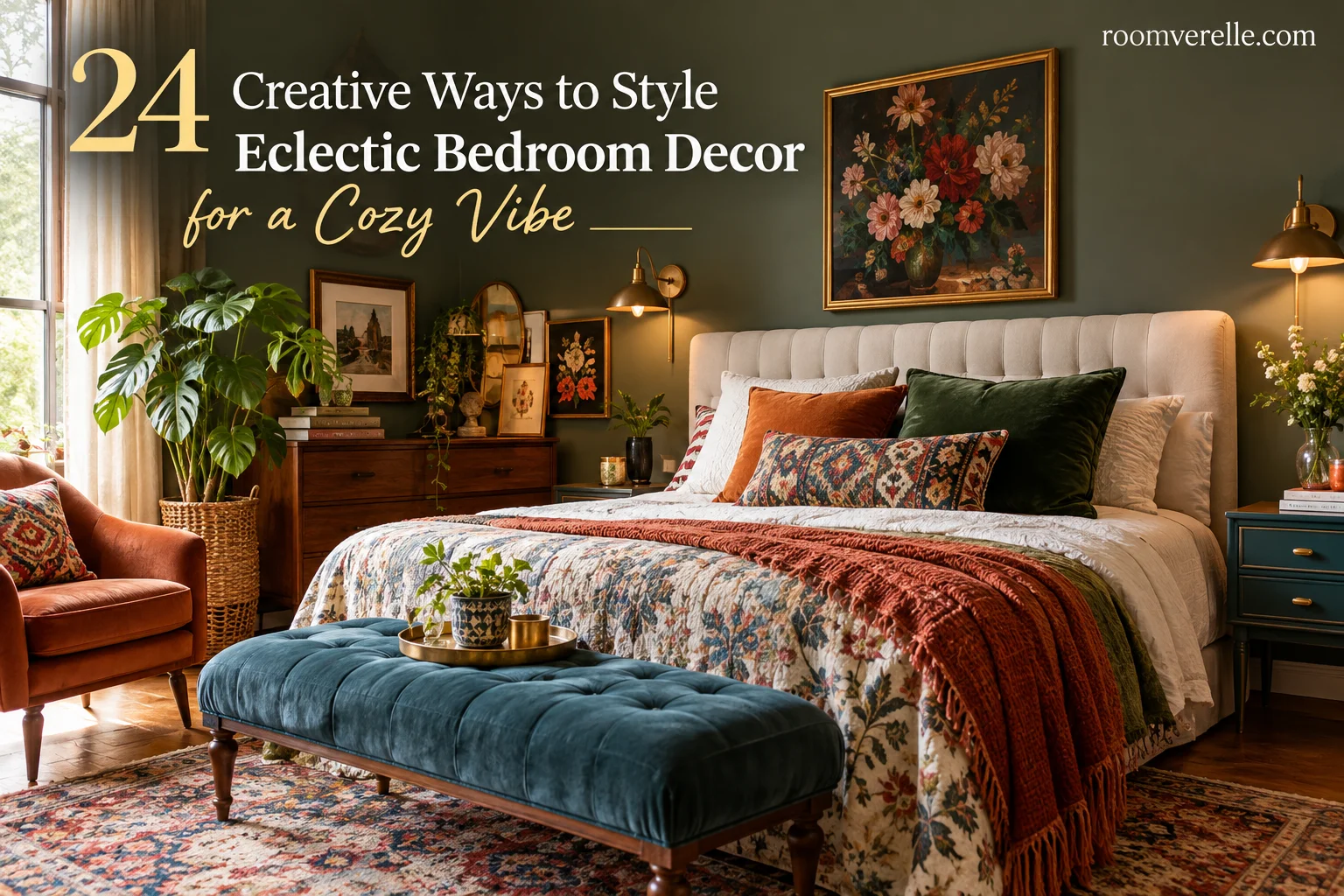
24 Creative Ways to Style Eclectic Bedroom Decor for a Cozy Vibe
An eclectic bedroom can feel collected rather than coordinated, but there’s a fine line between a layered room and one that simply feels busy. The secret is to give different colors, eras, patterns, and materials a few visual connections so they feel as though they belong together.
That might mean repeating a warm wood tone, balancing bold bedding with quieter walls, or pairing an antique nightstand with a streamlined modern lamp. You don’t need a matching bedroom set—or a large budget—to create the look. Secondhand furniture, meaningful artwork, textured bedding, books, rugs, and small decorative objects can all contribute to the character.
These 24 eclectic bedroom decor ideas explore different ways to combine those elements while keeping the room comfortable, functional, and inviting.
Layer Bedding in Complementary Patterns
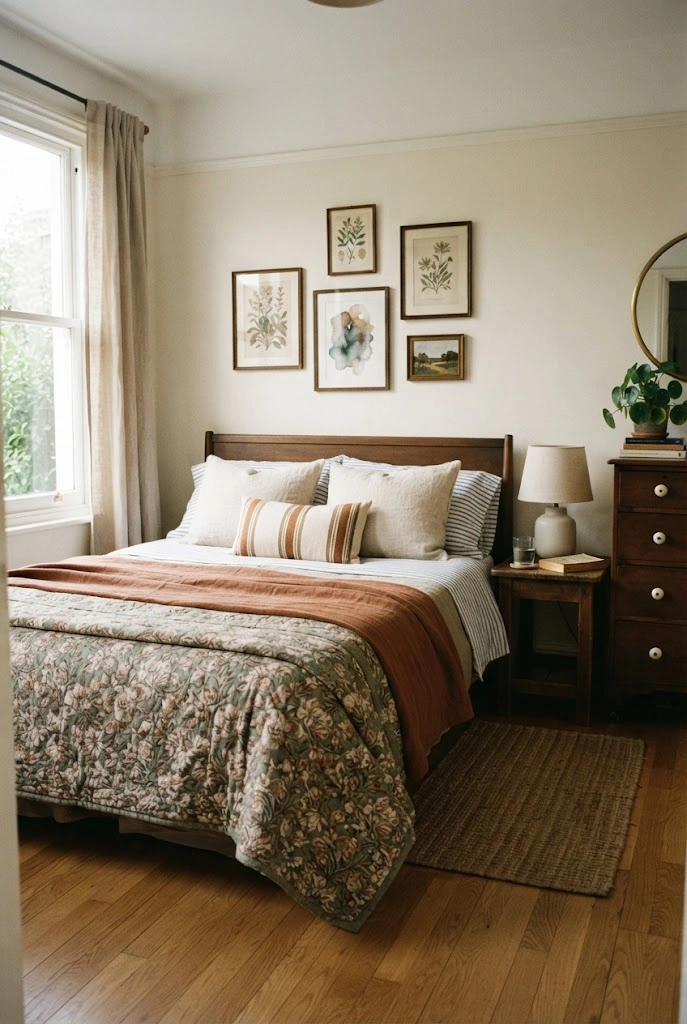
Start with the bed as the room’s main composition. Combine a patterned duvet or quilt with a different but related pillow pattern, then soften the mix with solid linen or cotton layers.
The easiest way to keep several patterns from competing is to give them a shared color family. For example, muted rust, cream, olive, and dusty blue can connect florals, stripes, and small geometric prints without making the bed look overly matched.
Choose patterns at different scales, too. A larger floral alongside a narrow stripe and a subtle textured solid creates more visual rhythm than three similarly sized prints.
Mix Furniture From Different Eras
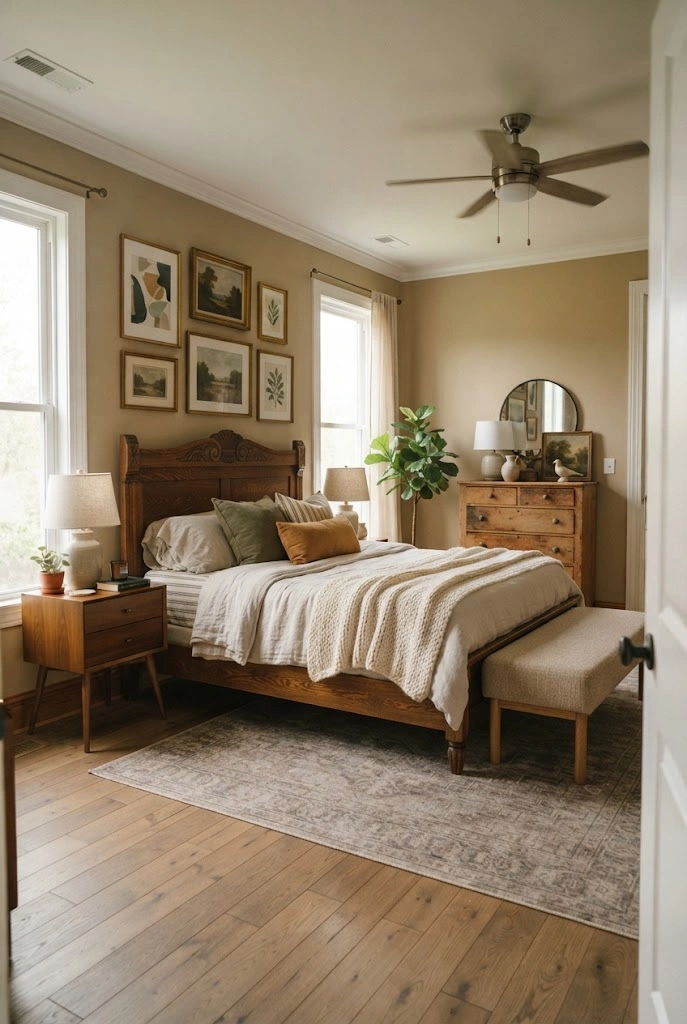
A matching bedroom set can make a room feel predictable. Instead, let the furniture tell a more interesting story by combining pieces from different periods.
Try a traditional wooden bed with a mid-century nightstand, a vintage dresser, or a contemporary upholstered bench. The pieces don’t need to match; they simply need enough common ground to coexist.
Wood is particularly useful for connecting mismatched furniture. Repeating a similar wood undertone—or intentionally contrasting light and dark woods—can make an assortment of pieces feel deliberate.
Create a Gallery Wall With Mixed Frames
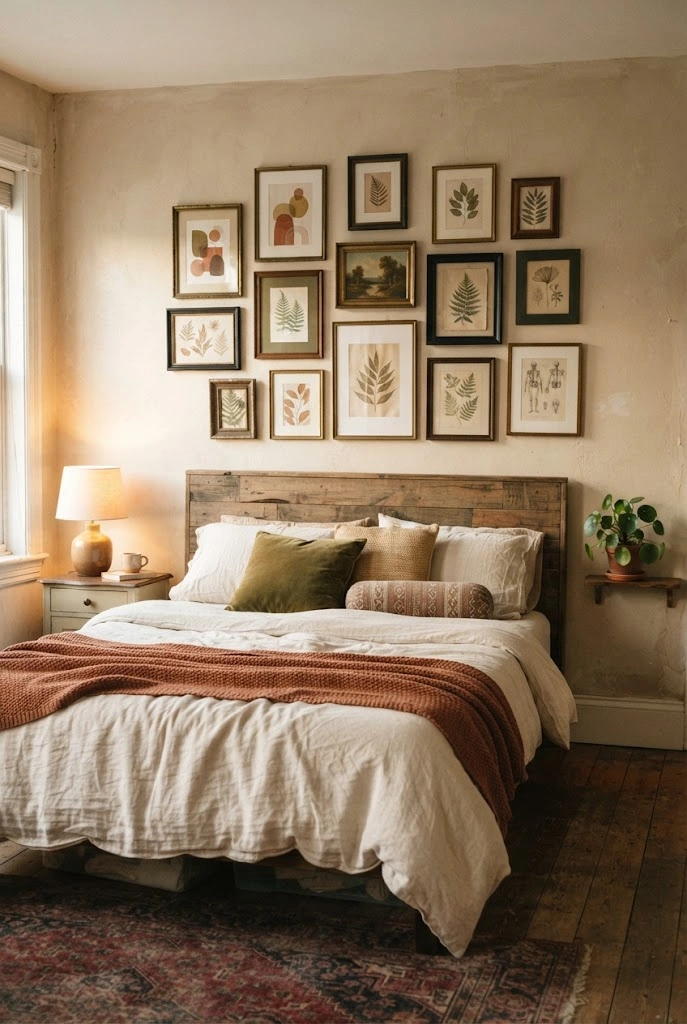
An eclectic gallery wall doesn’t have to consist of identical frames arranged in a perfect grid. Combine wood, brass, painted, and simple black frames to create a more collected arrangement.
Mix artwork types as well: a landscape print, abstract artwork, small photograph, vintage illustration, and textile piece can work together when they share a few colors.
Before hanging everything, arrange the pieces on the floor. Look for an overall shape rather than demanding identical spacing between every frame.
Use a Vintage Rug as the Color Bridge
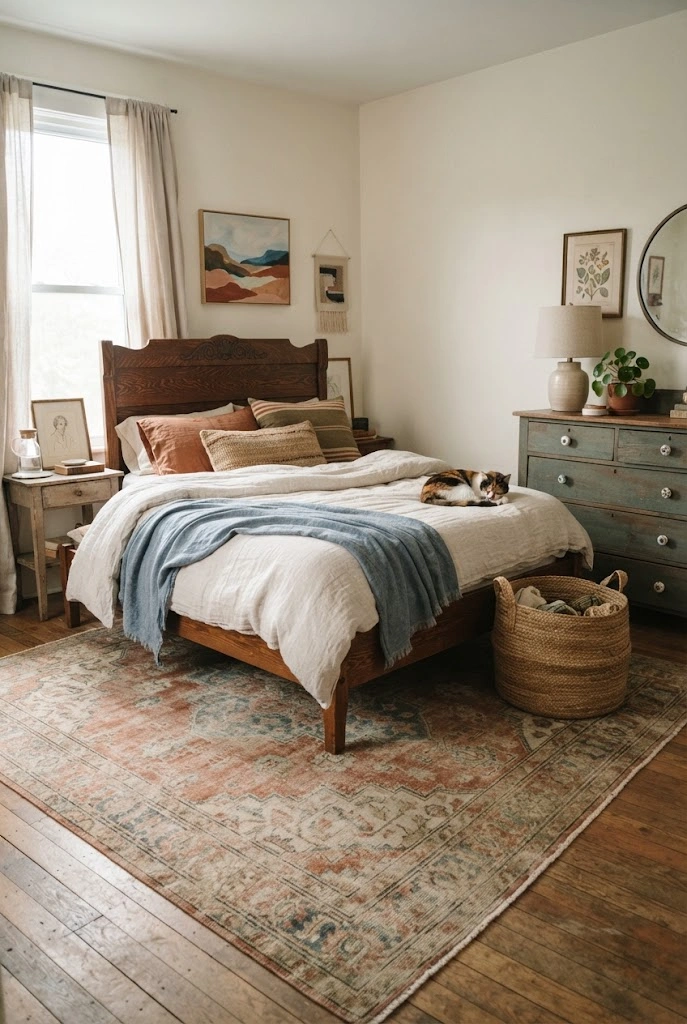
A vintage-style rug can solve one of the biggest challenges in eclectic decorating: connecting unrelated colors.
Choose a rug that contains at least two or three colors already appearing elsewhere in the room. It can then quietly tie together a painted dresser, patterned bedding, and colorful artwork.
For a small bedroom, place the rug so it extends around the lower portion of the bed rather than disappearing completely underneath it.
Pair Moody Walls With Warm Textiles
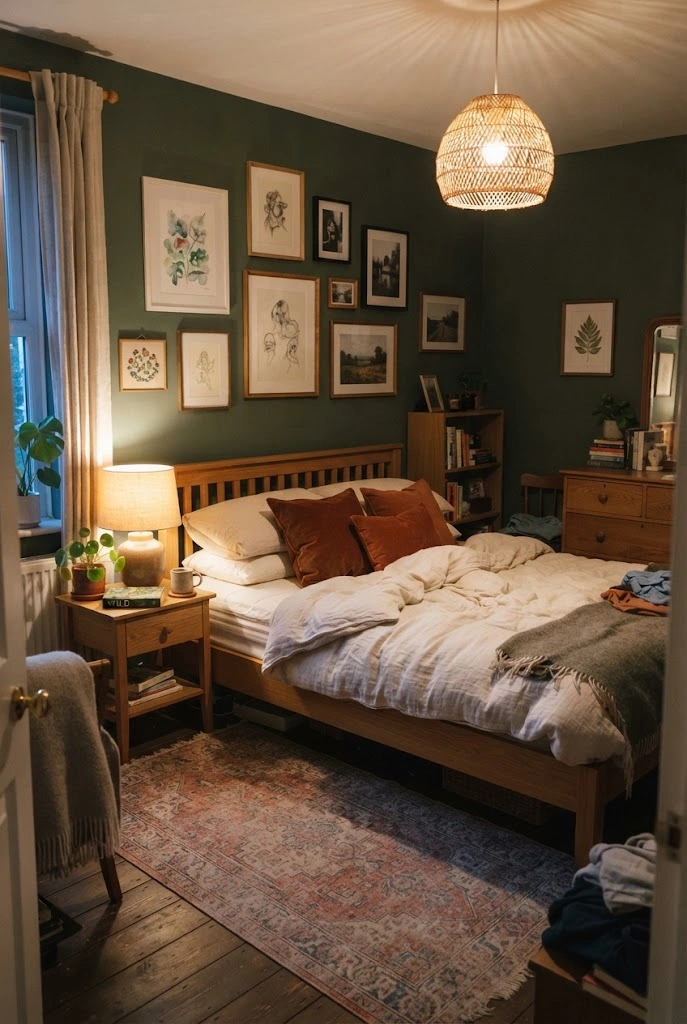
Deep wall colors can make an eclectic bedroom feel enveloping and intimate. Try charcoal, deep green, muted navy, clay, or another complex shade rather than relying exclusively on bright white.
Balance darker walls with tactile bedding, warm wood, woven accents, and soft lighting. The goal isn’t to make every element dark; it’s to create contrast between the wall color and the materials around the bed.
In a room with limited natural light, test paint samples at different times of day before committing.
Let One Bold Pattern Lead
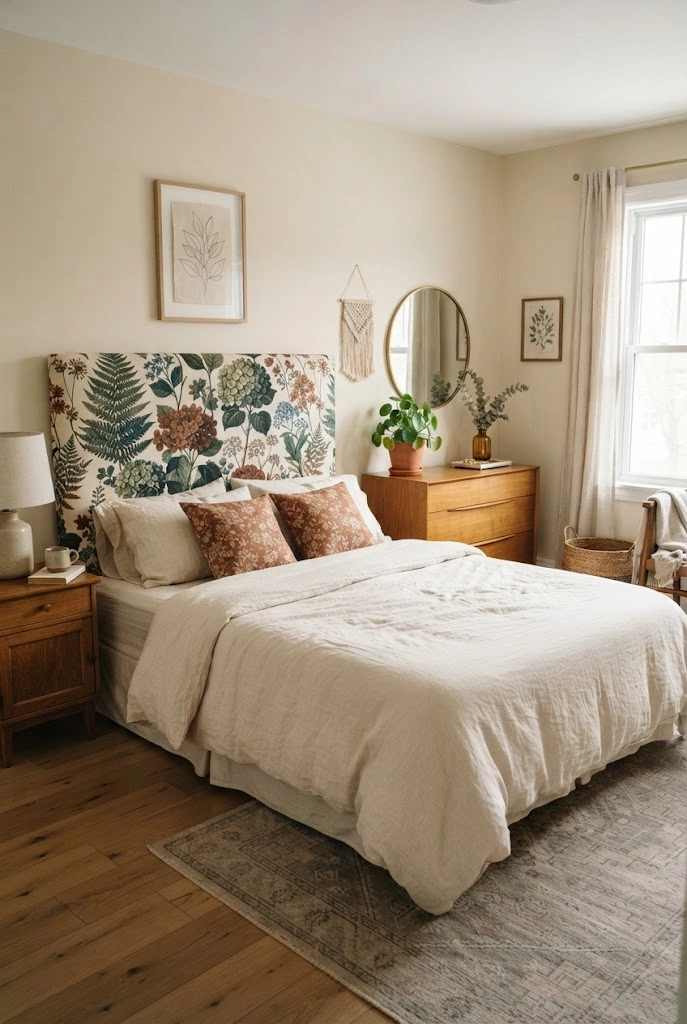
Eclectic style doesn’t require every surface to be patterned. In fact, choosing one strong pattern as the focal point can make the rest of the room feel calmer.
Consider a dramatic floral wallpaper, patterned duvet, or colorful upholstered headboard. Keep nearby pieces simpler and borrow just one or two colors from the focal pattern.
This approach works especially well when you’re drawn to maximalist rooms but still want the bedroom to feel restful.
Add a Collected Bedside Table
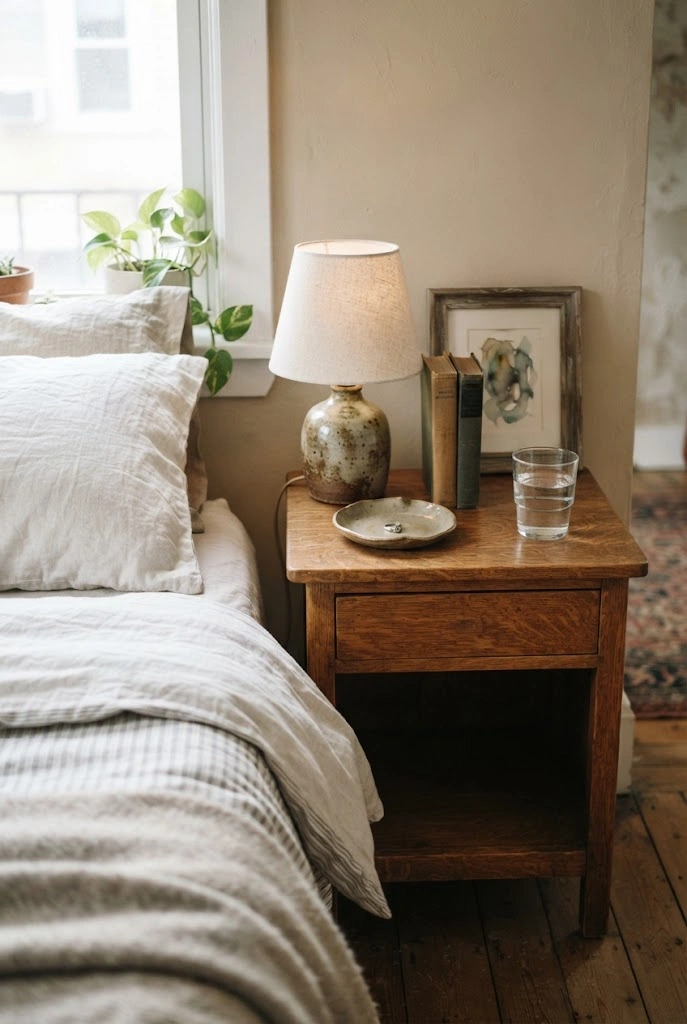
Instead of filling a nightstand with matching accessories, create a small vignette from objects with different origins.
A ceramic lamp, stack of books, small framed photograph, vintage dish, or sculptural object can give the bedside area personality. Keep the functional necessities—such as a phone, reading light, and water glass—within easy reach.
The trick is editing. A few meaningful objects usually create more impact than a crowded tabletop.
Mix Floral Prints With Stripes
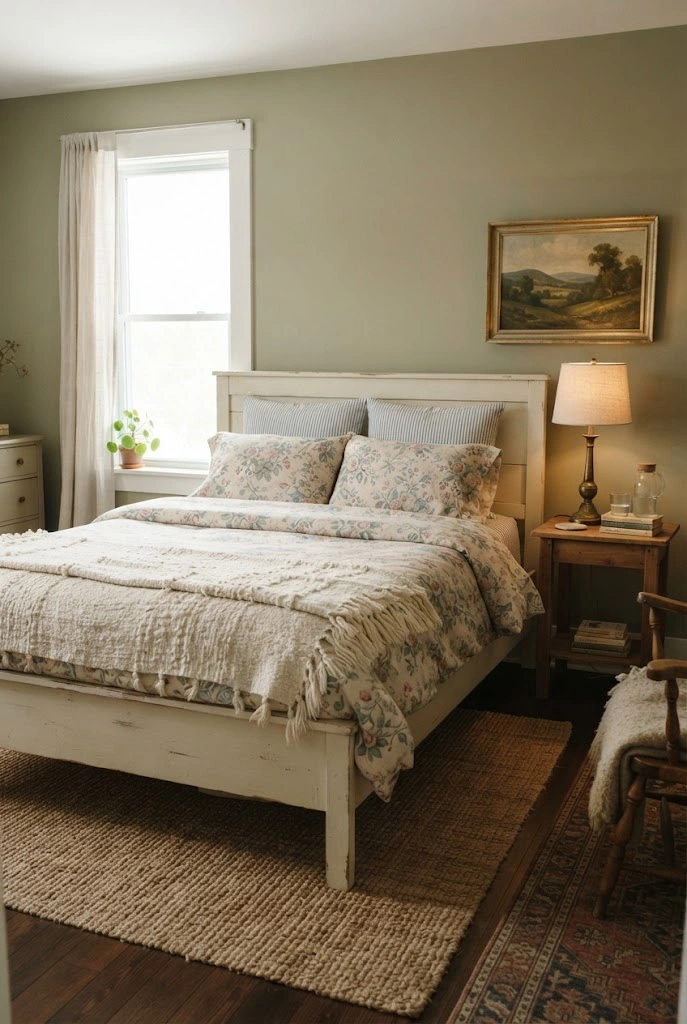
Floral and striped textiles can create a classic eclectic combination because the patterns behave differently visually.
Use a large floral on the duvet or curtains and a narrow stripe on pillows or a throw. Keep the colors related rather than trying to match every shade exactly.
A third layer of texture—such as a nubby blanket or woven cushion—can soften the contrast.
Bring in a Sculptural Statement Lamp
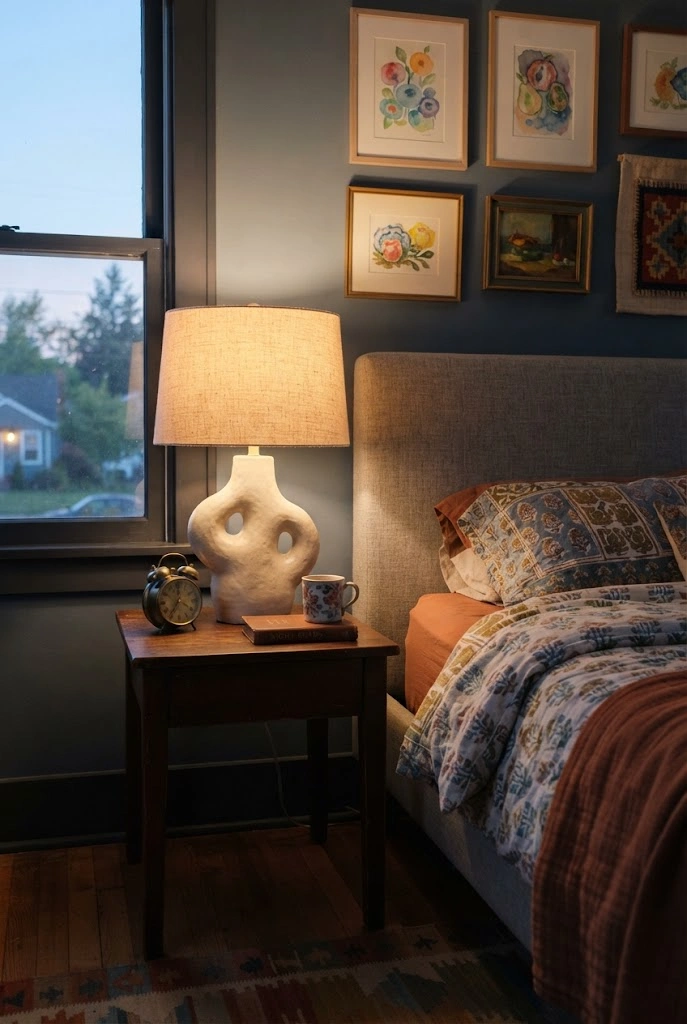
Lighting is an easy place to introduce a contrasting design era. A sculptural ceramic lamp, pleated shade, oversized paper lantern, or vintage-inspired fixture can become a focal point without requiring a major renovation.
Choose a shape that contrasts with the furniture. For example, an organic ceramic lamp can soften a boxy modern nightstand.
Display Books as Part of the Decor
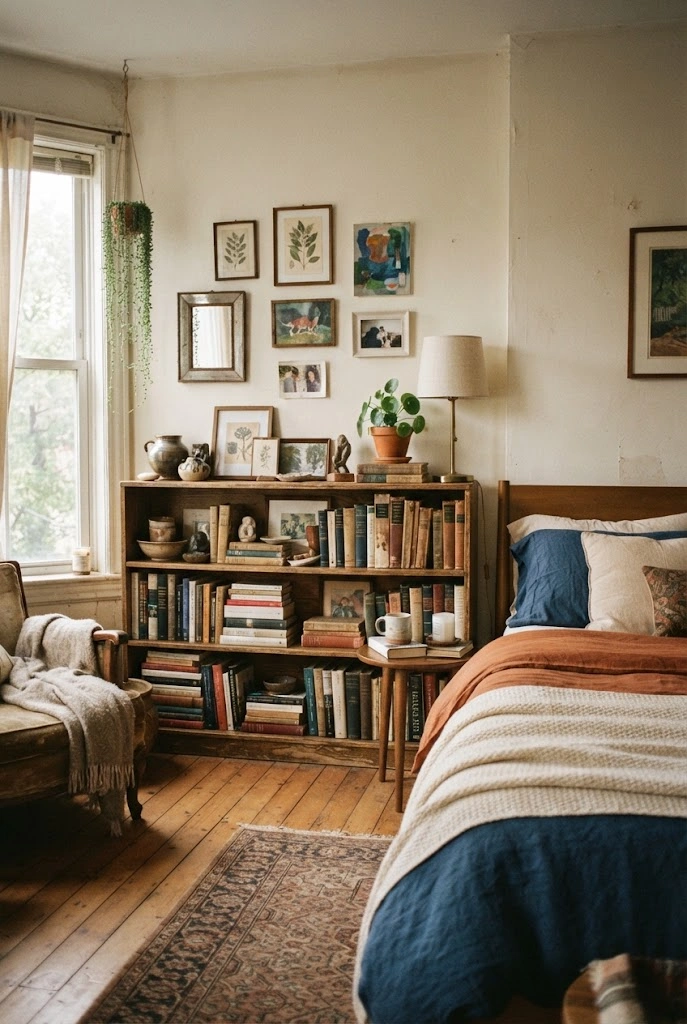
Books add color, texture, and personality without feeling like generic decoration. Stack a few on a nightstand, place a larger collection on open shelving, or arrange selected volumes on a dresser.
Mix horizontal and vertical arrangements to avoid making the display look overly staged. Keep frequently read books accessible rather than treating the entire collection as a decorative prop.
Use a Canopy Bed as the Architectural Focal Point
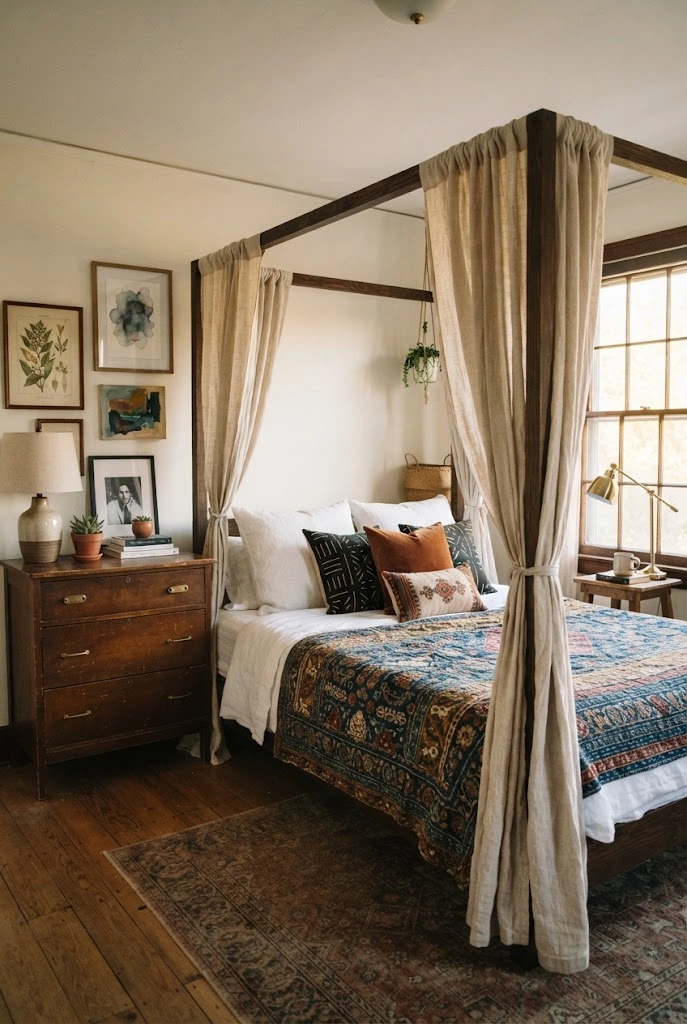
A canopy bed can make an eclectic bedroom feel more distinctive without adding much decorative clutter.
Choose a simple wood or metal frame, then layer it with linen curtains or leave the structure open. Surround it with contrasting furniture and textiles so the canopy becomes the room’s architectural anchor.
For a smaller bedroom, a visually light frame will generally preserve a greater sense of openness than a very heavy four-poster design.
Contrast Light and Dark Woods
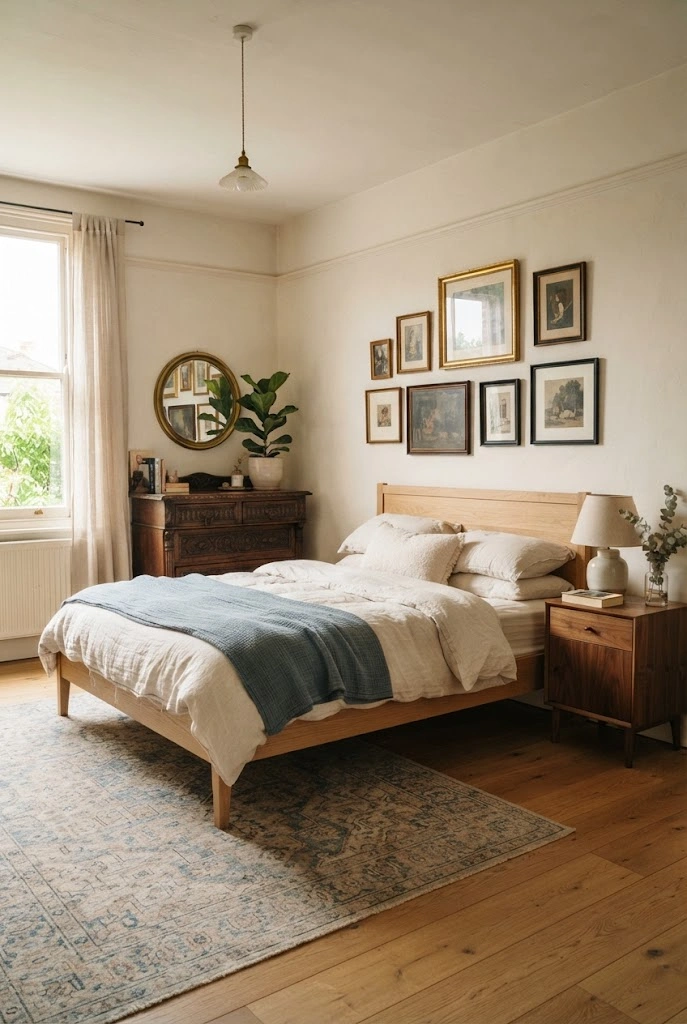
Eclectic rooms don’t need every wood finish to match. A pale oak bed beside a walnut nightstand or dark antique dresser can create useful contrast.
To keep the combination intentional, repeat each wood tone at least once elsewhere when possible. A walnut frame, for instance, can echo the walnut nightstand without requiring a matching furniture set.
Add a Patterned Curtain as a Soft Accent
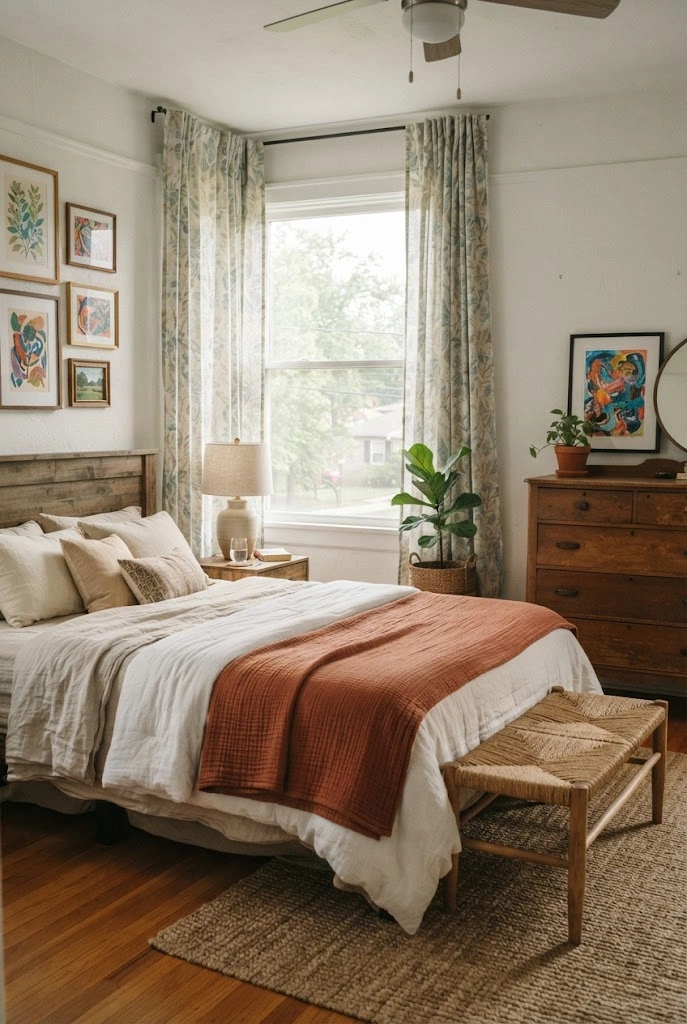
Curtains are often overlooked when decorating bedrooms, yet they can introduce a substantial dose of color or pattern.
Try small-scale checks, botanical motifs, block prints, or subtle stripes. If the bedding already has a strong pattern, choose curtains with a quieter motif and coordinate through color.
Full-length curtains can also soften hard architectural lines around a window.
Turn a Dresser Into an Artful Vignette
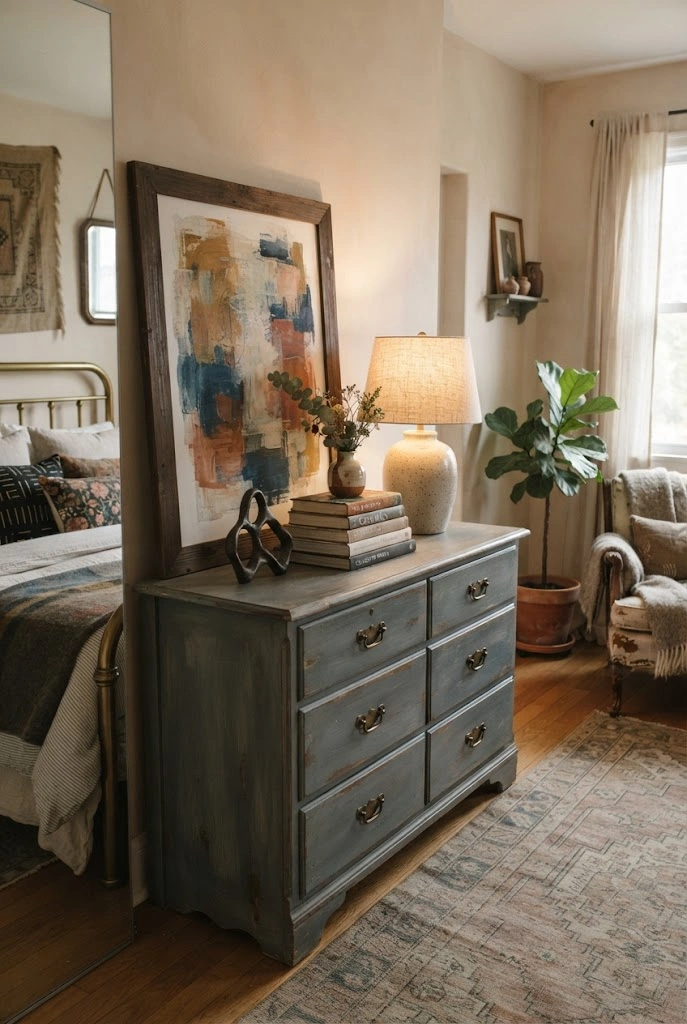
A dresser can function as more than storage. Treat its top as a horizontal canvas for artwork, a mirror, a lamp, books, pottery, or collected objects.
Vary the heights so the arrangement has movement. A large mirror or artwork can anchor the composition while smaller objects create layers in front.
Leave some breathing room around the most important pieces; eclectic doesn’t mean every inch needs to be filled.
Bring in a Woven Pendant Light
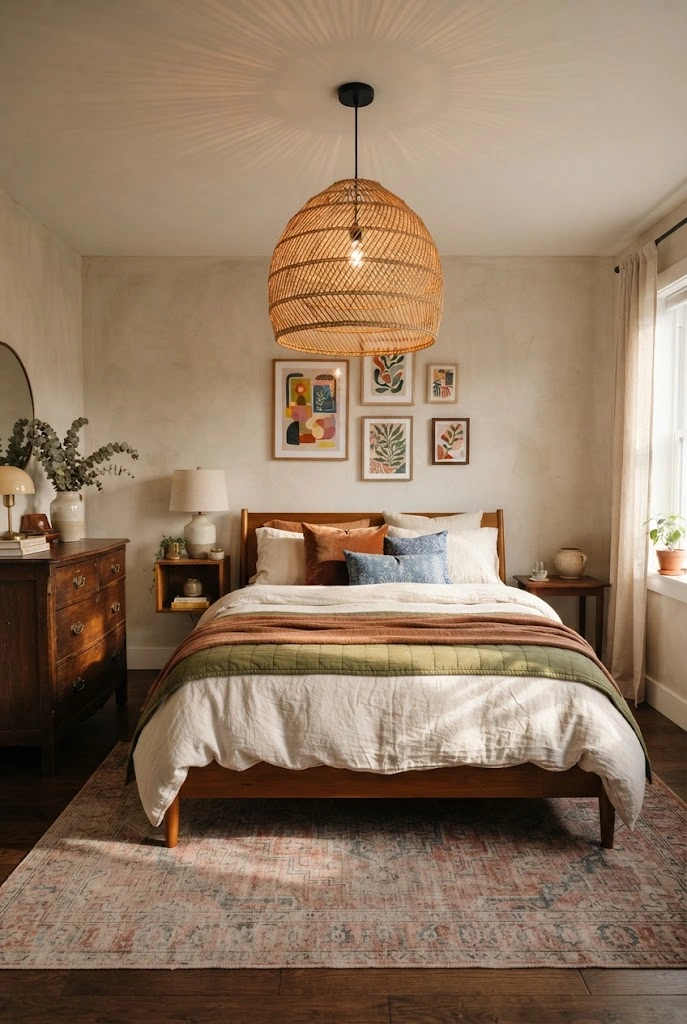
Natural fibers add warmth and visual texture, making them especially useful in rooms that contain painted furniture, metal accents, or smooth modern surfaces.
A woven pendant above the center of the bedroom can act as a unifying textural element. Choose an appropriately scaled fixture so it feels substantial without competing with the bed.
Add an Unexpected Colorful Chair
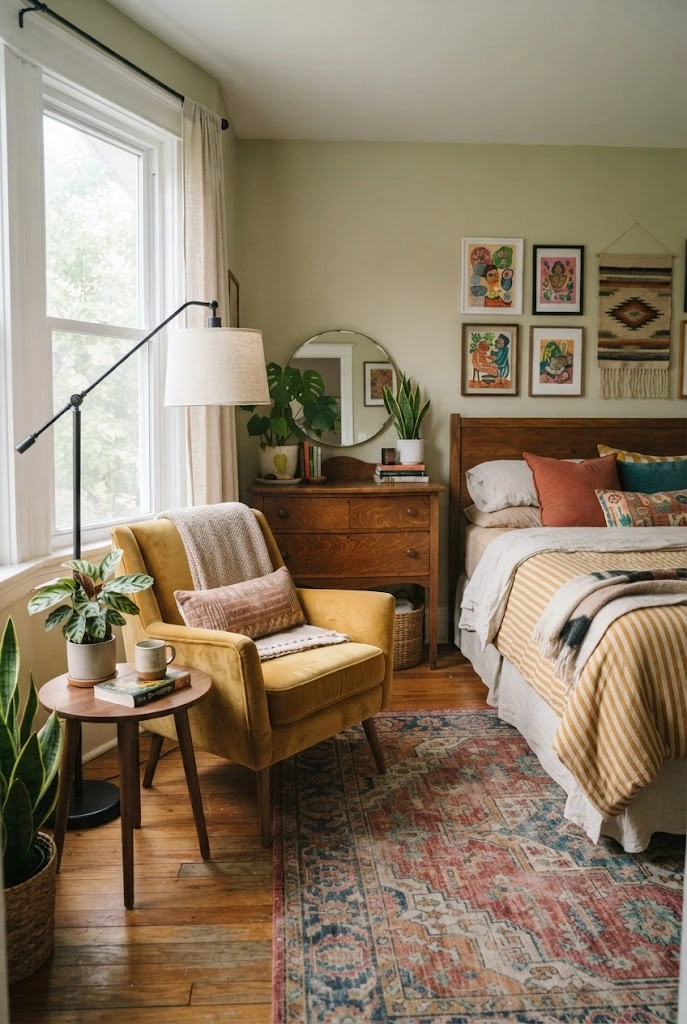
A bedroom reading chair doesn’t have to match the rest of the furniture. Use it as an opportunity for a saturated color or unusual silhouette.
A mustard slipper chair, blue velvet armchair, rust linen seat, or vintage wooden chair can give an otherwise neutral bedroom a clear focal point.
Keep a small side table or floor lamp nearby if you want the chair to function as a true reading spot rather than simply decoration.
Use Oversized Art Above the Bed
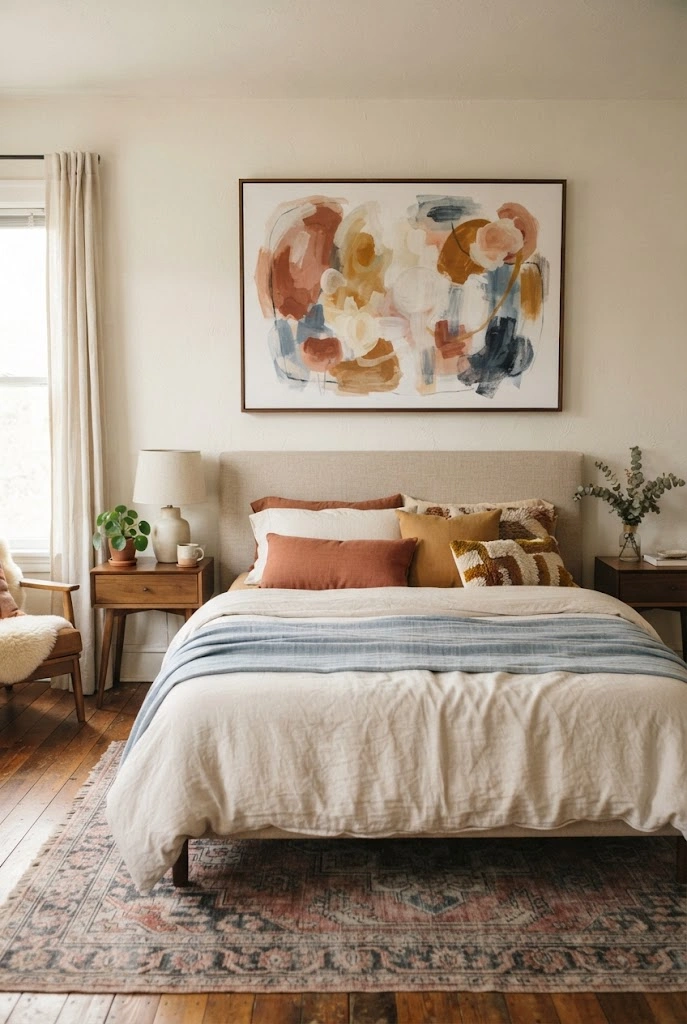
One large artwork can create the visual weight that a gallery wall normally provides while giving the room a calmer focal point.
Look for artwork with several colors already present in the bedroom. A large abstract canvas, vintage landscape, textile artwork, or expressive botanical piece can work beautifully.
Keep the frame relatively simple if the artwork is visually intense.
Layer Several Small Mirrors
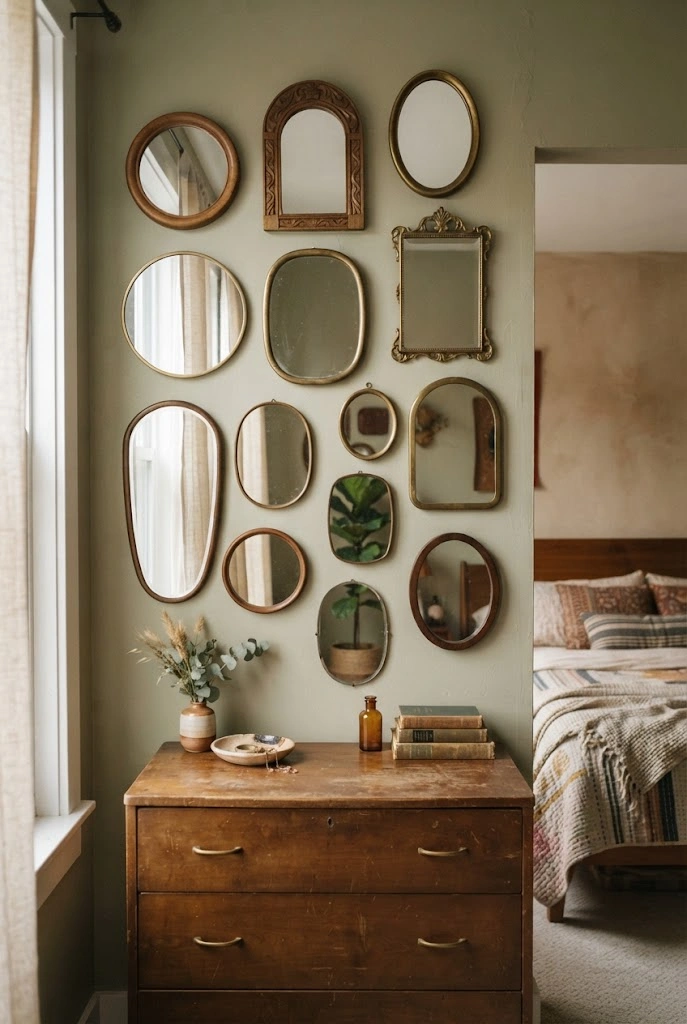
Instead of using one traditional wall mirror, consider a collection of smaller mirrors in different shapes and frames.
Round, arched, irregular, and rectangular forms can create an interesting wall composition. This approach works particularly well above a dresser or on a narrow wall that needs some visual movement.
Use mirrors thoughtfully around windows and light sources so reflections enhance rather than clutter the room.
Mix Handmade Ceramics Into the Room
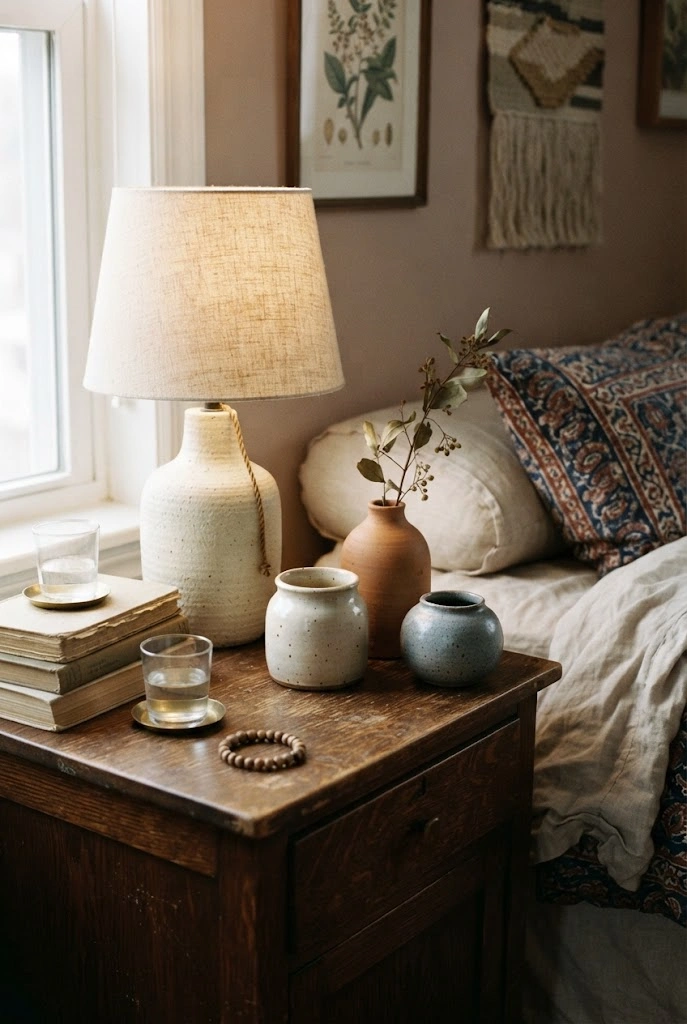
Handmade ceramics can bring small-scale variation to an eclectic bedroom. Use them as bedside vessels, planters, catchalls, or decorative objects.
Their slightly irregular forms pair particularly well with more polished furniture because they prevent the room from feeling too uniform.
Choose a few pieces in related earthy tones rather than creating a collection of unrelated colors.
Create a Layered Floor-Level Reading Nook
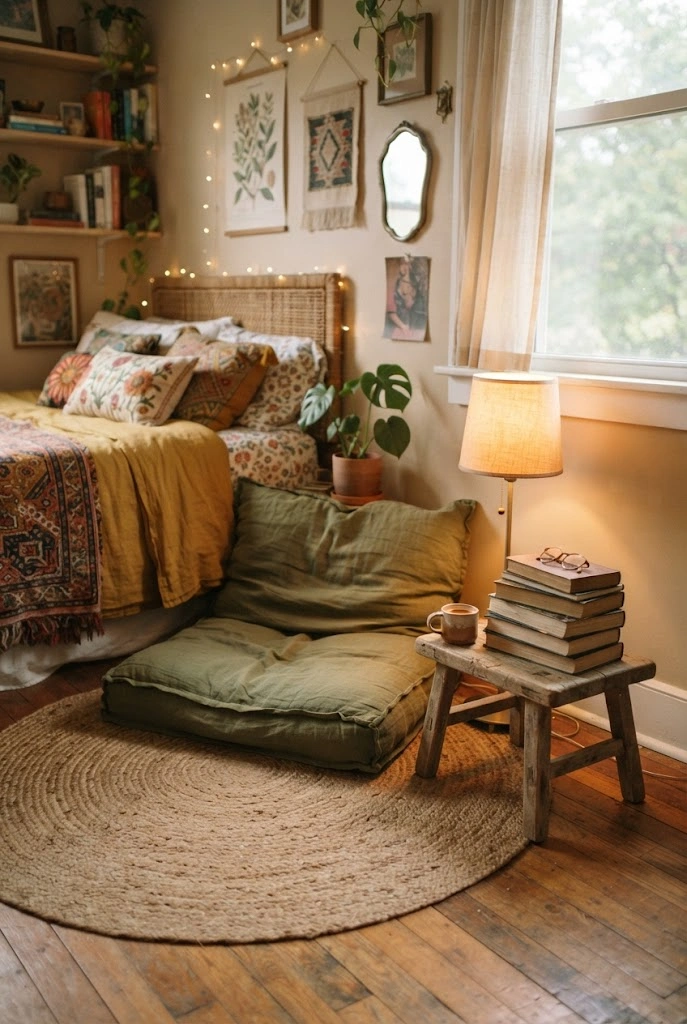
If you have an unused corner, make it part of the bedroom’s story. A floor cushion, low stool, small rug, stack of books, and nearby lamp can create a relaxed reading nook without requiring a full-size chair.
This is particularly useful in compact bedrooms where another piece of furniture would make circulation difficult.
Use a Painted Ceiling for an Unexpected Twist
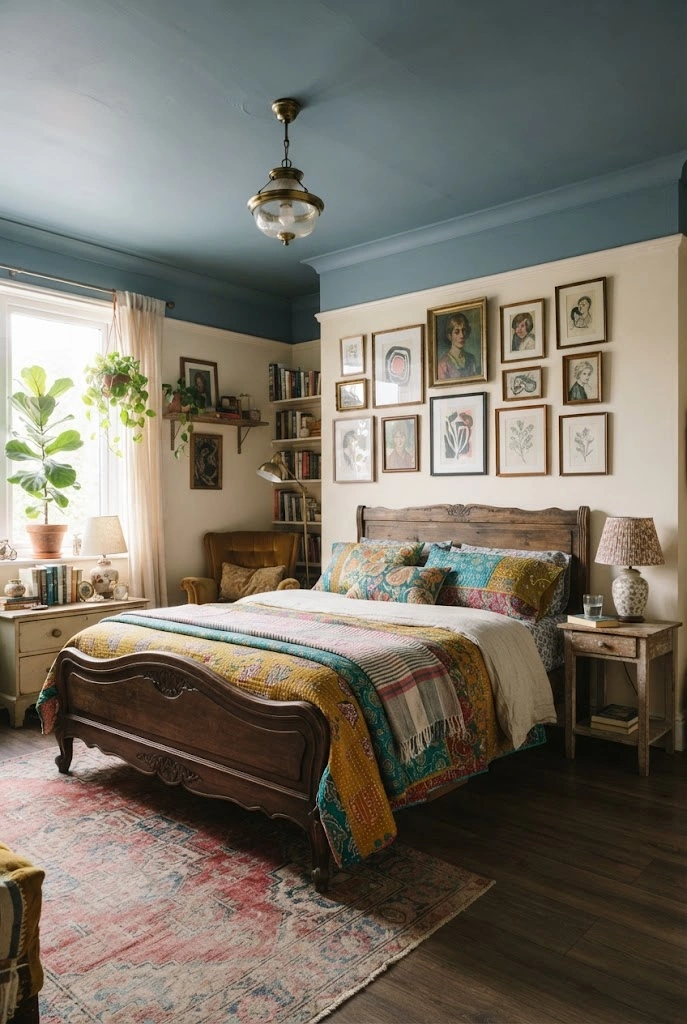
For a more adventurous eclectic bedroom, bring color onto the ceiling rather than stopping at the walls.
A muted blue, clay, sage, or warm cream can change the atmosphere without requiring every wall to become dramatic. Keep the rest of the room connected through textiles and artwork that echo the ceiling color.
This treatment can be especially effective in rooms with architectural details worth highlighting.
Style Open Shelves With Personal Objects
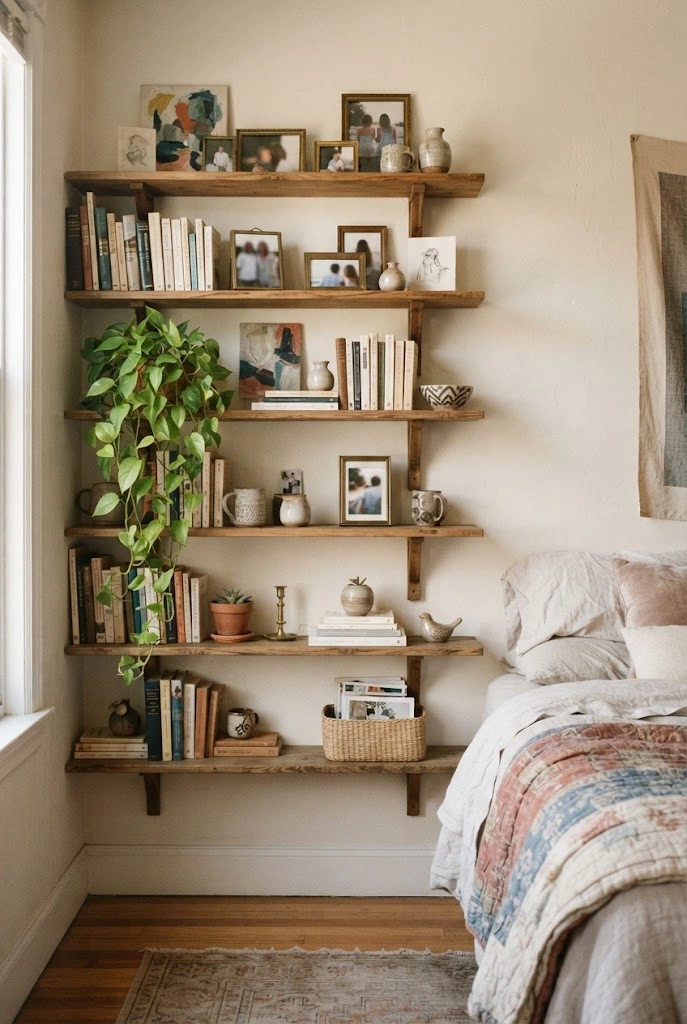
Open shelving can give an eclectic bedroom a sense of history when it holds things that actually mean something to the household.
Combine framed photos, ceramics, books, small artwork, travel keepsakes, baskets, and plants. Vary the spacing instead of filling every shelf evenly.
If the shelves are in a bedroom used for sleeping, keep fragile or unstable pieces away from areas where they could easily be knocked over.
Introduce an Antique or Thrifted Find
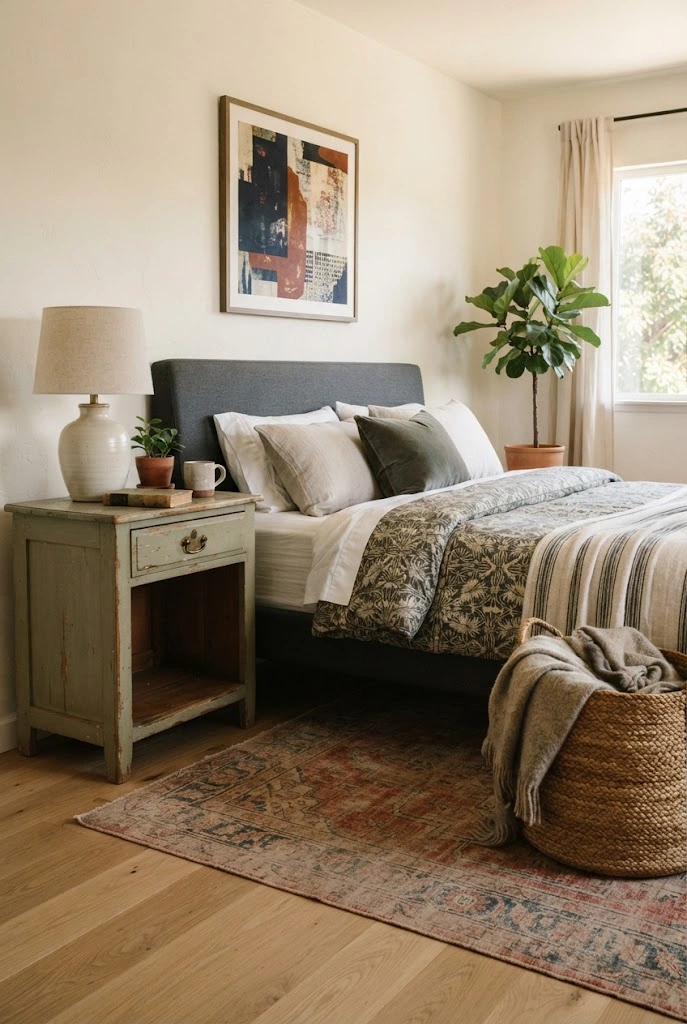
One unusual secondhand piece can give a bedroom much more personality than a room filled exclusively with new furniture.
Look for an old stool, small cabinet, mirror, bench, trunk, or nightstand with an interesting shape. The piece doesn’t need to be restored to pristine condition; its age and character can be part of the appeal.
Balance a strongly vintage item with simpler contemporary pieces so the room feels collected rather than themed.
Finish With a Personal Collection Wall
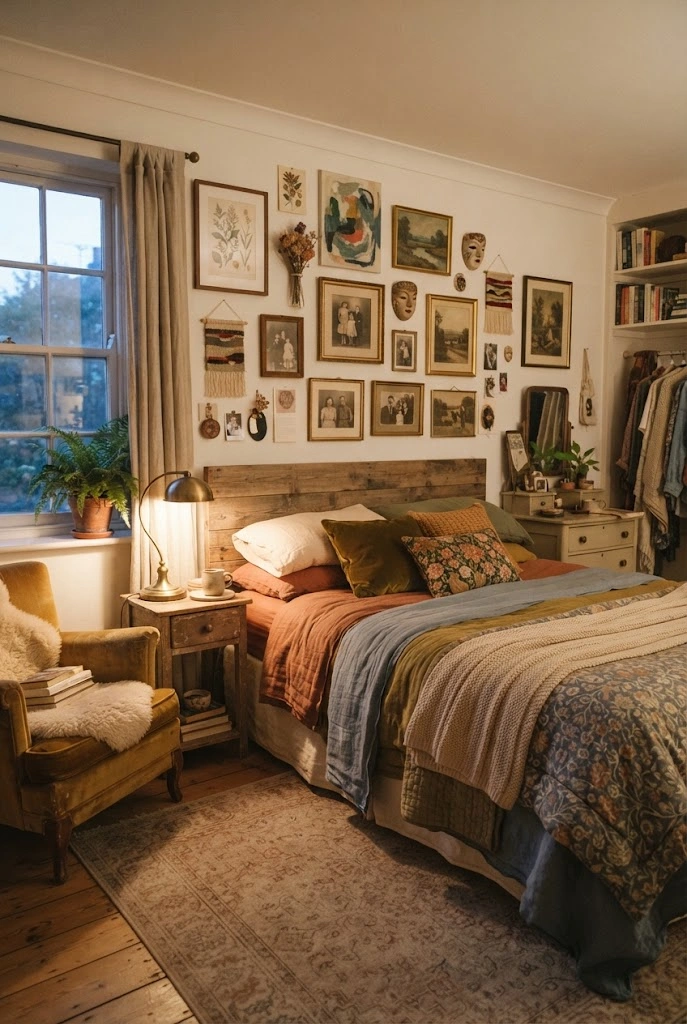
The most convincing eclectic bedrooms usually contain something that couldn’t simply be copied from a showroom. Dedicate one wall or small display area to objects you genuinely enjoy collecting.
It might be framed botanical prints, vintage postcards, small paintings, woven pieces, family photographs, ceramic plates, or a combination of objects gathered over time.
Arrange the collection with enough consistency to feel intentional, but don’t make every item identical. The goal is a room that reflects a person rather than a decorating formula.
How to Keep an Eclectic Bedroom From Feeling Cluttered
Eclectic decorating works best when there’s a visual relationship between the things you bring into the room. You don’t need everything to match, but you do need somewhere for the eye to rest.
Start by choosing two or three recurring colors. They can appear in the rug, bedding, artwork, curtains, or small accessories. Then establish a few quieter surfaces—perhaps solid-colored bedding, an uncluttered wall, or simple furniture—to balance the busier elements.
Scale matters, too. If the room contains lots of small artwork and accessories, introduce one or two larger shapes such as an oversized headboard, substantial rug, or large artwork.
Finally, edit periodically. Eclectic style should feel collected, not crowded. If an object no longer contributes function, memory, texture, color, or character, it may not need to stay.