21 Cozy Earthy Bedroom Ideas to Transform Your Space Into a Sanctuary
A cozy earthy bedroom doesn’t need to look rustic or overly decorated. The most inviting spaces usually rely on a quieter combination of natural materials, warm neutrals, tactile fabrics, soft lighting, and a few carefully chosen organic accents.
Think weathered wood beside crisp linen, clay-toned walls with creamy bedding, woven baskets near a simple dresser, or a reading corner illuminated by a warm lamp. These elements create visual warmth without making the room feel crowded.
The best part is that an earthy bedroom can work in an apartment, rental, suburban home, or larger primary suite. You can achieve the feeling with a few styling changes, or build it into the room through paint, flooring, millwork, and furniture.
Here are 21 ways to create a bedroom that feels grounded, comfortable, and genuinely restful.
Layer Warm Neutrals From Floor to Ceiling

Start with a restrained palette of oatmeal, warm white, sand, taupe, mushroom, and soft brown. Instead of relying on one beige shade, layer several closely related tones across the bedding, walls, rug, curtains, and upholstery.
The subtle variation keeps a neutral bedroom from feeling flat. A cream duvet can sit against a slightly darker upholstered headboard, while a natural jute or wool rug anchors the lower part of the room.
For a particularly calm result, keep the largest surfaces tonal and introduce stronger earthy shades through smaller accents.
Bring in a Statement Wood Headboard

Wood immediately introduces warmth and visual weight. A substantial headboard made from oak, walnut, reclaimed wood, or another natural timber can become the room’s main earthy feature.
For a contemporary bedroom, choose a simple slab or slatted design. In a more rustic space, a lightly textured or naturally varied wood surface can provide character.
Keep the bedding relatively simple so the wood remains the focal point rather than competing with several other statement pieces.
Paint the Walls a Clay-Inspired Shade

Earthy bedrooms don’t have to be beige. Terracotta, muted clay, cinnamon, dusty rose, and warm taupe can bring depth while maintaining a grounded atmosphere.
A subdued clay shade works especially well when paired with cream bedding and medium-toned wood. The goal isn’t to make the room feel orange; choose a softened, dusty version of the color with enough brown or gray to keep it sophisticated.
If you’re hesitant about painting every wall, use the shade behind the bed as an accent wall.
Make Linen the Star of the Bed

Linen is a natural fit for an earthy bedroom because its slightly irregular texture makes the bed feel relaxed rather than overly polished.
Layer a linen duvet cover with washed linen sheets and a couple of textured pillows. You don’t need a dozen decorative cushions. Two or three well-chosen layers can create plenty of depth.
Choose natural shades such as flax, ivory, stone, or muted olive. Slight wrinkles are part of the appeal.
Add a Vintage or Antique Wood Dresser

An earthy bedroom benefits from furniture that looks collected rather than purchased as one matching set.
A vintage pine dresser, antique oak chest, or secondhand wood nightstand can introduce warmth and individuality. Look for pieces with interesting grain, simple hardware, and proportions that suit the room.
You don’t need everything to match. In fact, combining different wood tones can make the space feel more natural when the finishes share a similar warmth.
Ground the Room With a Natural-Fiber Rug
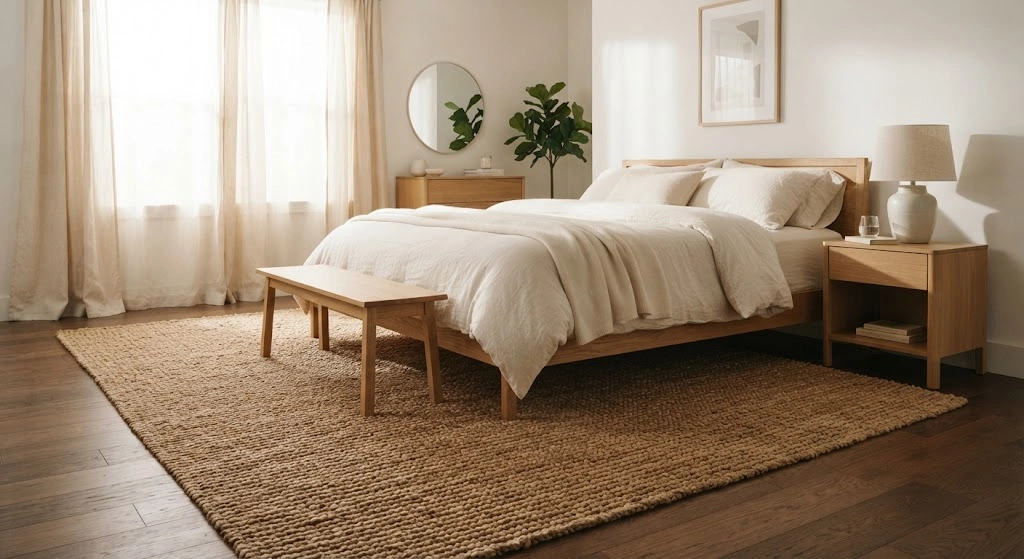
A rug can make a bedroom feel warmer almost instantly, particularly when the floor is hardwood or another hard surface.
Jute, sisal, seagrass, wool, and wool-blend rugs all bring organic texture. For a softer feel underfoot, use a wool rug with a subtle natural pattern. For a more casual coastal-earthy look, try a woven jute style.
Make sure the rug is large enough to extend beyond the sides of the bed. A rug that’s too small can visually disconnect the bed from the rest of the room.
Use Olive Green as a Grounding Accent
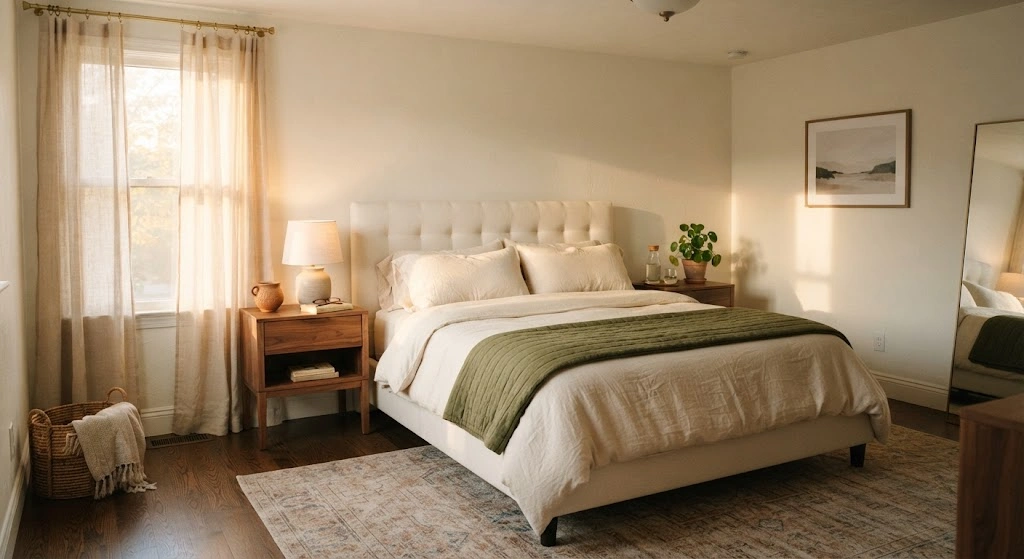
Olive is one of the easiest colors to introduce into an earthy bedroom without overwhelming it.
Use it selectively through a quilt, throw, upholstered chair, curtains, artwork, or painted nightstand. Olive works particularly well with warm white, tan, walnut, brass, and terracotta.
For a more subtle effect, keep the walls neutral and let a single olive textile provide the color anchor.
Create a Soft Reading Nook
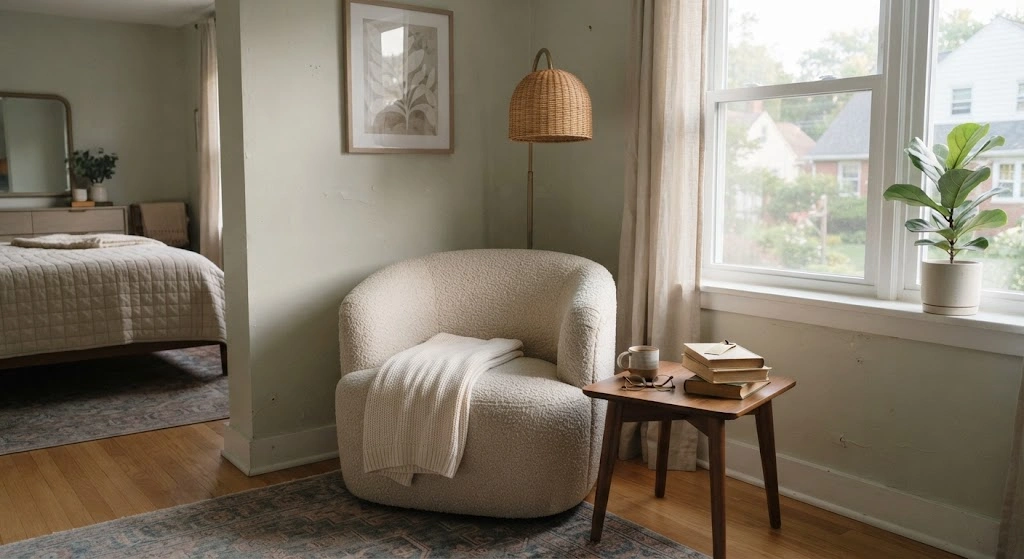
If the room has an unused corner, turn it into a small retreat instead of filling it with decorative furniture.
A compact upholstered chair, wooden stool, floor lamp, and soft throw can create a practical reading nook. Position it near a window when possible, but avoid blocking the natural path around the bed.
This approach works particularly well in larger bedrooms, where an empty corner can otherwise make the room feel unfinished.
Hang Woven Pendants Beside the Bed

Bedside lighting doesn’t have to sit on the nightstand. Hanging a woven pendant from each side of the bed frees up surface space while adding vertical texture.
Rattan, cane, raffia, and other woven materials work naturally with an earthy palette. Keep the shape relatively simple so the lighting feels intentional rather than themed.
This can also be a useful solution for small bedrooms where bulky table lamps take up valuable space.
Add a Plaster-Look Accent Wall

For a more architectural take on earthy bedroom design, use a plaster-inspired wall treatment behind the bed.
A softly mottled finish adds depth without requiring bold artwork. Depending on the room, you might choose warm ivory, mushroom, sand, or muted taupe.
If you’re renting, look for removable textured wallpaper or keep the effect to furnishings and artwork rather than altering the wall permanently.
Style With Handmade Ceramics
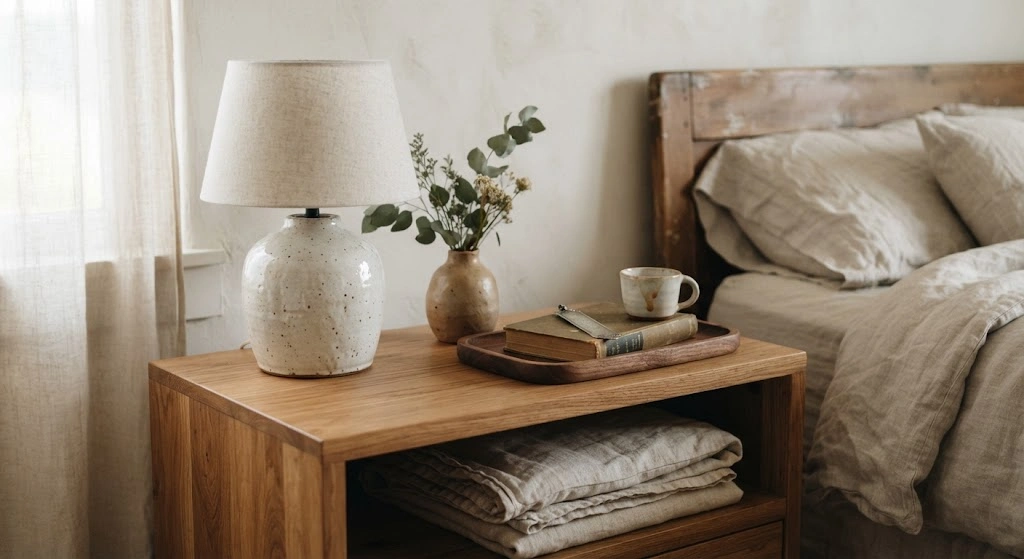
Small objects can carry a surprising amount of visual warmth.
Place a handmade ceramic lamp, irregular vase, shallow bowl, or small planter on the nightstand or dresser. Cream, sand, terracotta, and smoky brown finishes reinforce the earthy palette.
Don’t overfill every surface. A few tactile objects with different shapes will usually have more impact than a crowded collection.
Introduce Deep Walnut for Contrast
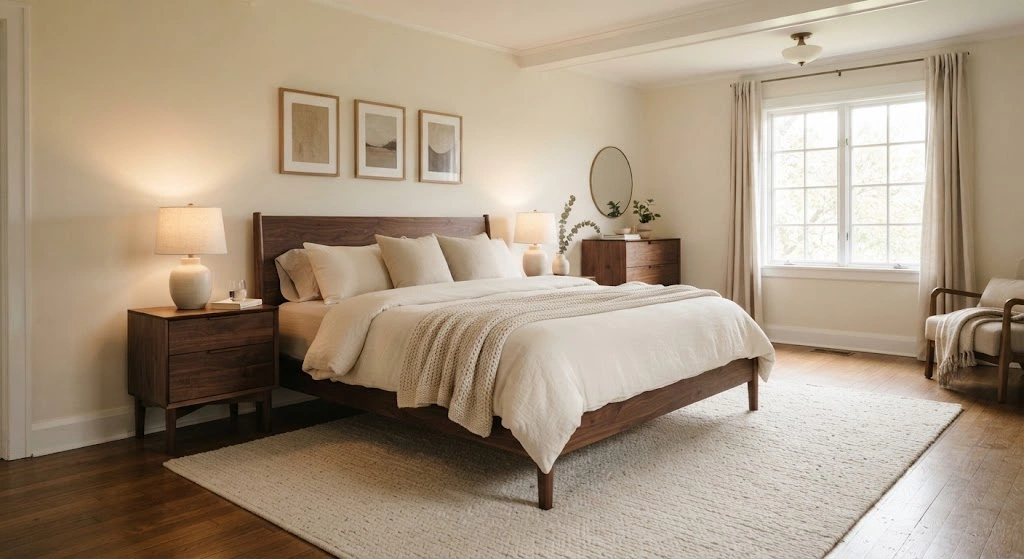
An earthy palette doesn’t need to stay pale. Deep walnut furniture can provide contrast and make creams and lighter textiles look richer.
Try walnut on the bed frame, nightstands, dresser, or a single accent chair. Pair it with warm white walls and lighter bedding so the room remains balanced.
The combination of dark wood and soft textiles works particularly well for bedrooms that receive plenty of natural light.
Layer the Bed With a Chunky Throw
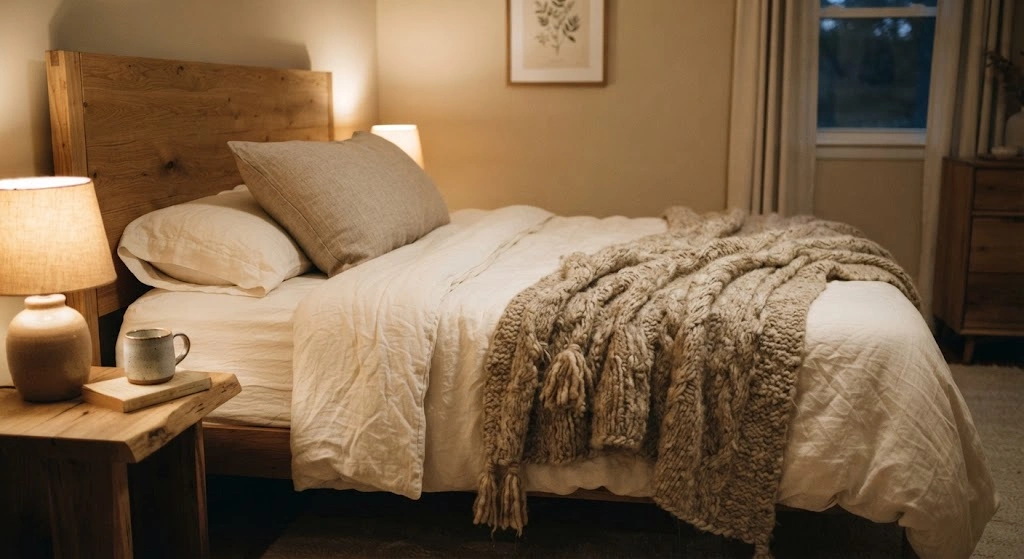
For a simple seasonal update, add one substantial knitted, woven, or brushed throw to the foot of the bed.
Choose a natural color such as oatmeal, camel, cream, mushroom, or muted brown. The heavier texture contrasts with smoother sheets and gives the bed a more inviting appearance.
Fold the throw loosely rather than arranging it too precisely. An earthy bedroom benefits from a relaxed sense of imperfection.
Bring in Branches and Dried Botanicals
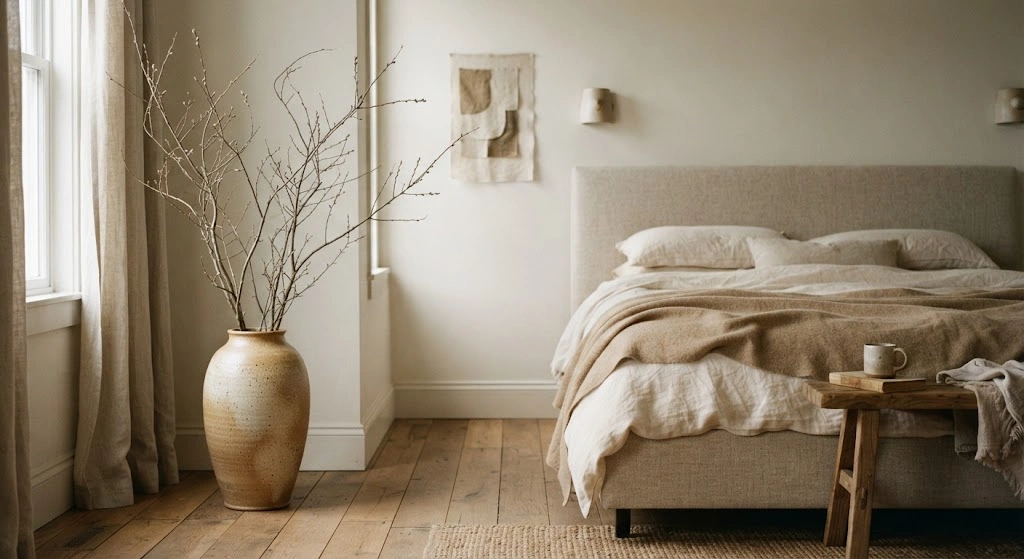
You don’t need a jungle of houseplants to bring nature into the bedroom.
A few branches in a tall ceramic vessel can create height and a subtle connection to the outdoors. Dried grasses, eucalyptus-like foliage, or seasonal branches can work depending on the look you’re after.
Use one substantial arrangement rather than scattering tiny botanical decorations throughout the room.
Pair Cream Bedding With Terracotta Accents
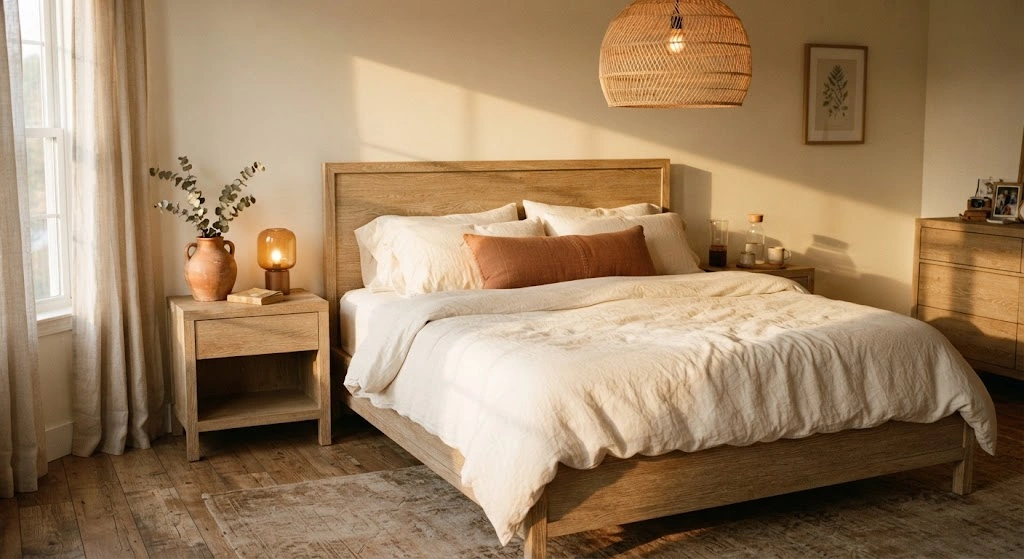
Terracotta adds warmth without requiring an entirely colorful bedroom.
Keep the foundation light with cream bedding, then introduce terracotta through pillows, a small blanket, ceramics, artwork, or a bedside accent.
Because terracotta has a naturally earthy quality, even a few small touches can give a pale bedroom more depth.
Install Simple Wood Wall Paneling
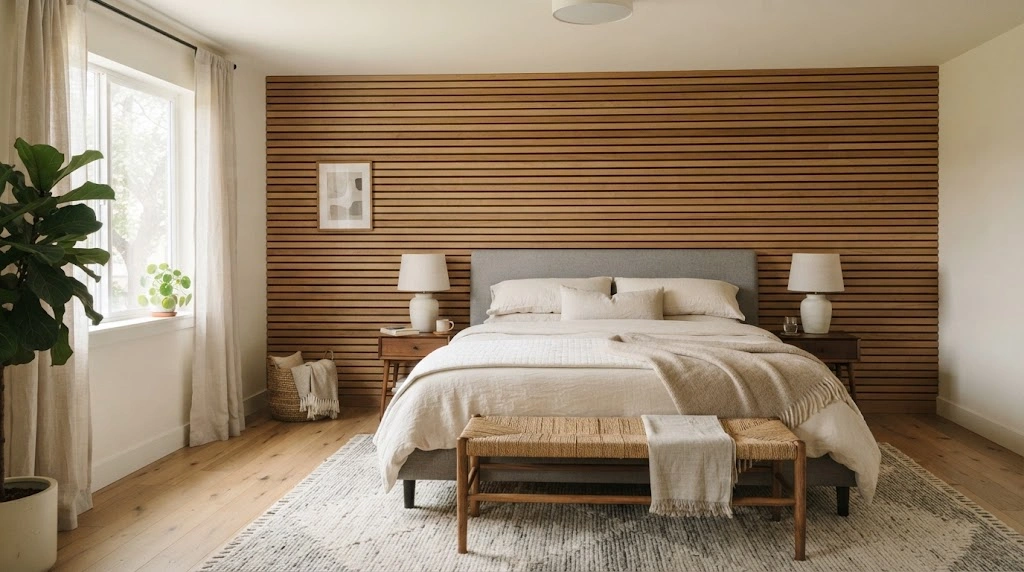
Vertical or horizontal wood paneling can create an architectural focal point behind the bed.
For a contemporary earthy room, use narrow oak slats or smooth vertical boards. For a more traditional home, painted wood paneling in a warm neutral can provide a similar sense of structure.
Keep the rest of the room restrained so the wall treatment has room to breathe.
Choose a Low, Grounded Bed Frame
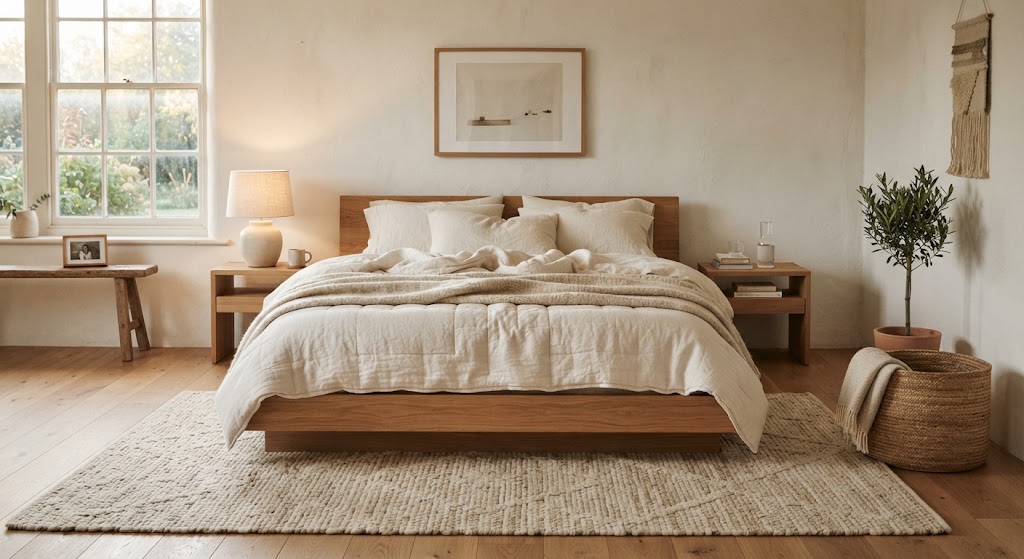
A low-profile bed can make an earthy bedroom feel relaxed and connected to the floor.
Choose a simple wood or upholstered platform frame and keep the bedding loose and generously layered. A low bed pairs especially well with oversized rugs, floor-level baskets, and low nightstands.
This approach is particularly effective when the goal is a quiet, minimalist retreat rather than a highly formal bedroom.
Mix Wood Tones Without Making Them Match
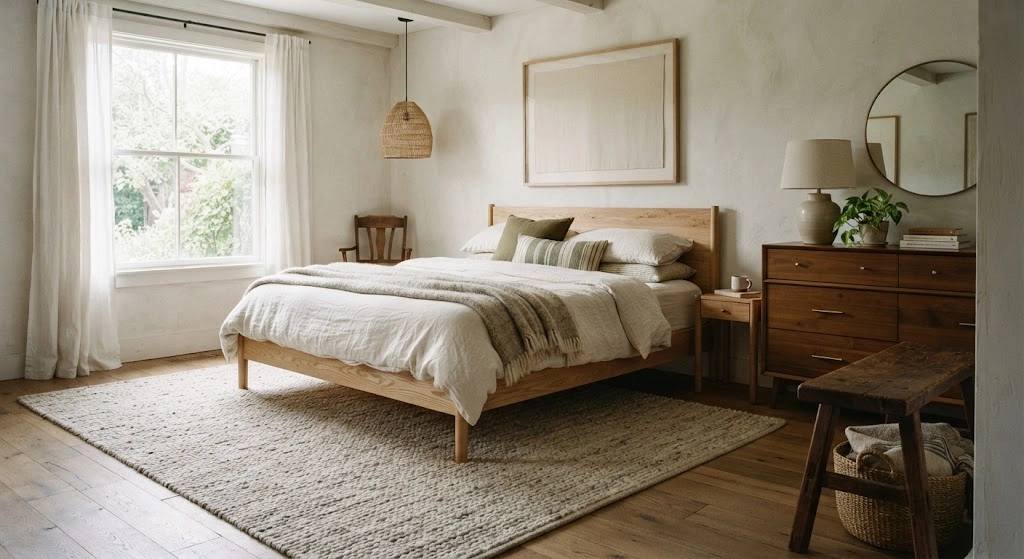
A collected bedroom often looks better when every wooden piece isn’t identical.
Combine a pale oak bed with a darker walnut stool, or a medium-toned dresser with a lighter nightstand. The key is to repeat warmth rather than force an exact finish match.
Keep other materials consistent—such as linen, wool, cane, or ceramic—so the different woods feel intentionally connected.
Use a Warm, Layered Lighting Plan
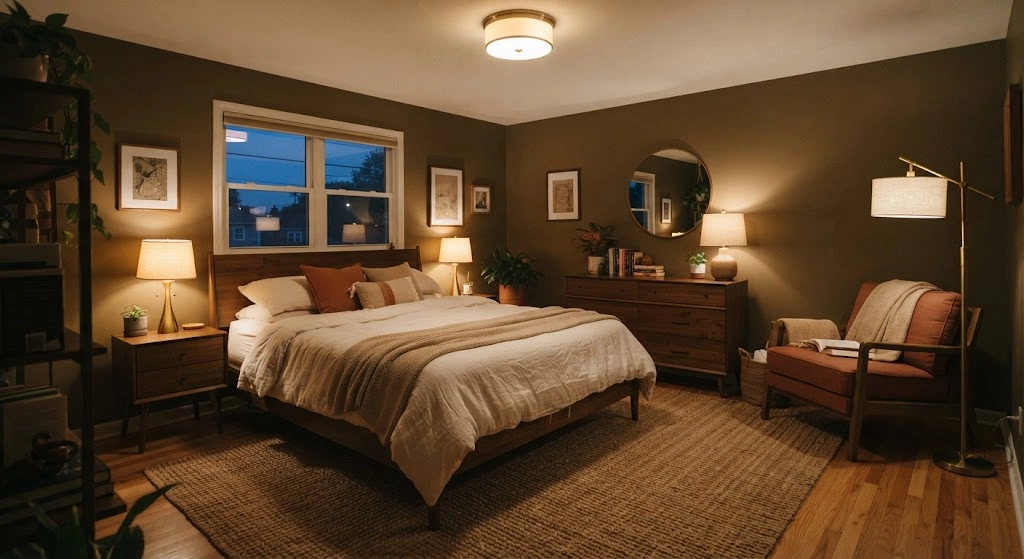
Even a beautifully decorated bedroom can feel cold under a single bright ceiling fixture.
Instead, combine ambient, task, and accent lighting. A soft ceiling fixture can provide general illumination, while bedside lamps create a warmer pool of light. A floor lamp in a reading corner adds another layer.
Choose bulbs with a warm residential appearance and use dimmable fixtures where practical.
Add a Soft Window Treatment
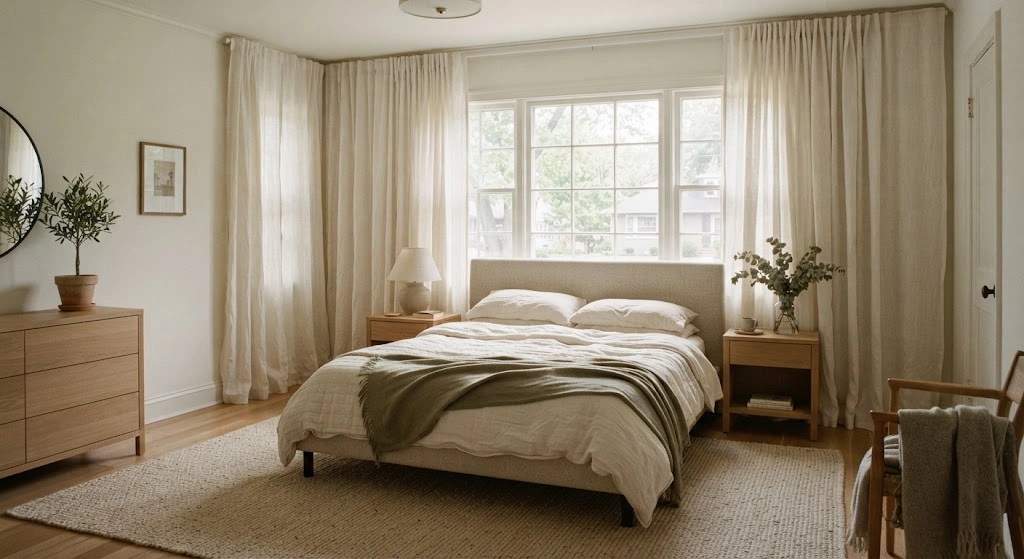
Curtains can dramatically change the mood of a bedroom by filtering daylight and softening hard architectural lines.
Choose linen or linen-look panels in ivory, flax, oatmeal, or warm taupe. Hang them high and allow enough width for generous folds when they’re closed.
For an especially peaceful effect, combine lightweight curtains with simple woven shades or another practical window treatment suited to the room.
Finish With One Meaningful Focal Piece

An earthy bedroom doesn’t need a wall covered in decoration. One carefully chosen focal piece can give the room personality while preserving its calm.
Consider a large abstract artwork in muted natural colors, an oversized woven wall hanging, a vintage landscape, or a sculptural mirror. Choose something that echoes the room’s materials or palette rather than introducing an unrelated accent.
Leave some surrounding wall space empty. Negative space helps the focal piece feel deliberate.
How to Pull an Earthy Bedroom Together
The easiest way to keep an earthy bedroom cohesive is to repeat a few materials and colors instead of trying to include every natural element at once.
Start with the largest surfaces: walls, flooring, rug, and bedding. Then add one or two strong material cues, such as oak furniture or woven lighting. Finally, introduce smaller accents through ceramics, plants or branches, artwork, and textiles.
A useful palette might combine warm white + oak + flax + olive, or cream + walnut + clay + oatmeal. You can also make the room moodier with deeper browns, charcoal-brown accents, and richer wood tones.
If the room is small, prioritize texture and lighting over large decorative pieces. If you’re renting, focus on bedding, rugs, curtains, lamps, artwork, and freestanding furniture. If you’re renovating, wall treatments and built-in millwork can provide a stronger architectural foundation.
The goal isn’t to make every object look rustic. It’s to create a room where the materials feel warm, the colors feel connected, and the lighting encourages you to slow down.