28 Stunning Vintage Wall Decor Ideas to Transform Any Room
Vintage wall decor ideas can make a room feel collected rather than simply decorated. The trick is to combine pieces with history, texture, and visual weight without turning the walls into a crowded gallery of unrelated objects. An antique mirror, an old botanical print, a collection of decorative plates, or even a salvaged architectural fragment can give an otherwise ordinary room a stronger sense of personality.
The best vintage-inspired walls also leave room for modern life. You can mix thrifted finds with contemporary furniture, repeat one color to make mismatched pieces feel intentional, or use a single statement object when a full gallery wall would overwhelm the space.
Here are 28 distinct ways to bring vintage character to bedrooms, living rooms, dining spaces, hallways, kitchens, and home offices.
Create a Collected Vintage Gallery Wall
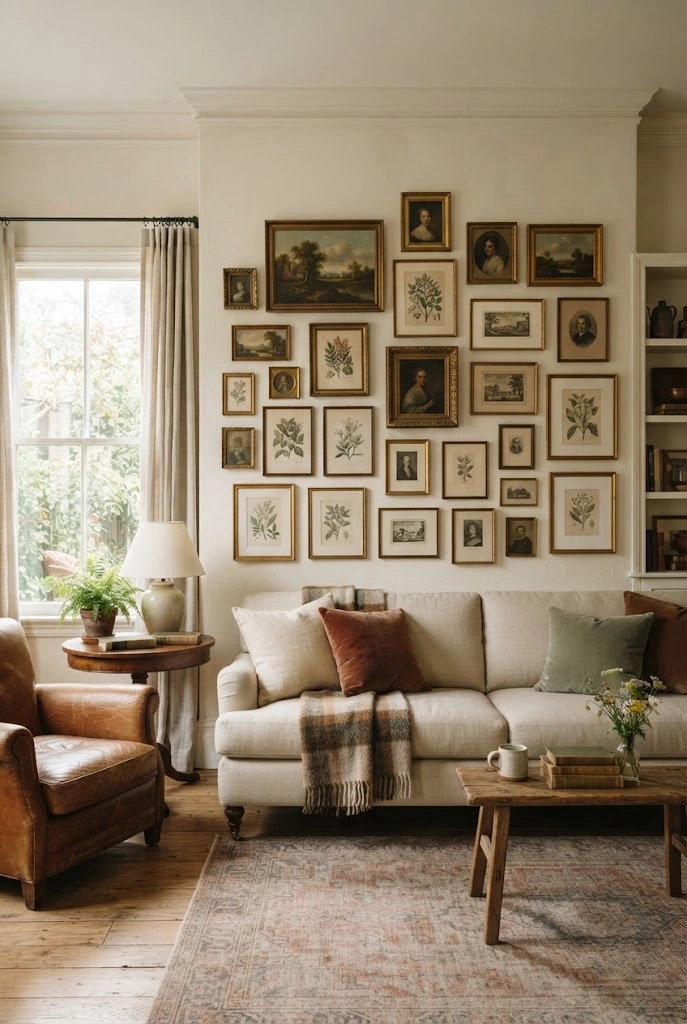
A gallery wall is one of the easiest ways to introduce a vintage look because it allows different eras, frames, and artwork styles to coexist. Combine landscape paintings, botanical illustrations, portraits, sketches, and small decorative prints rather than buying a perfectly coordinated set.
For a cohesive result, repeat one or two visual elements—such as dark wood frames, muted greens, or warm brass—throughout the arrangement. Lay everything out on the floor before hanging it, especially if your pieces vary considerably in size.
Hang an Oversized Antique Mirror
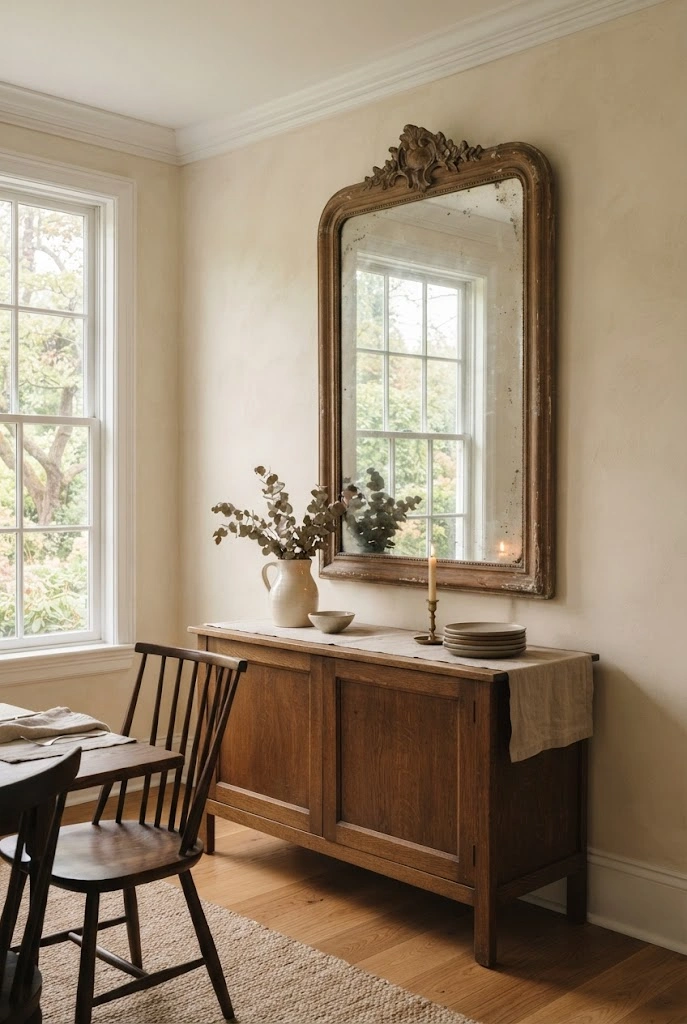
An oversized mirror can function as both wall decor and a practical way to reflect light. Look for an ornate carved frame, aged wood, or an antique finish rather than a perfectly pristine modern frame.
In a smaller room, let the mirror become the dominant wall element and keep the surrounding decoration restrained. Position it where it reflects a window, attractive furniture, or another architectural feature instead of a cluttered corner.
Build a Vintage Plate Display
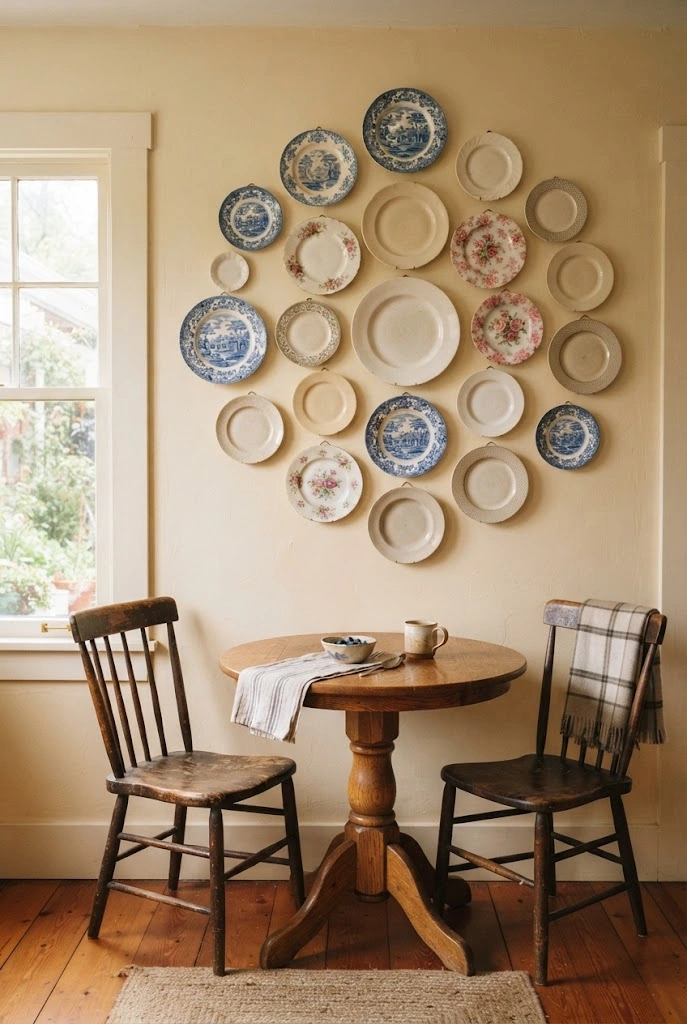
Decorative plates can create an unexpectedly graphic wall installation in kitchens, dining rooms, breakfast nooks, and dining areas. Mix floral china, transferware, simple painted ceramics, and a few plain pieces to keep the collection from looking too uniform.
A loose cluster generally feels more collected than a rigid grid. Arrange the largest plates first, then fill visual gaps with smaller pieces.
Layer Framed Botanical Prints
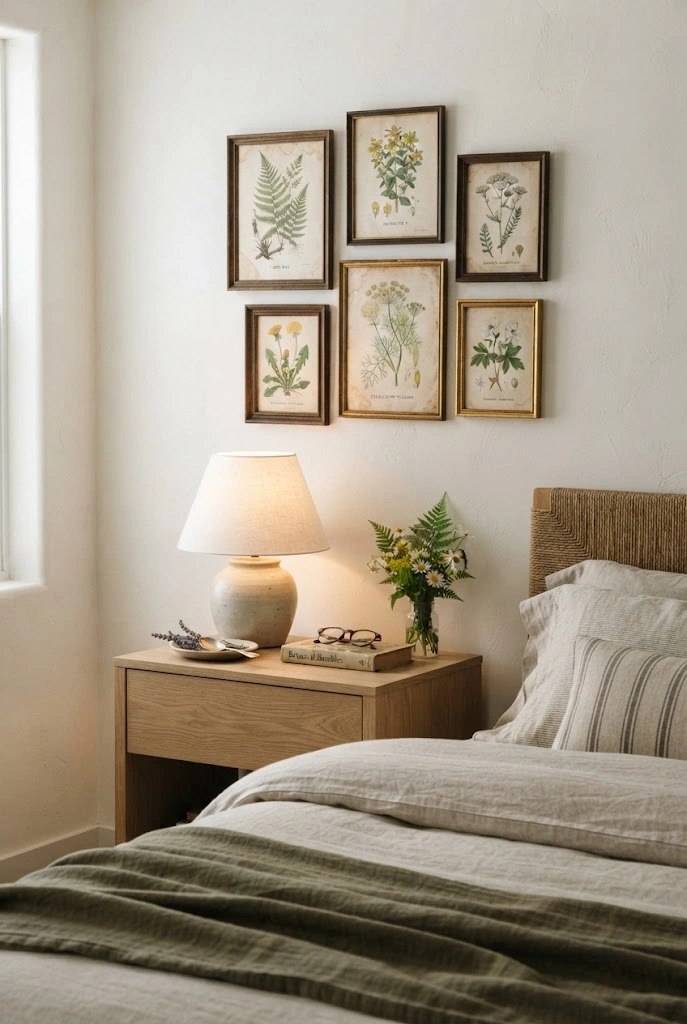
Botanical artwork works particularly well when you want vintage character without a heavily ornate look. Choose several related plant studies in aged frames and hang them in a compact grouping.
The restrained subject matter gives you flexibility with color. Olive, sage, cream, ochre, and faded brown can connect naturally with wood furniture and linen textiles.
Use an Antique Tapestry as a Focal Point
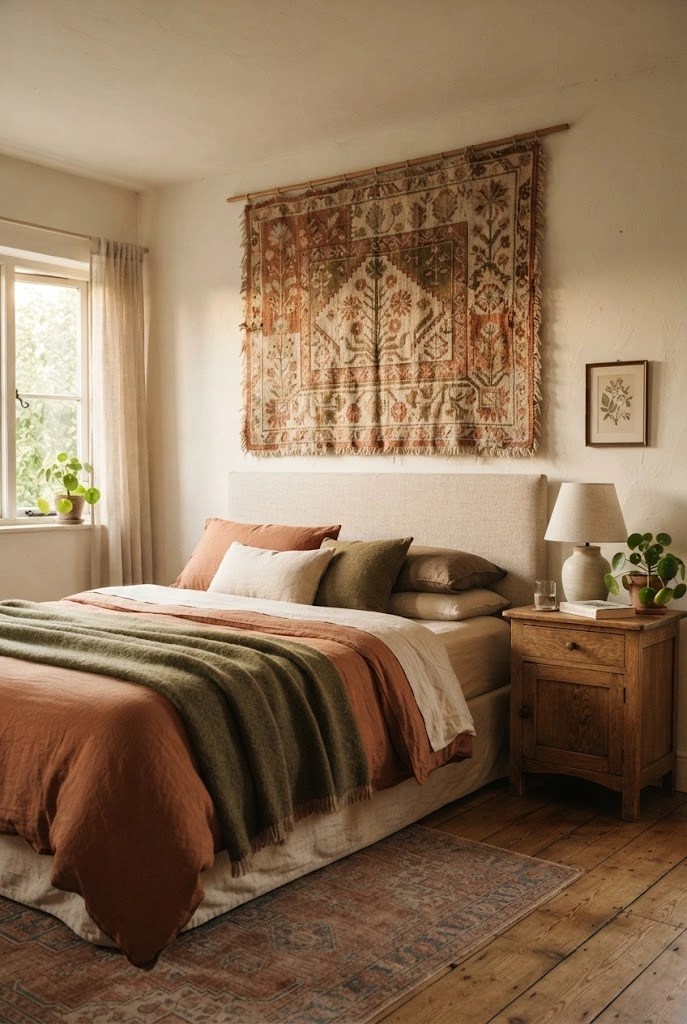
Textiles bring softness to walls that might otherwise feel dominated by hard frames and glass. A vintage-inspired tapestry, woven textile, or antique-style textile panel can become the focal point above a bed, sofa, or console.
Because textiles already have strong texture, pair them with simpler furniture and avoid surrounding them with too many competing patterns.
Frame an Old Map
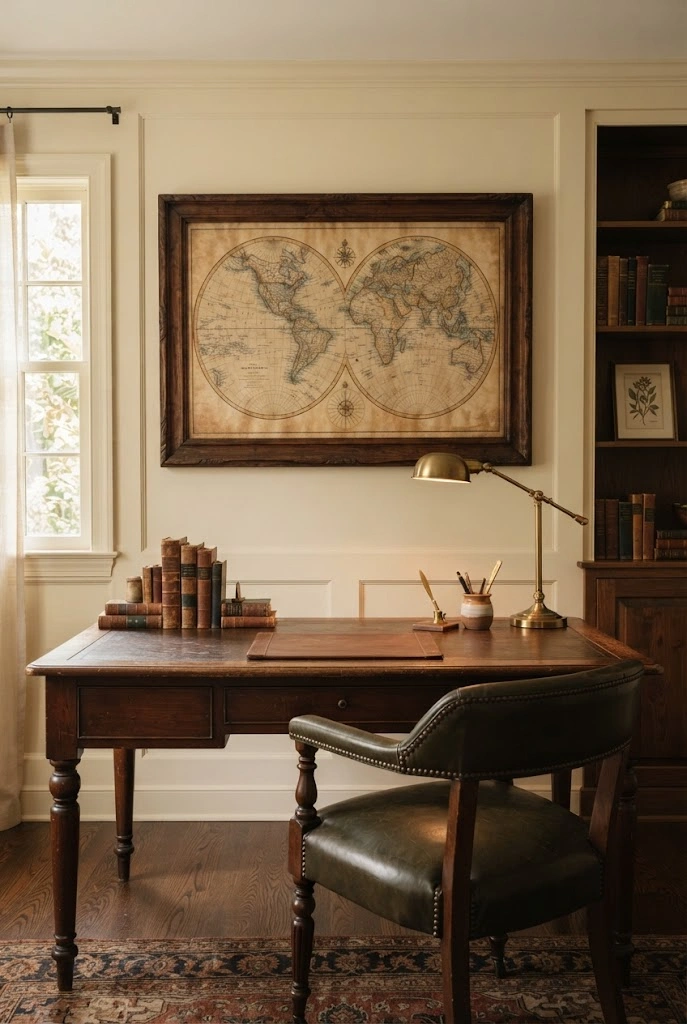
An antique map can add a sense of history to an office, hallway, library, or living room. Choose a map with visual character rather than focusing only on geographic content.
A substantial wooden frame can make the piece feel intentional, while a restrained surrounding wall keeps the map from competing with itself.
Display an Ornate Clock
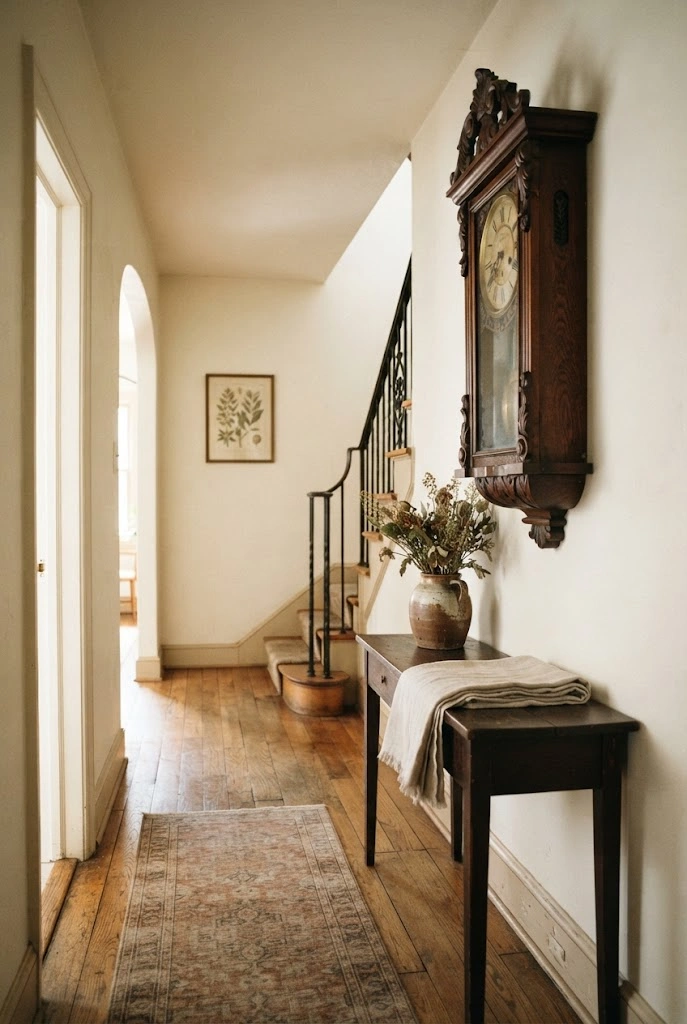
An antique wall clock can provide a strong focal point without requiring a large collection. Choose a clock with a case that complements the room’s existing wood, brass, or painted finishes.
In a dining room or hallway, a clock can also establish a vertical focal point above a console or sideboard.
Try a Vintage Mirror Trio
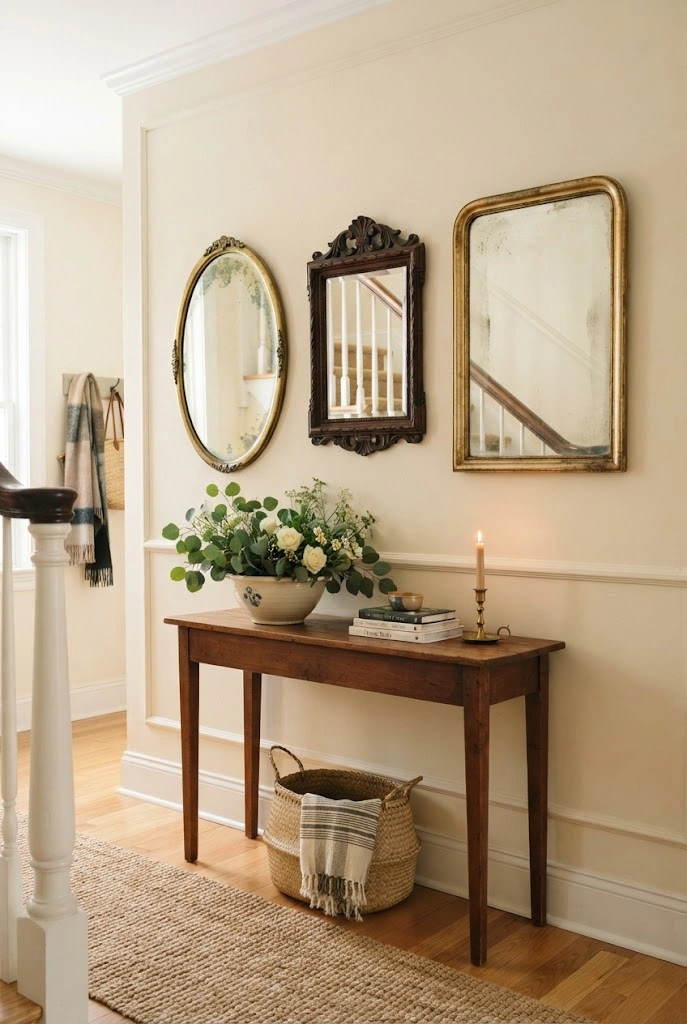
Instead of one large mirror, group three smaller vintage mirrors with different frames. This works especially well over a long console or along a wide hallway wall.
Keep some relationship between the frames—similar tones, shapes, or finishes—so the arrangement feels curated instead of random.
Mount a Salvaged Architectural Fragment
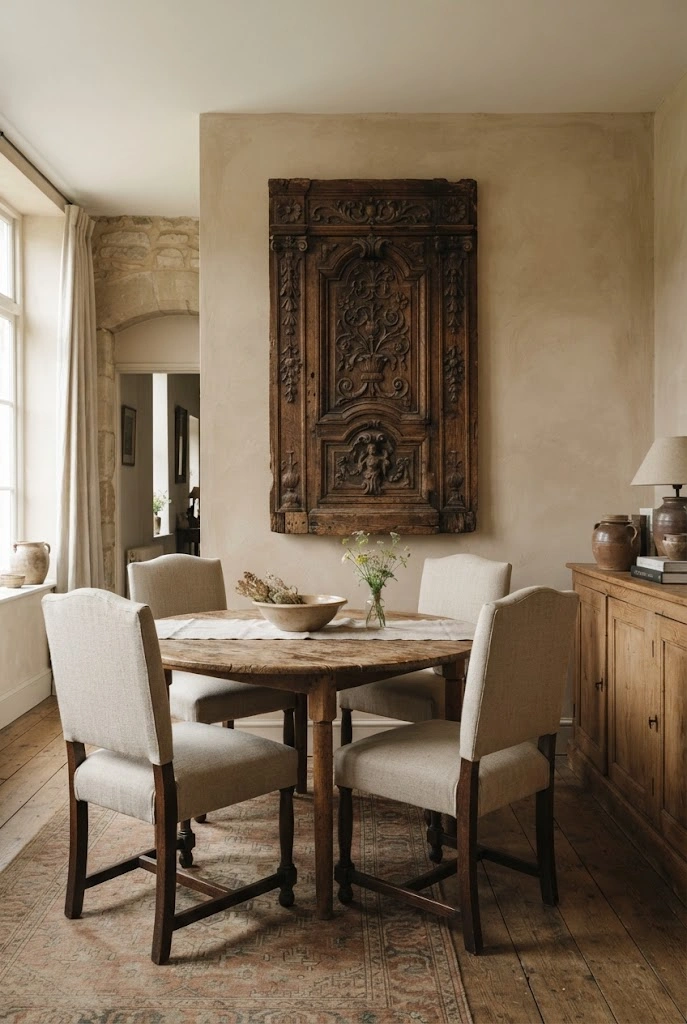
Old corbels, carved panels, shutters, molding fragments, and decorative woodwork can become wall art when displayed intentionally. This is particularly effective in older homes where the architectural character feels natural.
Mount the piece securely and give it breathing room. One substantial fragment can be more compelling than a wall crowded with small objects.
Hang a Pair of Vintage Portraits
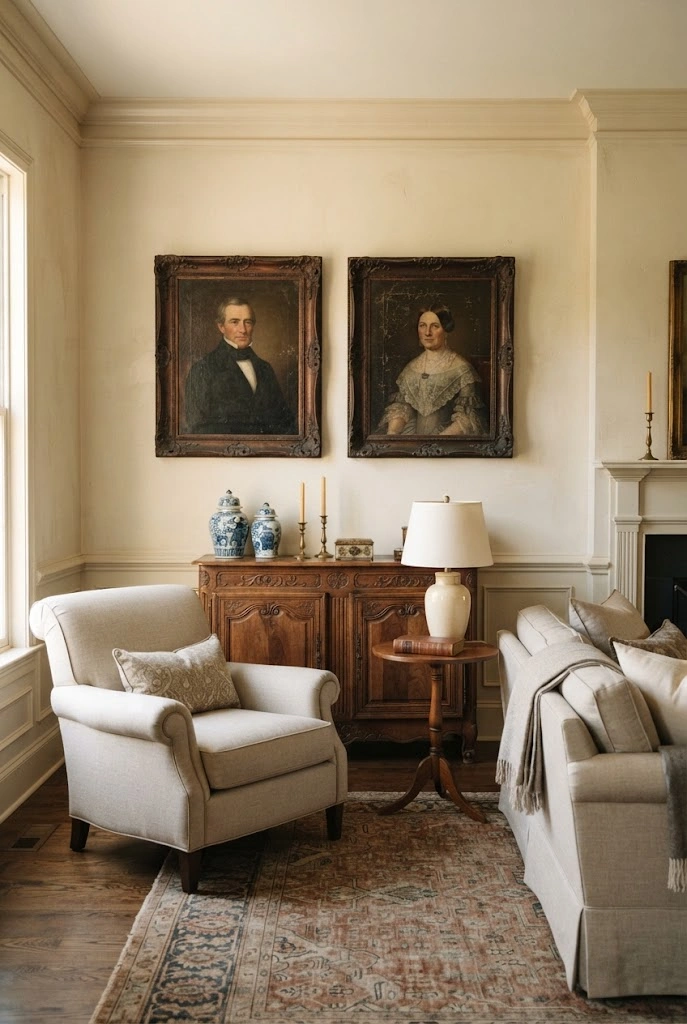
A matched pair of portraits can create symmetry while still feeling historic. Look for paintings or prints with related framing, scale, or subject matter.
Place them over a console, fireplace, or symmetrical furniture arrangement. The repetition makes this approach especially useful in rooms where you want a more orderly vintage atmosphere.
Turn a Narrow Shelf Into a Picture Ledge
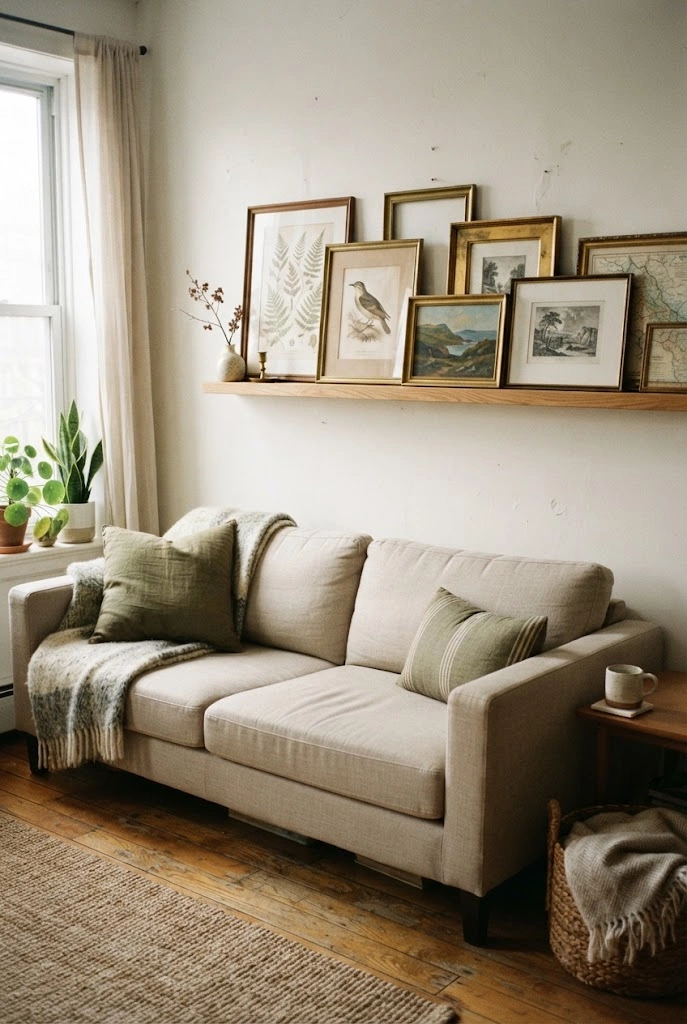
A shallow picture ledge gives you the flexibility to layer vintage art rather than committing every piece to a fixed position. Overlap framed prints, postcards, small paintings, and one or two decorative objects.
This approach works particularly well for renters because the display can be changed without repeatedly rearranging a gallery wall.
Style a Vintage Still-Life Painting
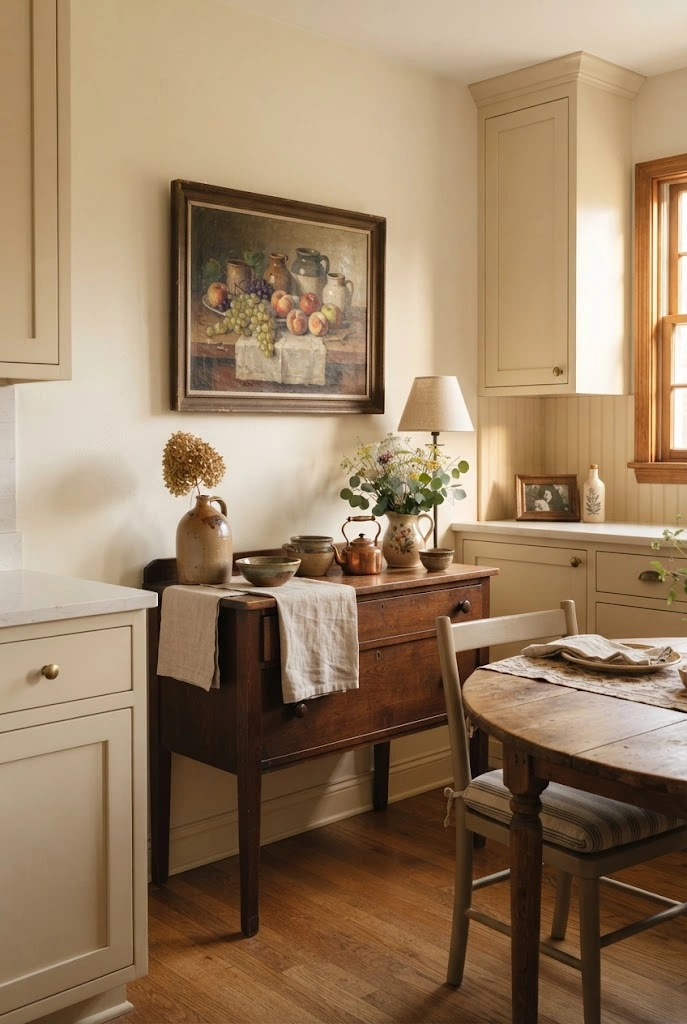
One carefully chosen still-life painting can give a dining room or kitchen a distinctly collected feel. Look for fruit, flowers, vessels, or tabletop scenes in muted colors that connect with the room.
Hang it where it has enough uninterrupted wall space to read as a focal point rather than getting lost among competing objects.
Make a Vintage-Inspired Peg Rail Display
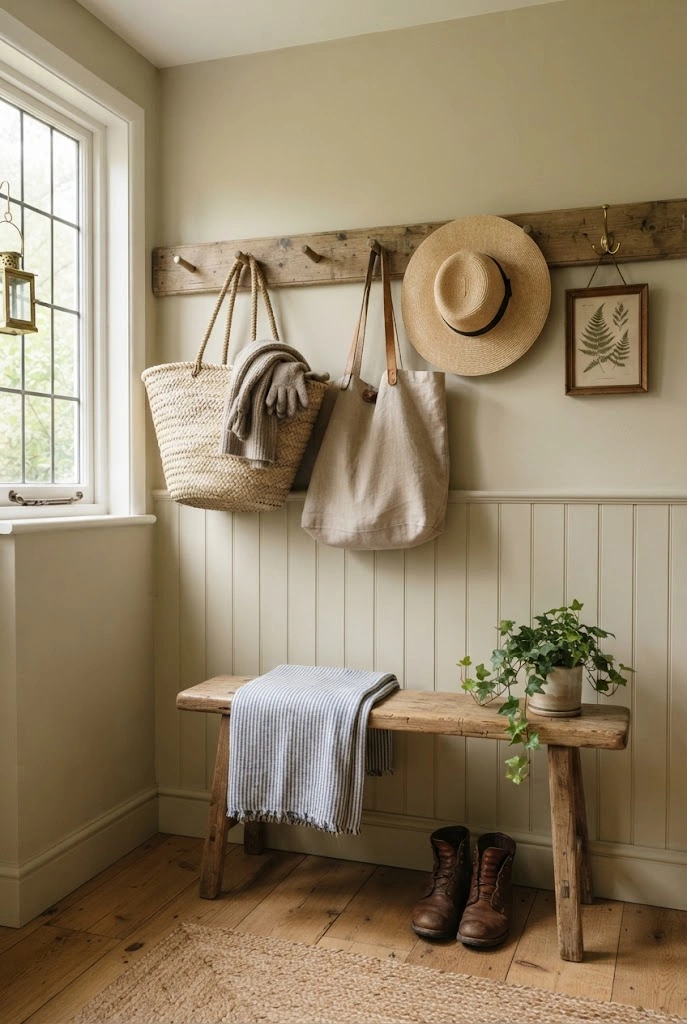
A wooden peg rail can bridge decoration and function. Hang baskets, woven bags, aprons, small framed pieces, or antique kitchen tools from it to create a useful wall display.
Choose a naturally aged wood rail or a simple painted version rather than making every component equally distressed.
Arrange Antique Frames Without Artwork
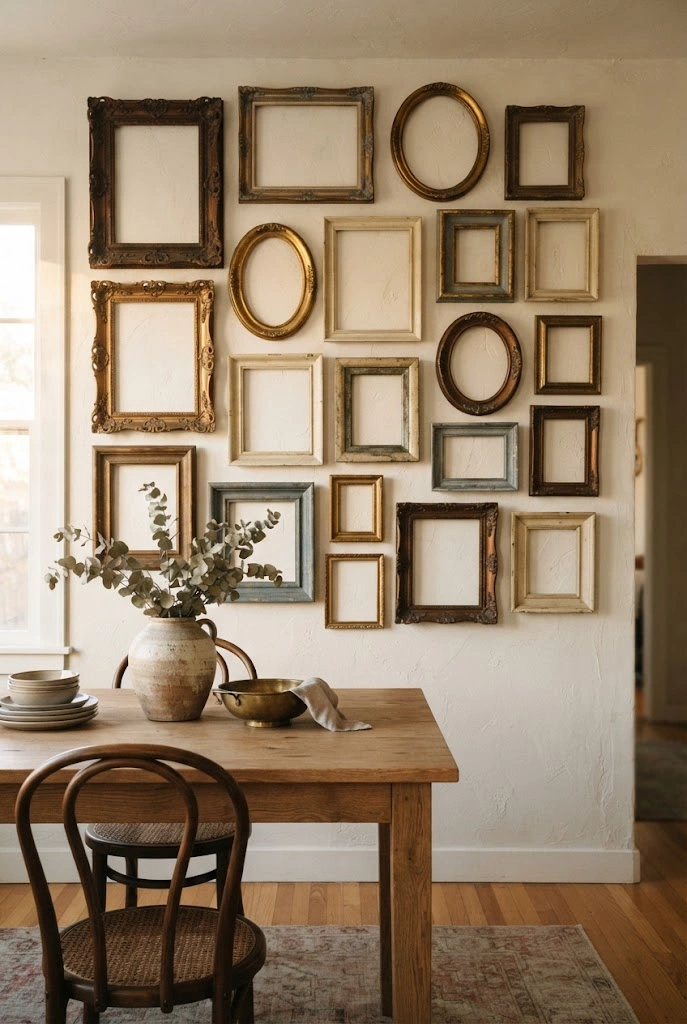
Empty antique frames can be surprisingly effective when treated as sculptural objects. Group several ornate frames in different sizes on one wall, allowing their carved profiles and patina to provide the visual interest.
This works particularly well when the room already contains strong artwork or patterns and you want texture without adding more imagery.
Create a Vintage Cookbook Wall
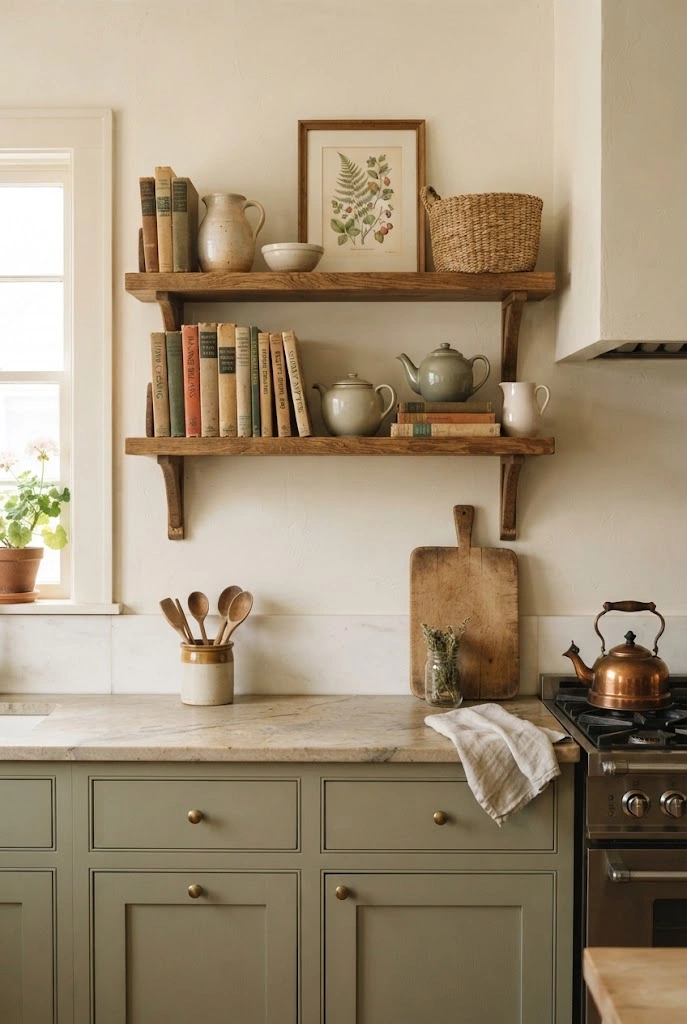
In a kitchen, old cookbooks can become part of the wall decor when displayed on shallow shelves. Choose books with attractive covers and spines, then mix them with a few ceramics or small framed prints.
Keep the shelves shallow so the display remains decorative rather than becoming bulky kitchen storage.
Use a Brass Sconce as Wall Art
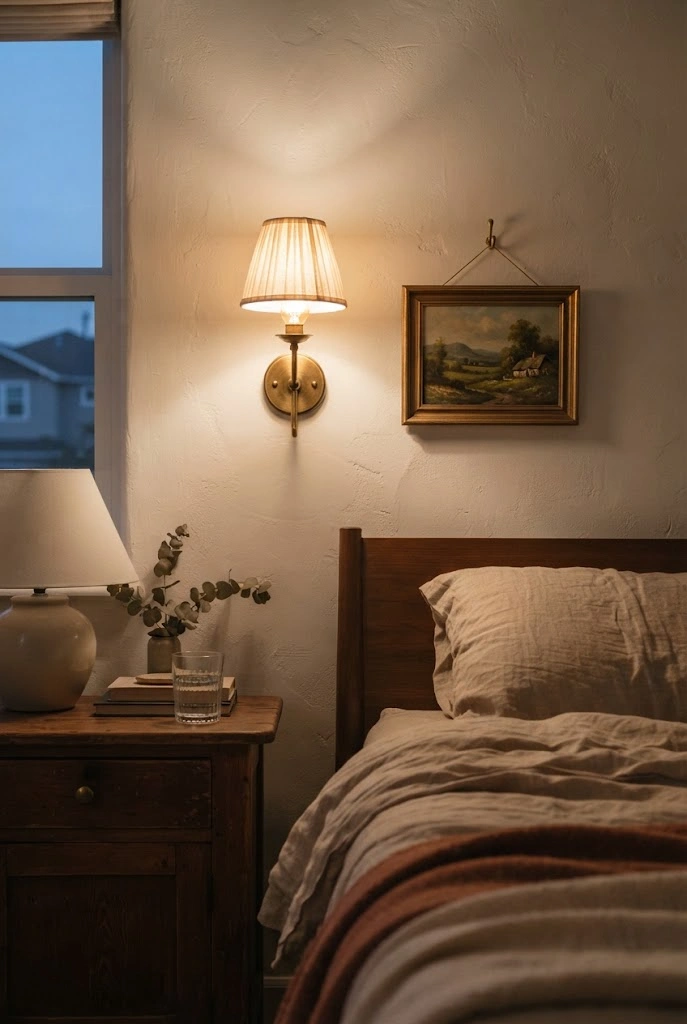
Lighting can contribute to vintage character while solving a practical need. A brass, aged bronze, or antique-style wall sconce can act as a decorative focal point beside artwork, a bed, or a mirror.
Choose a fixture whose scale matches the wall. Oversized lighting can overwhelm a small arrangement, while a tiny fixture may disappear.
Frame Vintage Fabric Samples
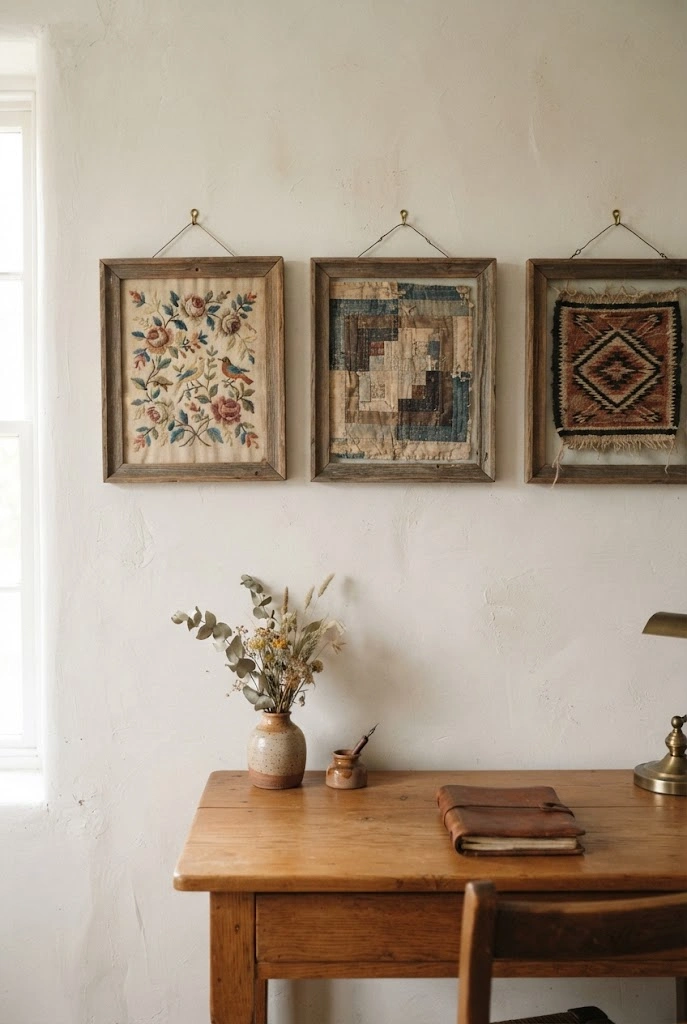
Small pieces of antique textile, embroidery, quilt blocks, or needlework can be framed as miniature works of art. This is a useful way to display a textile that is too delicate or small to hang on its own.
Use simple frames if the fabric already has elaborate pattern and texture.
Add a Decorative Wall Basket Collection
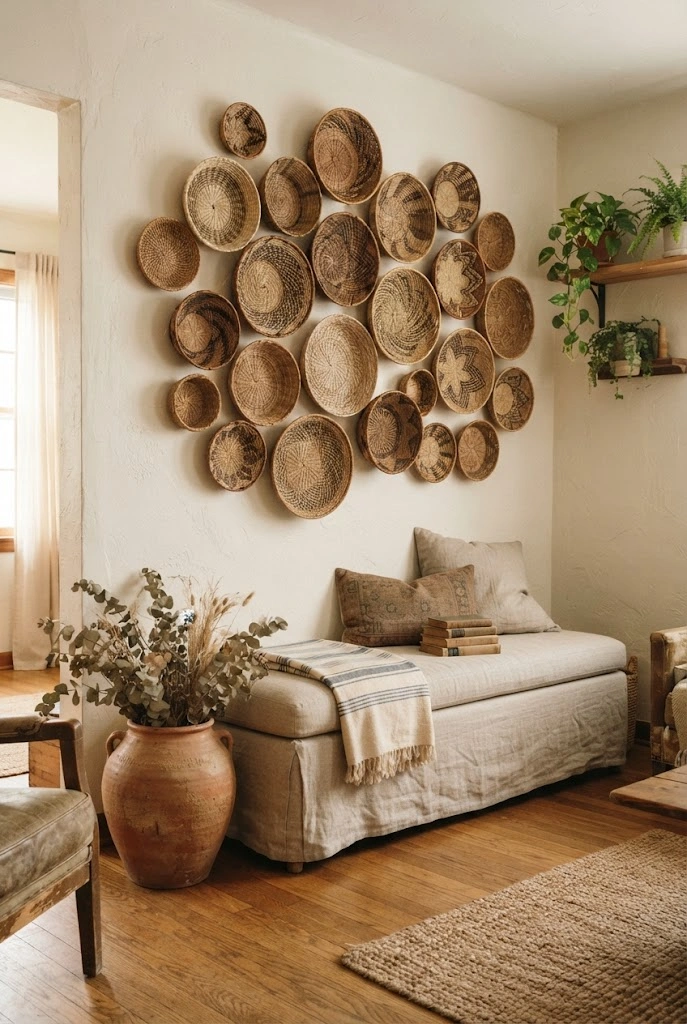
Woven baskets introduce natural texture and can soften a plain wall. Mix shallow baskets with different weaving patterns and diameters, keeping the palette relatively related.
A basket arrangement works especially well in casual living rooms, breakfast areas, and bedrooms where a relaxed vintage feel is appropriate.
Display Antique Mirrors Above a Fireplace
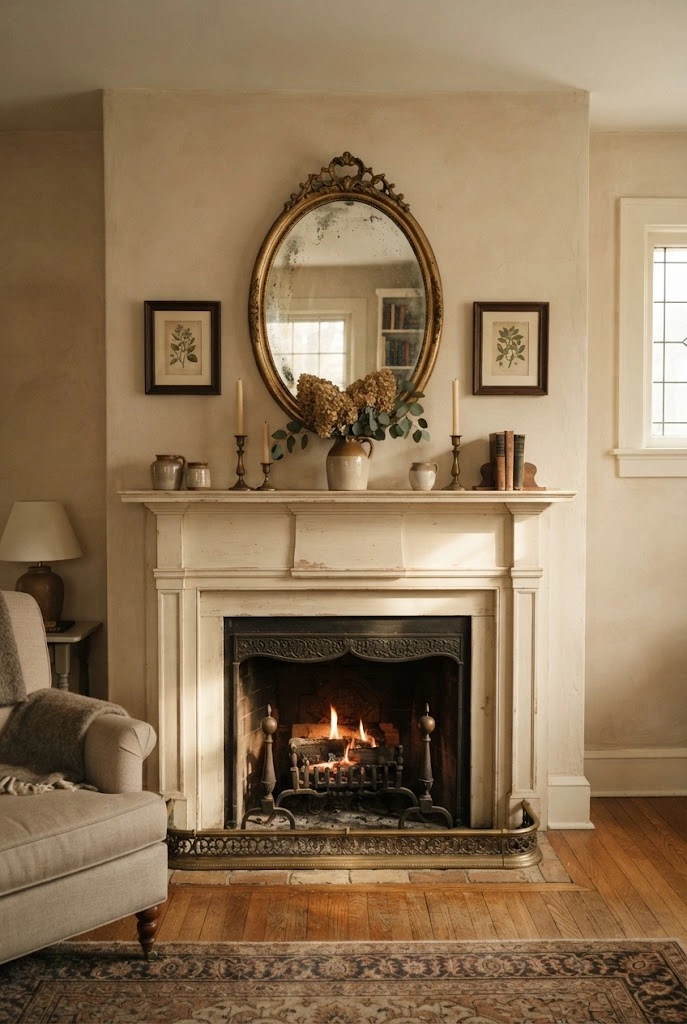
A fireplace provides a natural architectural anchor for layered vintage decor. Instead of one oversized mirror, consider combining a central mirror with smaller framed pieces or candlestick-style wall objects.
Keep the mantel relatively restrained so the wall remains the main focal point.
Hang a Vintage Quilted Wall Textile
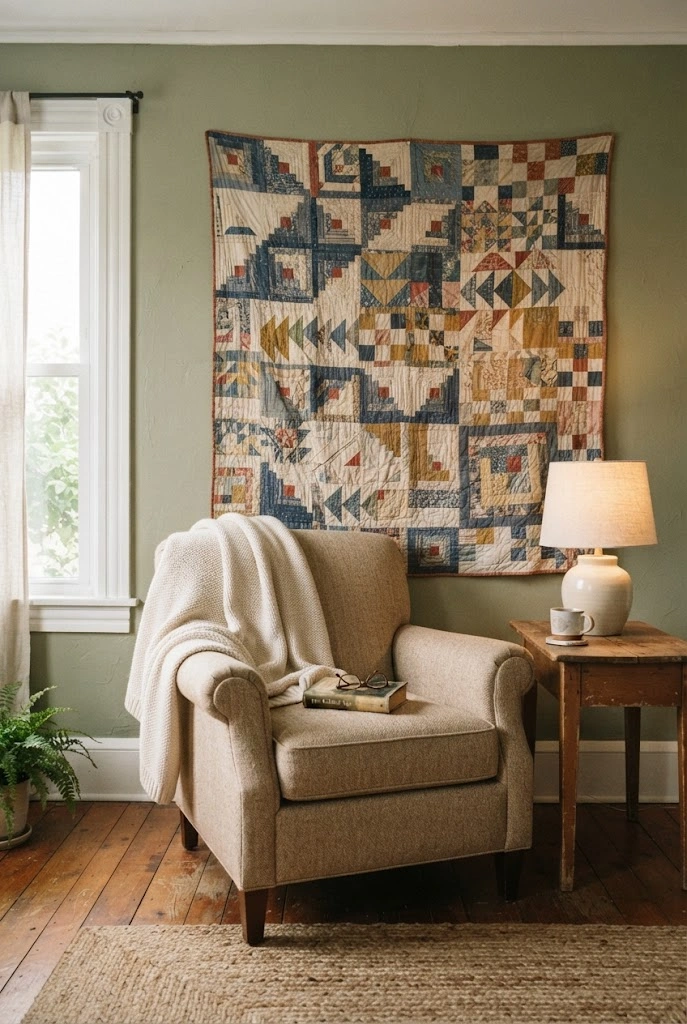
A quilt can bring color, softness, and craftsmanship to a bedroom, nursery, reading nook, or living room. Rather than matching every color in the quilt, pull one or two quieter tones into the surrounding furnishings.
Use a textile hanging method that distributes its weight appropriately, especially for older or delicate pieces.
Mix Vintage and Modern Frames
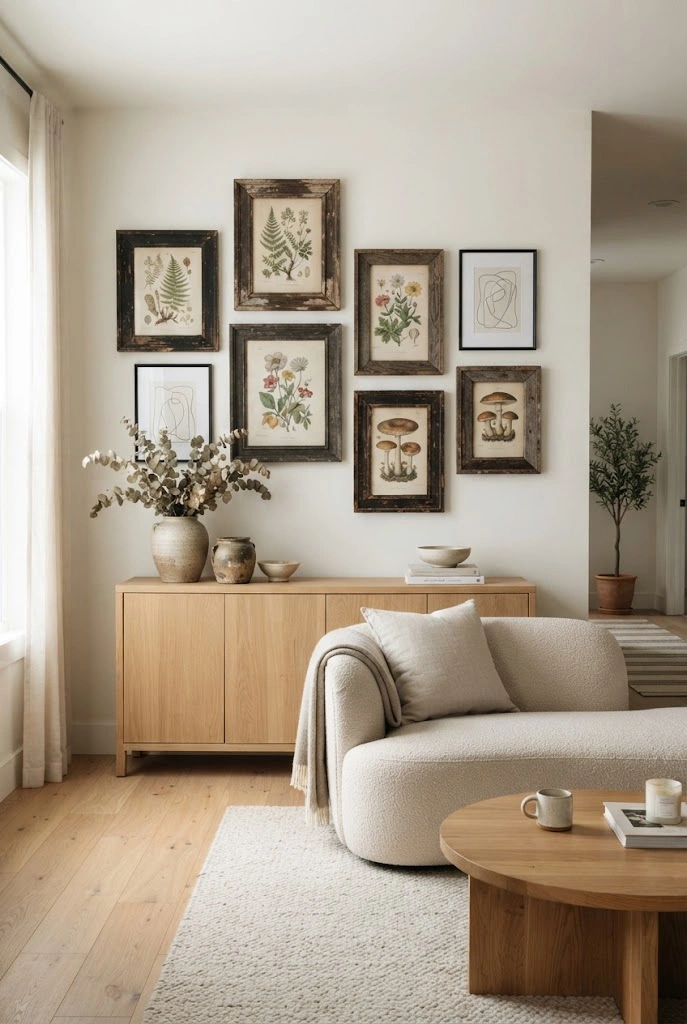
You don’t need every piece of wall decor to be genuinely antique. Pair vintage artwork with clean contemporary frames to create a more current interpretation of the style.
The contrast works especially well in newer homes where entirely traditional decor might feel disconnected from the architecture.
Style a Vintage Wall Niche
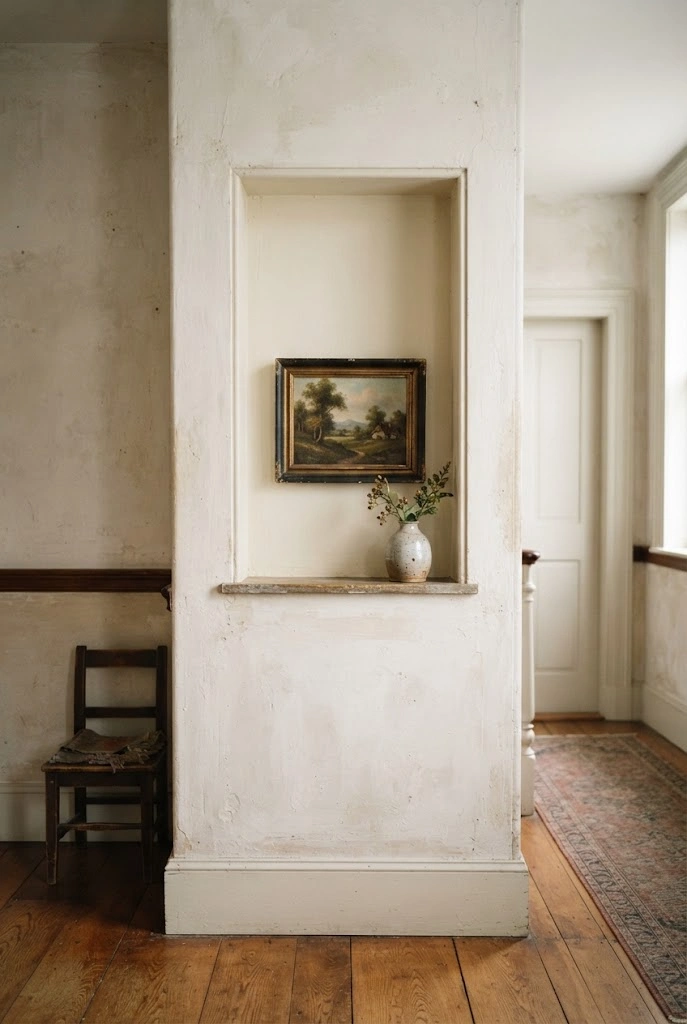
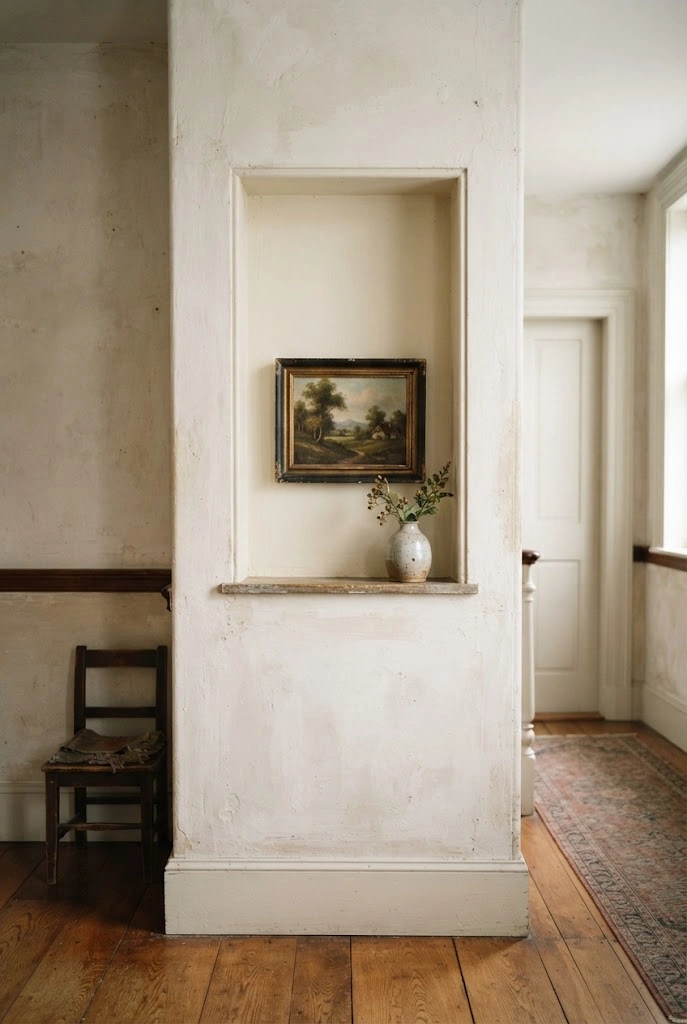
If your home has a recessed niche, treat it as a miniature display gallery. A small antique painting, ceramic plaque, mirror, or decorative object can make the architectural recess feel intentional.
Avoid filling every inch. Negative space helps the niche retain its architectural character.
Hang Vintage Botanical Plates
Botanical plates provide a different look from framed prints while preserving the natural subject matter. Search for ceramic or porcelain pieces featuring birds, flowers, herbs, or scientific-style illustrations.
Arrange them in a vertical grouping in a narrow dining area or kitchen where a horizontal gallery might not fit.
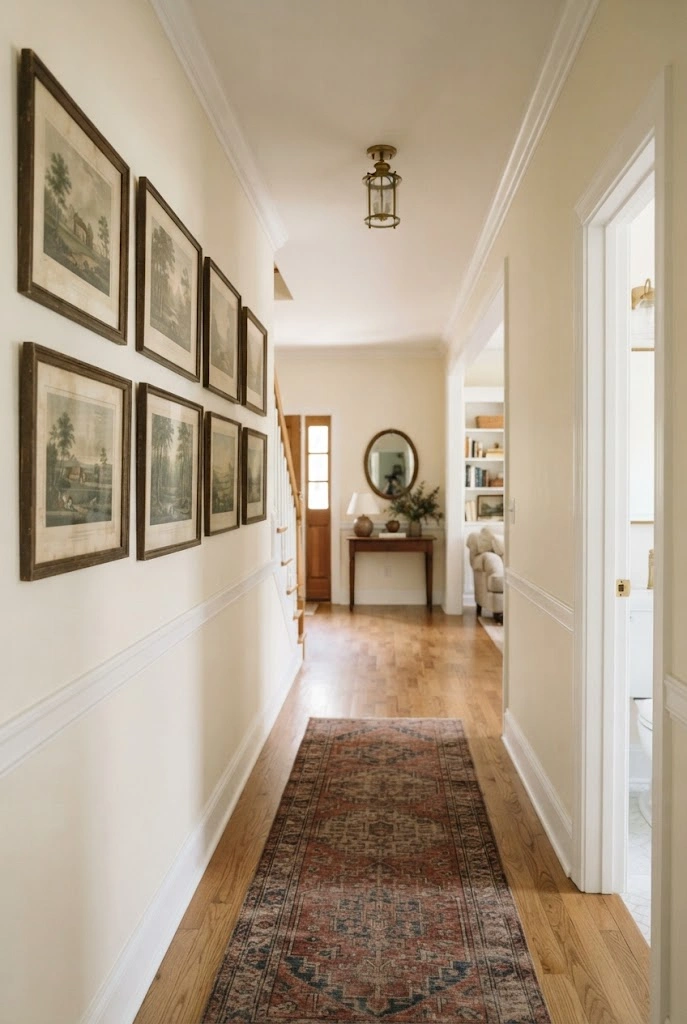
Give a Hallway a Vintage Art Runner
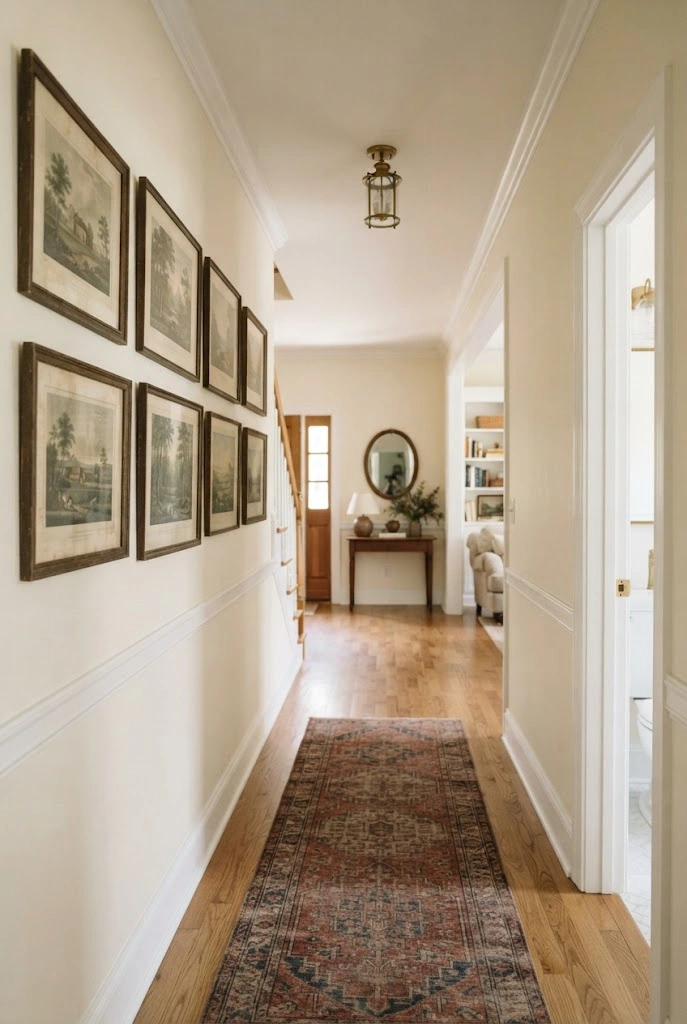
Long hallways benefit from repetition. Hang a series of similarly sized vintage prints along one side, keeping the spacing relatively consistent to create a visual rhythm.
This technique can make a passageway feel designed rather than treated as leftover wall space.
25. Display a Collection of Antique Tools
Old kitchen tools, gardening tools, sewing implements, or woodworking pieces can become wall decor when arranged as a deliberate collection. Their worn materials add a tactile quality that framed artwork cannot always provide.
Use a restrained number of objects and leave enough wall visible around them so the collection reads as intentional.
Build a Salon-Style Artwork Wall
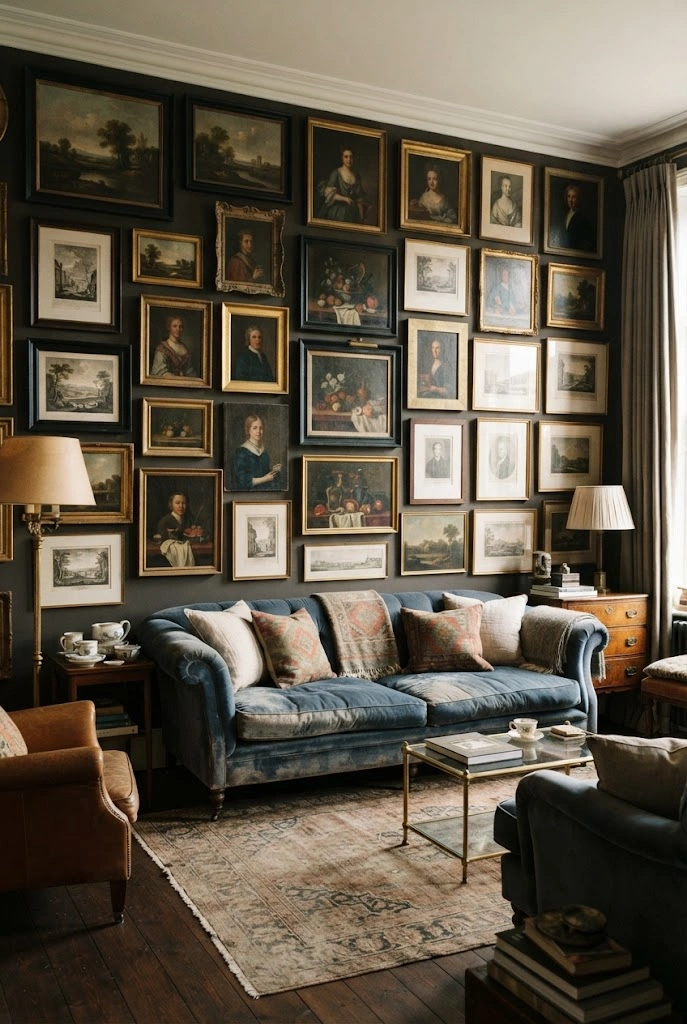
For a more traditional maximalist approach, arrange paintings and prints in a dense salon-style composition. The pieces should overlap visually without actually obscuring one another.
Unify the collection with repeated frame tones or a restrained color palette. The result should feel accumulated over time rather than purchased as one matching set.
Use a Large Vintage Textile Map or Banner
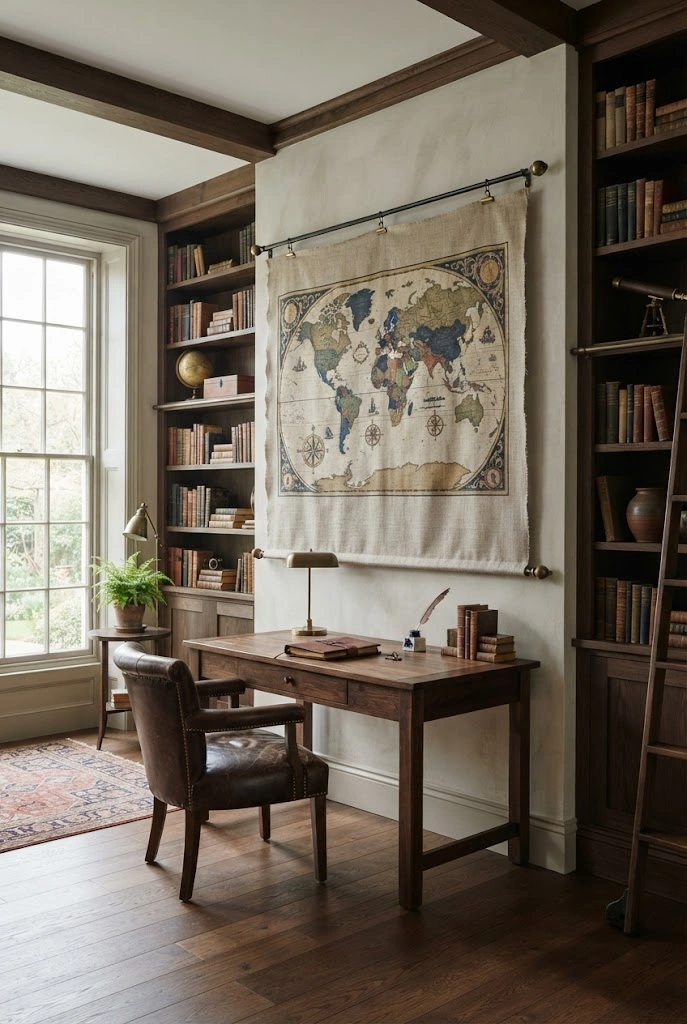
For rooms that need a single strong statement, a large fabric map, historical-style banner, or textile panel can create visual impact without requiring dozens of small objects.
Because the piece is substantial, balance it with simple furniture and generous open space around the installation.
Combine Vintage Art With Everyday Objects
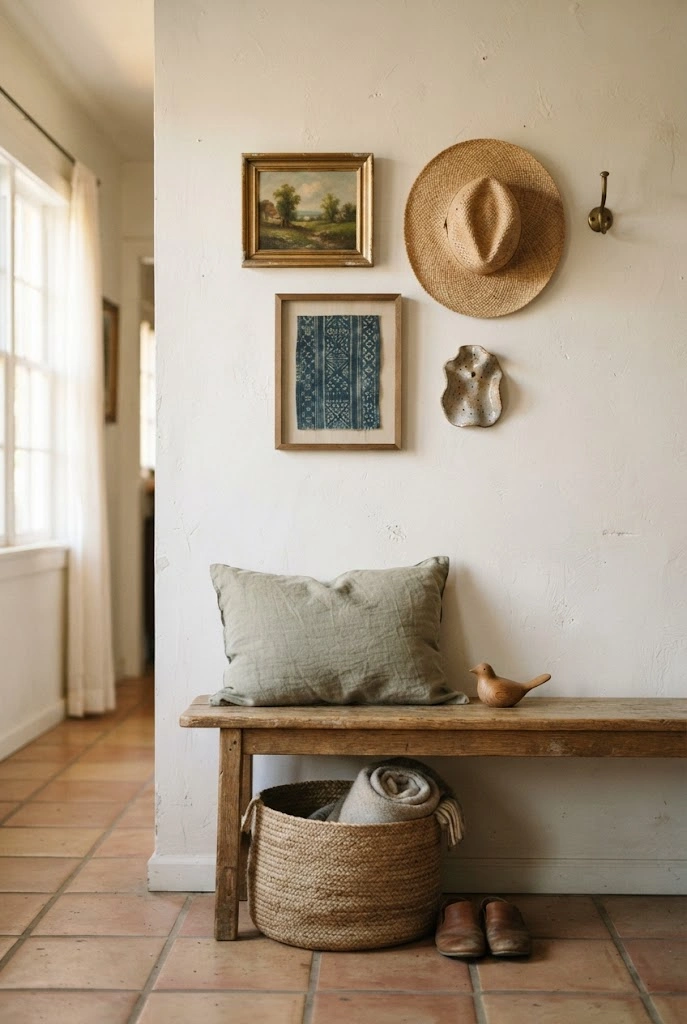
The most relaxed vintage walls often mix art with ordinary objects. Place a small painting beside a straw hat, a decorative hook, a framed textile, or a treasured-looking ceramic piece.
The key is editing. Choose objects that share a visual relationship in color, material, or scale, then allow some empty wall space to keep the arrangement breathable.
How to Make Vintage Wall Decor Feel Intentional
The difference between a collected wall and a cluttered wall usually comes down to relationships. Your pieces don’t need to match, but they should have something connecting them.
Repeat a color found in several artworks. Pair warm wood frames with brass hardware elsewhere in the room. Use similar spacing around a gallery arrangement. If one piece is especially ornate or colorful, let it have more visual breathing room.
Scale matters, too. Tiny artwork can disappear on a large wall, while too many oversized pieces can make a smaller room feel crowded. When you’re unsure, start with fewer pieces and build outward.
You also don’t need an entirely vintage room. A modern sofa, contemporary lighting, or simple cabinetry can make antique wall decor feel fresher by giving the older pieces some contrast.