21 Gorgeous Limestone Window Sills to Elevate Your Home’s Exterior Curb Appeal
A window sill can be a surprisingly powerful architectural detail. While it may occupy only a small portion of the facade, the right sill adds shadow lines, visual weight, texture, and a finished transition between the window and exterior wall.
Limestone is especially well suited to this role because its natural variation can complement everything from traditional brick and stone homes to clean-lined contemporary exteriors. The key is choosing a profile, color, projection, and finish that feel intentional with the architecture around the window.
These 21 limestone window sill ideas explore a range of looks, including crisp modern slabs, softly beveled edges, traditional molded profiles, rustic finishes, and more decorative treatments. Some are subtle enough to disappear into the facade, while others turn the window into a stronger architectural focal point.
Crisp Honed Limestone for a Clean Modern Facade
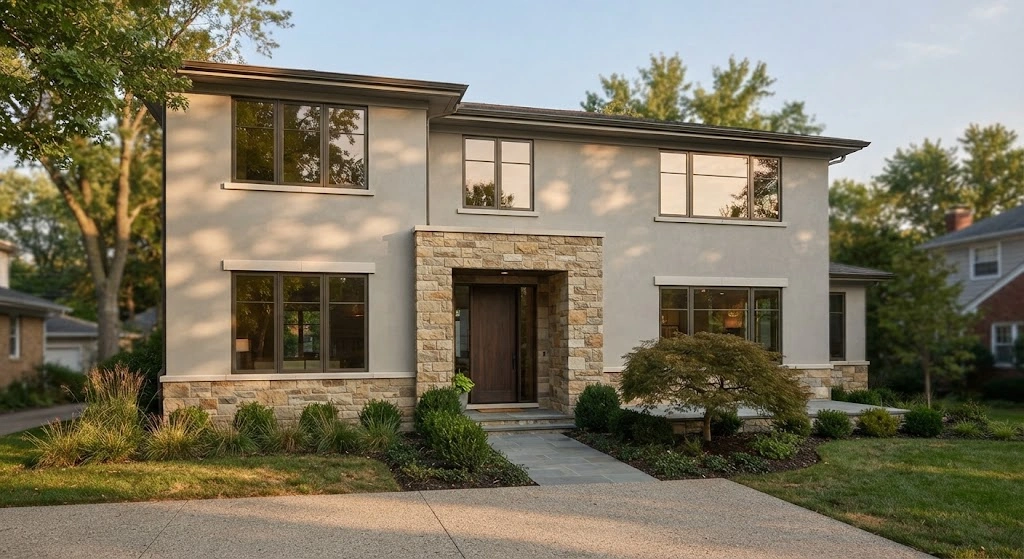
A simple rectangular limestone sill can give a contemporary exterior the definition it needs without introducing unnecessary ornament.
Choose a slab with a relatively straight profile and a honed finish for a soft, matte appearance. The subtle surface variation of natural stone keeps the facade from feeling overly manufactured while maintaining the clean geometry associated with modern architecture.
A restrained projection beyond the window frame creates a useful shadow line underneath the sill. Keep the surrounding trim minimal so the stone remains part of the architectural composition rather than looking like an added decoration.
Best for: Contemporary homes, modern additions, minimalist facades, and simple stucco exteriors.
Warm Cream Limestone Against Red Brick
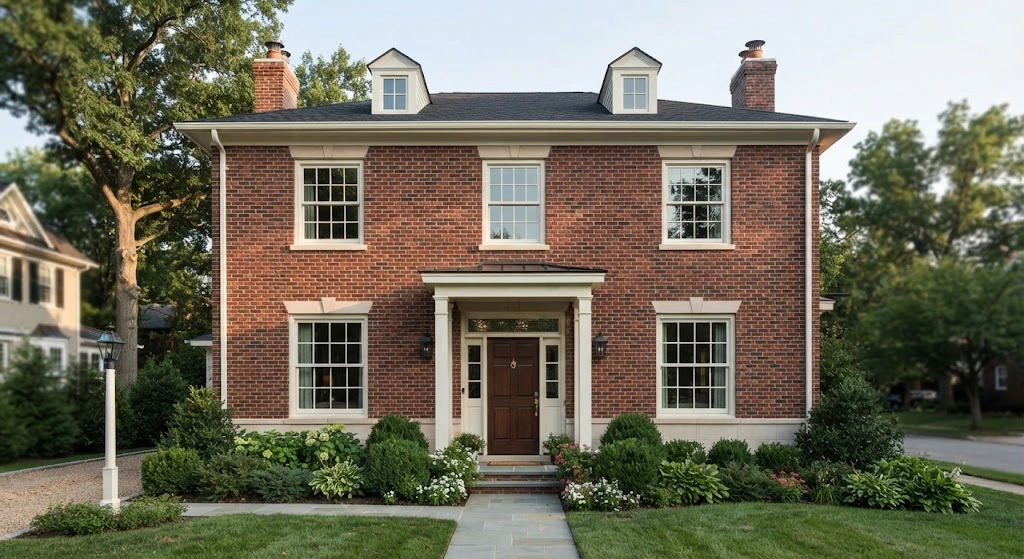
Red brick and warm limestone make a particularly natural architectural pairing. A cream or pale-beige sill breaks up the darker masonry while echoing warm tones found elsewhere on the facade.
For a traditional brick house, consider a sill that projects slightly farther than the window trim. This creates a defined horizontal line and helps visually anchor each opening.
The contrast doesn’t have to be dramatic. A limestone with subtle honey, ivory, and beige variation can create a more layered appearance than a perfectly uniform manufactured stone.
Best for: Colonial-inspired homes, brick townhouses, traditional suburban houses, and English-inspired exteriors.
Deep Limestone Sills With a Strong Shadow Line
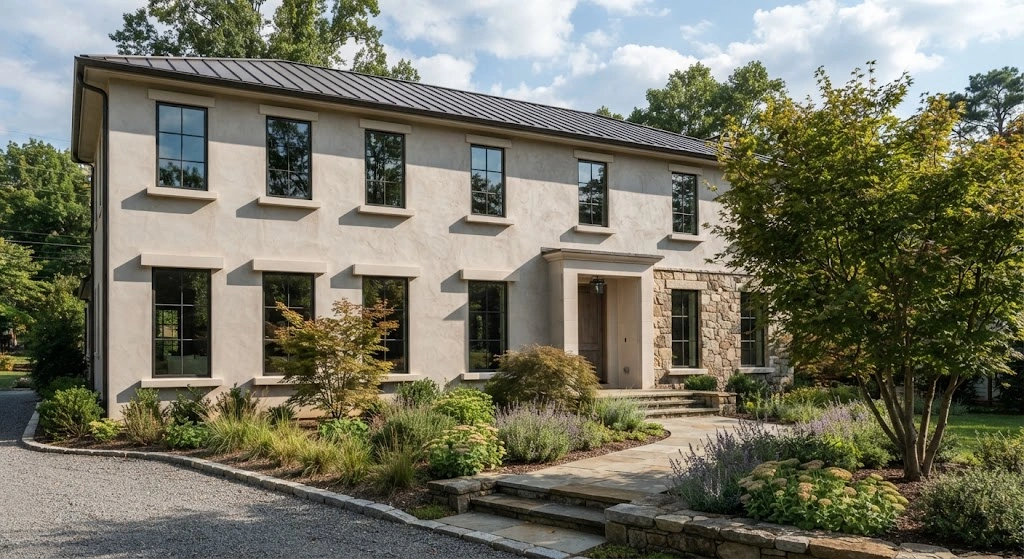
Sometimes the most effective architectural detail is one that emphasizes depth.
A deeper limestone sill extends farther from the wall, producing a noticeable shadow beneath the stone. This can make flat exterior walls feel more dimensional, especially when the facade receives changing sunlight throughout the day.
The extra projection should remain proportionate to the window and wall. A very deep sill on a small opening can appear bulky, while a slightly deeper slab beneath a large window can provide exactly the architectural weight the facade needs.
Best for: Stucco, stone veneer, rendered masonry, and homes with relatively flat exterior walls.
Softly Beveled Limestone Edges
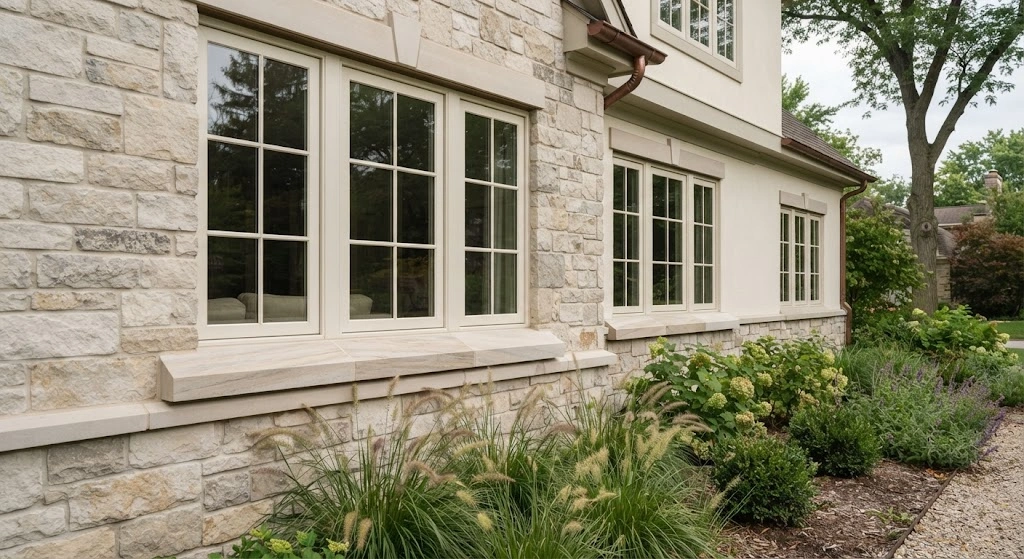
A beveled edge offers a subtle alternative to a completely square stone slab.
The angled lower edge catches light differently as the sun moves across the facade, creating a delicate transition between the wall and the sill. It works especially well when you want natural stone to feel refined without making the window treatment overly formal.
Pair the bevel with simple window trim so the stone profile remains the main detail.
Best for: Transitional homes and facades that combine traditional and contemporary elements.
Classic Molded Limestone Sills
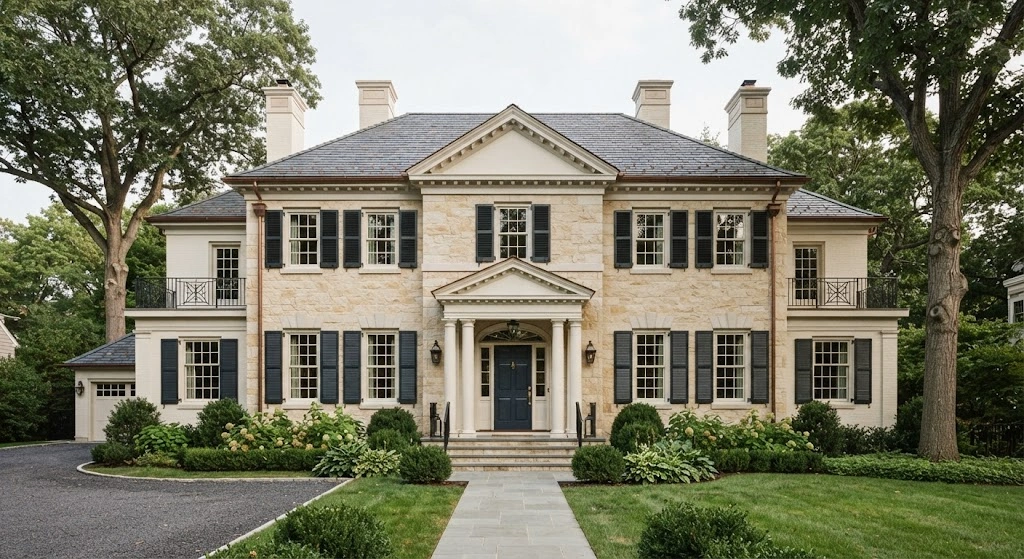
For a historically inspired facade, a molded limestone sill can reinforce the architecture far more effectively than a plain rectangular slab.
A modest molded profile may include a small upper ledge, sloping face, and defined lower edge. The goal is not to make the window ornate for the sake of ornament; the profile should echo other architectural details such as cornices, door surrounds, or base trim.
Repeating the same stone profile across multiple windows creates visual consistency.
Best for: Georgian, Colonial Revival, Federal-inspired, and other traditional architecture.
Limestone Sills That Match the Front Door Surround
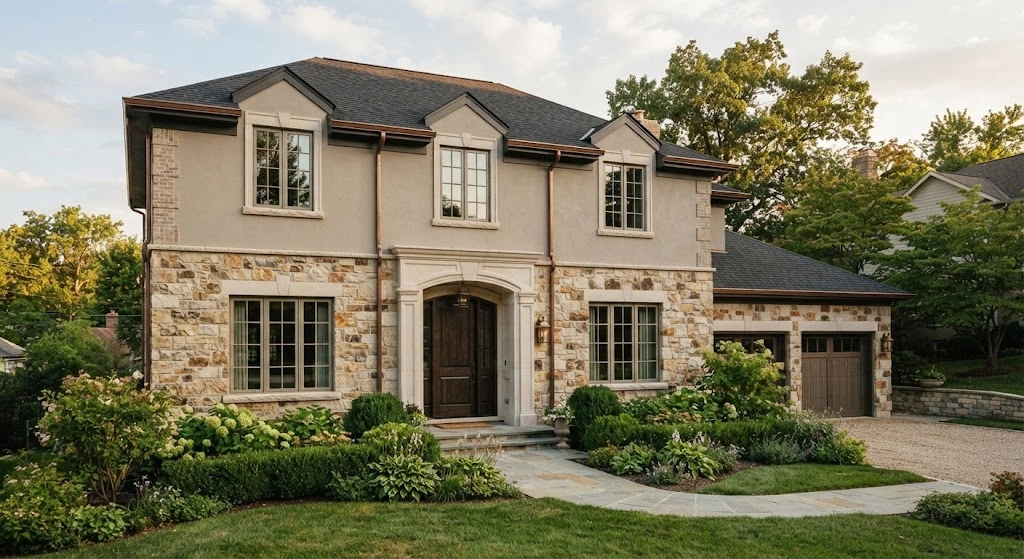
A coordinated stone palette can make separate architectural elements feel like part of one design.
If the entry has a limestone door surround, threshold, or other stone detail, using a closely related limestone for the window sills can tie the facade together. The pieces don’t need to be identical in shape, but their color and general finish should relate.
This approach is particularly useful on facades that combine several materials.
Best for: Mixed-material exteriors and traditional entry-focused facades.
Rustic Limestone With Natural Split-Face Texture
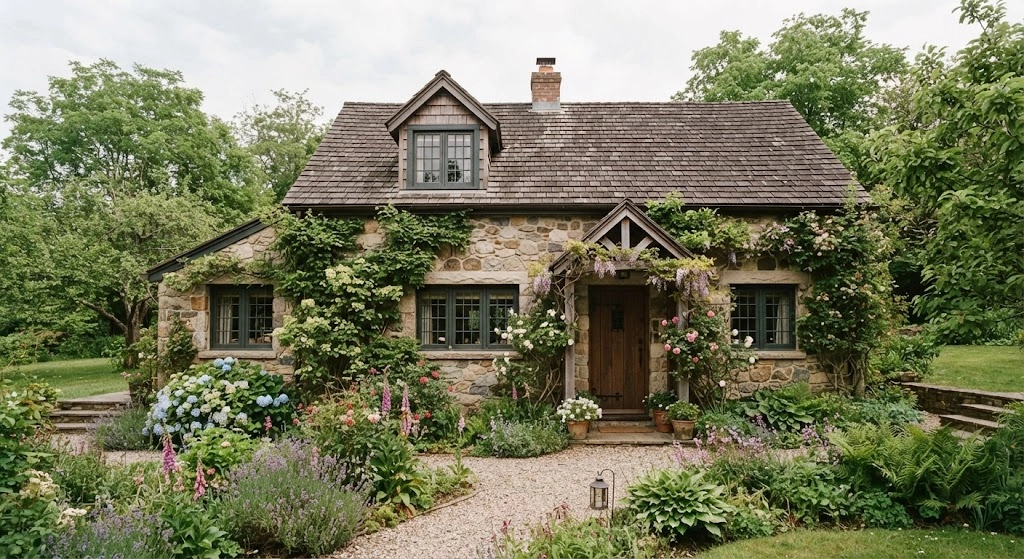
Not every limestone sill needs to look highly polished.
A more natural finish can work beautifully with rustic masonry, fieldstone, reclaimed brick, or cottage-inspired architecture. Slight tonal variation and a less uniform surface give the window a handcrafted quality.
Keep the window frames relatively simple so the irregular stone becomes a supporting texture rather than visual clutter.
Best for: Cottages, rustic homes, stone houses, and farmhouse-inspired exteriors.
Long Limestone Sills Beneath Grouped Windows
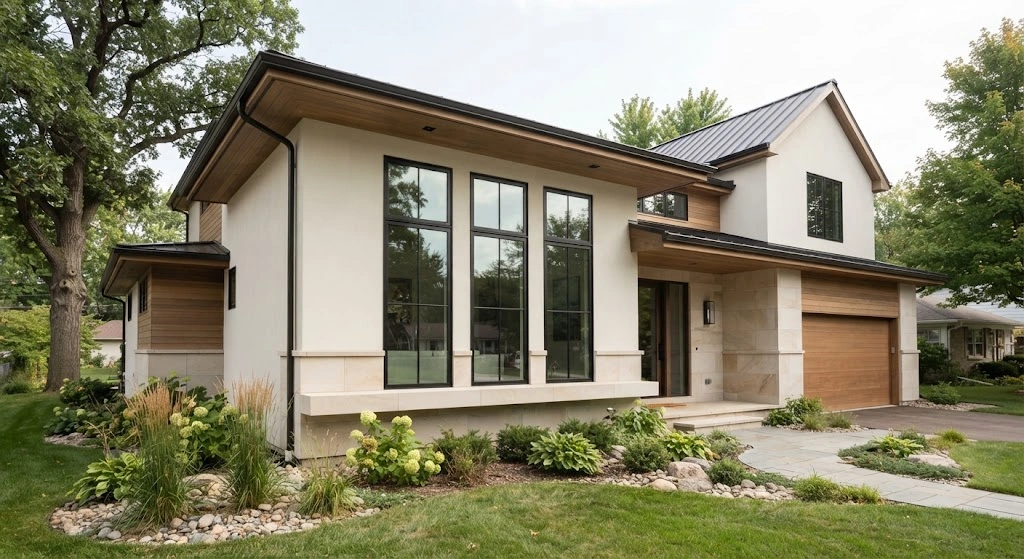
When several windows sit together, one continuous limestone sill can visually unite the group.
Rather than treating every opening as a separate element, a longer stone band emphasizes the horizontal rhythm of the windows. This can be especially effective beneath a set of narrow windows or a large multi-panel opening.
Use careful joints and consistent stone thickness so the long sill feels intentionally designed rather than pieced together.
Best for: Contemporary homes, wide window groupings, and larger facade openings.
Dark Limestone for Dramatic Contrast
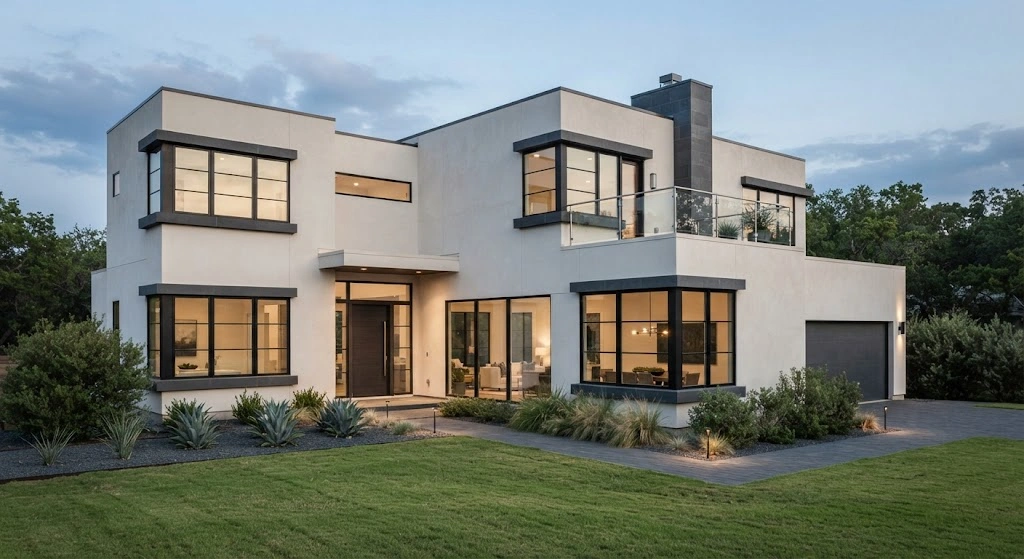
Limestone isn’t limited to pale cream and ivory shades.
A darker gray or charcoal-toned limestone can create a more dramatic relationship with light walls and dark window frames. This is a strong choice for contemporary architecture where contrast is part of the design language.
Keep the rest of the facade relatively restrained so the darker stone doesn’t compete with too many other colors.
Best for: Modern homes, charcoal window frames, white stucco, and monochromatic exteriors.
Sloped Limestone Sills for Traditional Drainage Design
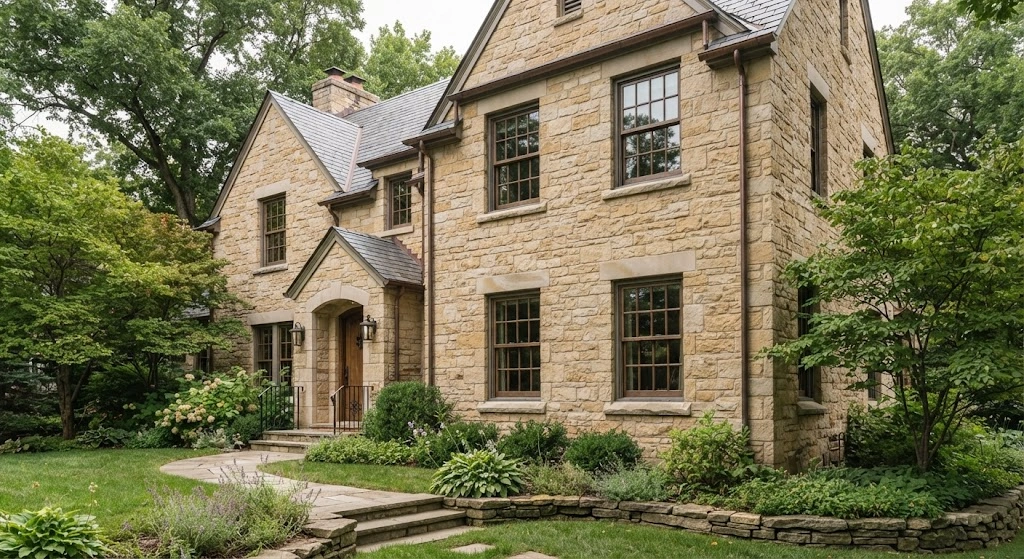
A sill can be attractive while also serving a practical architectural purpose.
A slightly sloped sill surface helps direct water away from the window rather than leaving a completely flat ledge. The slope can be subtle enough to remain visually understated while still creating a recognizable architectural profile.
Proper flashing, joints, and installation remain important; the stone itself should not be treated as a substitute for appropriate water-management details.
Best for: Traditional masonry homes and renovations where architectural detailing and weather management both matter.
Pale Limestone Against Deep Green Exterior Paint
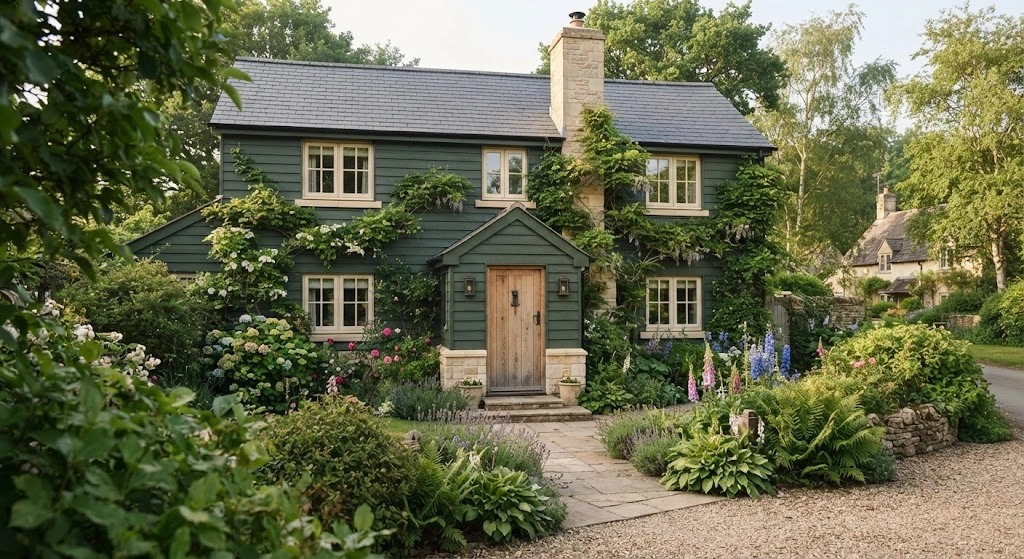
A pale limestone sill can introduce a quiet natural accent to a darker painted facade.
Deep olive, forest green, or muted sage exterior colors pair naturally with warm cream stone. The combination feels grounded because both materials draw from earthy tones rather than relying on a sharp black-and-white contrast.
Repeat the limestone elsewhere sparingly—perhaps at the entry or foundation—to make the facade feel intentional.
Best for: Cottage exteriors, traditional homes, and nature-inspired color palettes.
Thin Limestone Sills for a Minimalist Profile
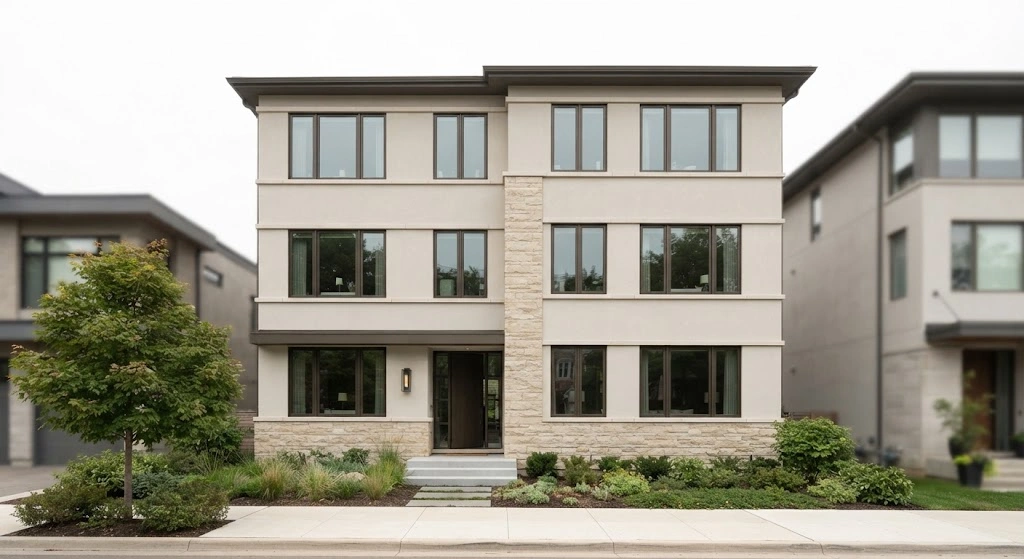
A thin slab can provide the visual benefits of stone without giving the windows a heavy traditional appearance.
Choose a relatively narrow profile with a clean edge and limited projection. The result is especially effective on contemporary facades where every architectural line is intentionally restrained.
The surrounding wall and window frame should do most of the visual work; the limestone simply adds a subtle horizontal break.
Best for: Minimalist houses, modern townhomes, and compact contemporary facades.
Chiseled Limestone for a Handcrafted Look
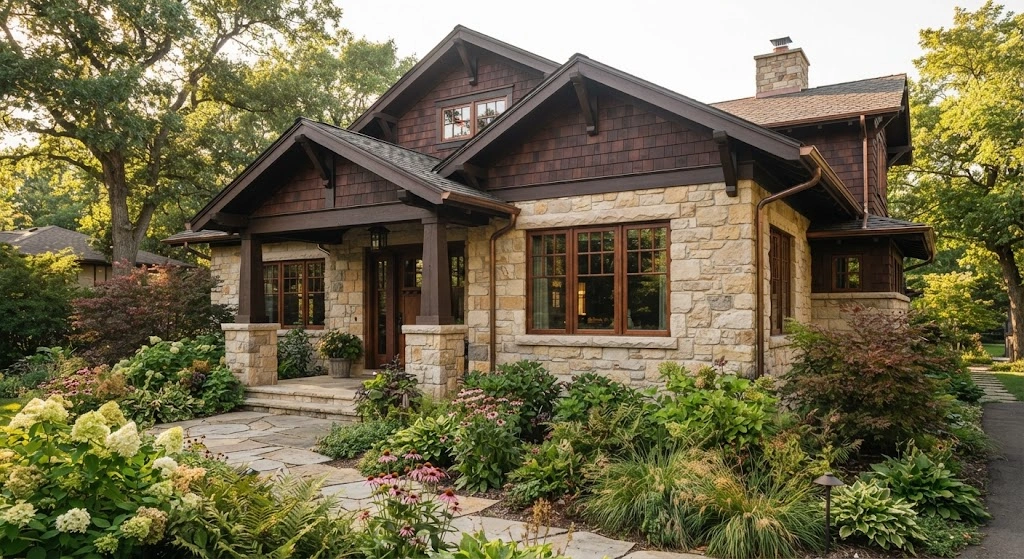
A chiseled edge gives limestone a stronger sense of craftsmanship.
Instead of a perfectly machine-like perimeter, the edge has controlled irregularity that catches the light and emphasizes the natural character of the stone. The result works particularly well when the home already contains handmade-looking materials.
Keep the irregularity intentional. Too much variation can make the facade look unfinished rather than handcrafted.
Best for: Craftsman homes, stone cottages, rustic-modern residences, and custom masonry.
Limestone Sills With Matching Stone Shutters
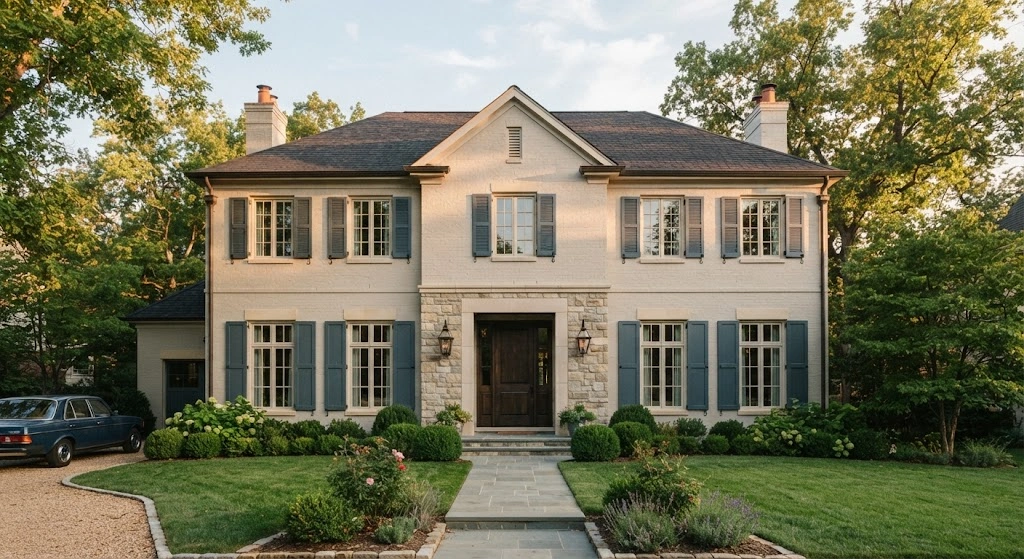
For a more formal facade, stone sills can be paired with shutters that visually frame the window.
The shutters don’t necessarily need to be made from limestone. Painted wood or composite shutters can create enough contrast while allowing the natural stone to remain the architectural anchor beneath the window.
Choose shutter proportions that relate to the window rather than treating them as purely decorative accessories.
Best for: Traditional European-inspired and Colonial-style homes.
Tumbled Limestone for Old-World Character
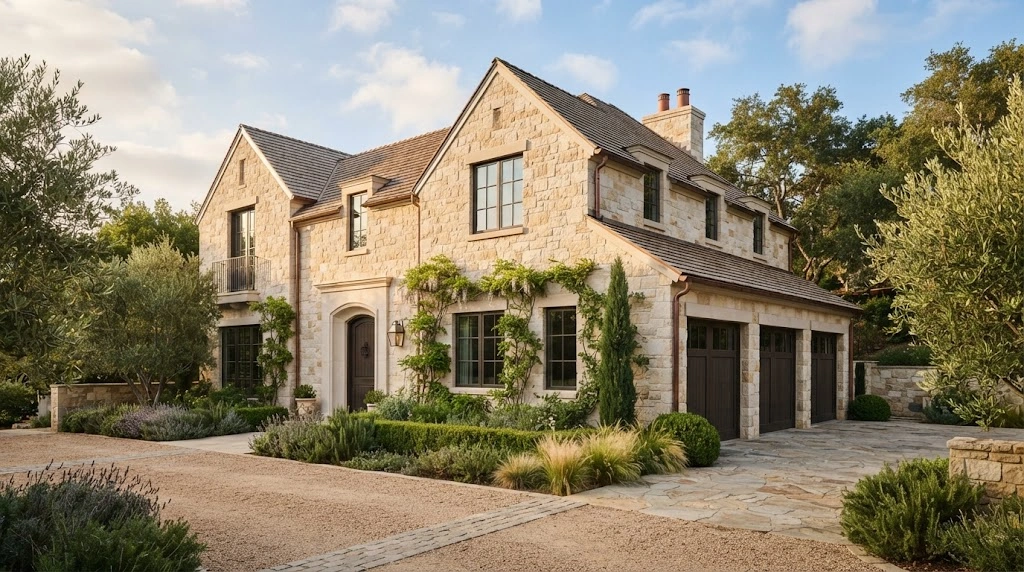
A gently tumbled limestone finish can soften the precision of new construction.
The lightly aged appearance works particularly well when the goal is to give a newer home the warmth of an established European-inspired residence. Pair it with limewashed or textured masonry, aged-looking brick, or natural stone landscaping.
The trick is restraint: the stone should suggest character without making the home appear artificially distressed.
Best for: European-inspired homes, villas, cottages, and traditional new builds.
Contrasting Limestone Sills on a Stone Facade
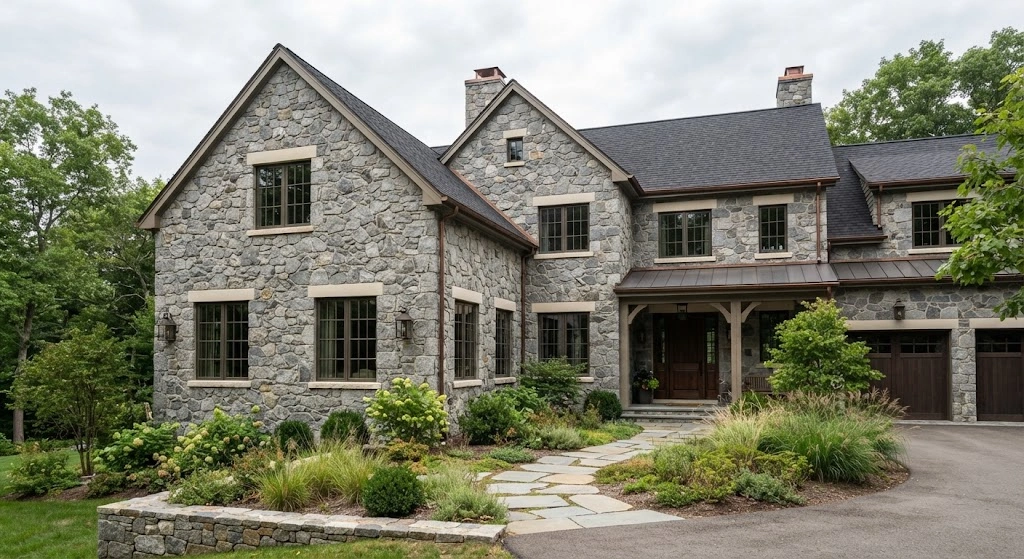
When the exterior is already covered in natural stone, a contrasting limestone sill can help each window read clearly.
Rather than matching the wall stone exactly, choose a related but noticeably different tone. For example, a warm cream sill can stand out against cooler gray fieldstone.
The contrast gives the windows definition without requiring heavy decorative trim.
Best for: Fieldstone houses, mountain homes, rustic-modern residences, and natural-material facades.
Waterfall-Edge Limestone Sills
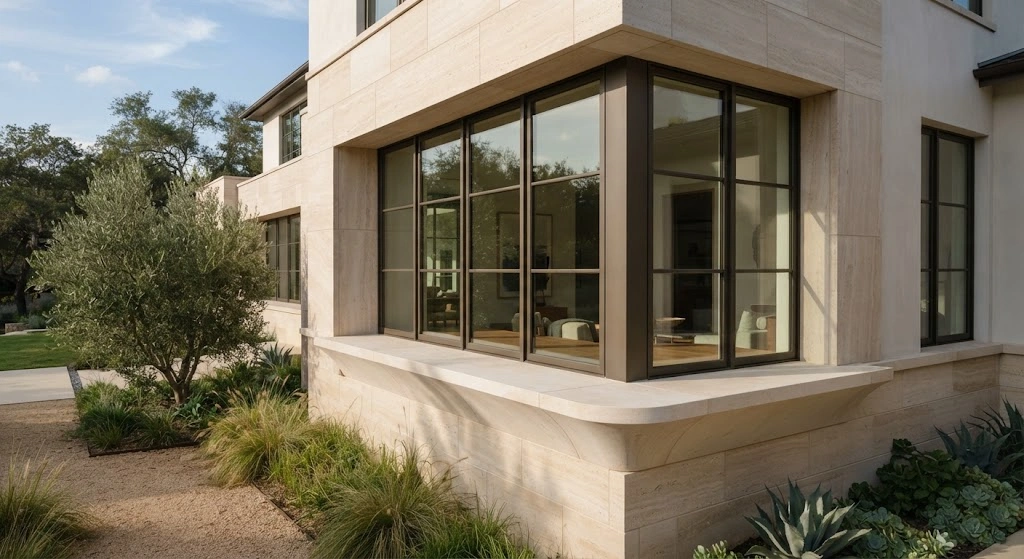
A waterfall-style edge gives the stone a slightly more sculptural appearance.
The upper surface remains relatively simple while the edge turns downward in a clean, continuous profile. This can make a contemporary window feel more substantial without relying on decorative molding.
Use this detail selectively, especially on larger windows where the stone has enough visual space to be appreciated.
Best for: Contemporary custom homes and modern renovations.
Layered Limestone Profiles Around Deep-Set Windows
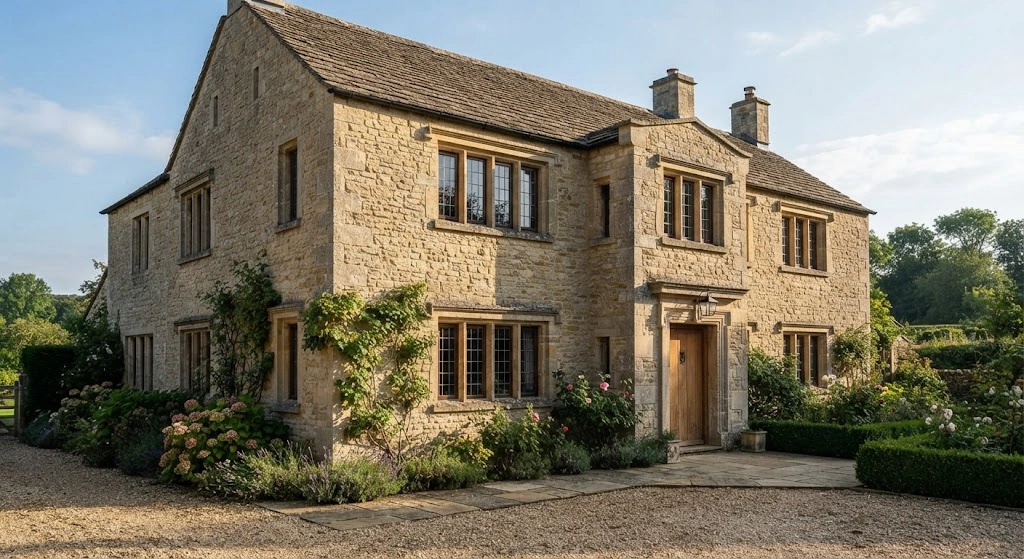
Deep-set windows create an opportunity for more architectural layering.
A limestone sill can be combined with a recessed window opening, creating several planes of light and shadow around the glass. This treatment feels especially substantial on thick masonry walls.
The effect works best when the depth comes from the architecture itself rather than from adding too many decorative pieces.
Best for: Stone and masonry homes with deep exterior walls.
Limestone Sills With Subtle Floral Carving
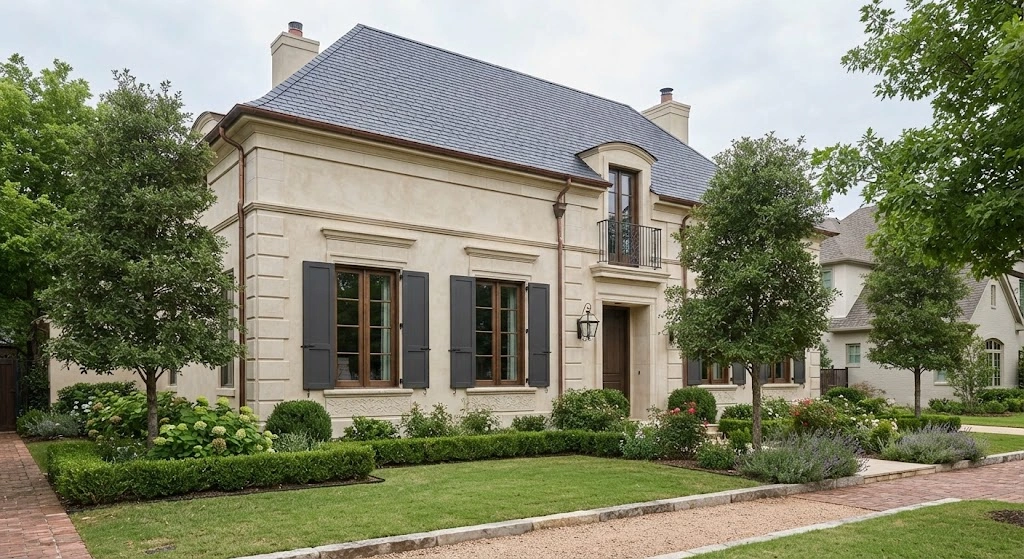
A small amount of carving can bring personality to a traditional exterior without turning the facade into a highly ornate composition.
A restrained botanical motif along the face or corner of the sill can work beautifully on a period-inspired home. Keep the carving shallow and repeat the design consistently so it feels architectural rather than decorative.
This is best reserved for homes whose overall style supports handcrafted detailing.
Best for: Historic-inspired homes, French country exteriors, and formal traditional architecture.
Wide Limestone Sills With Built-In Planter Potential
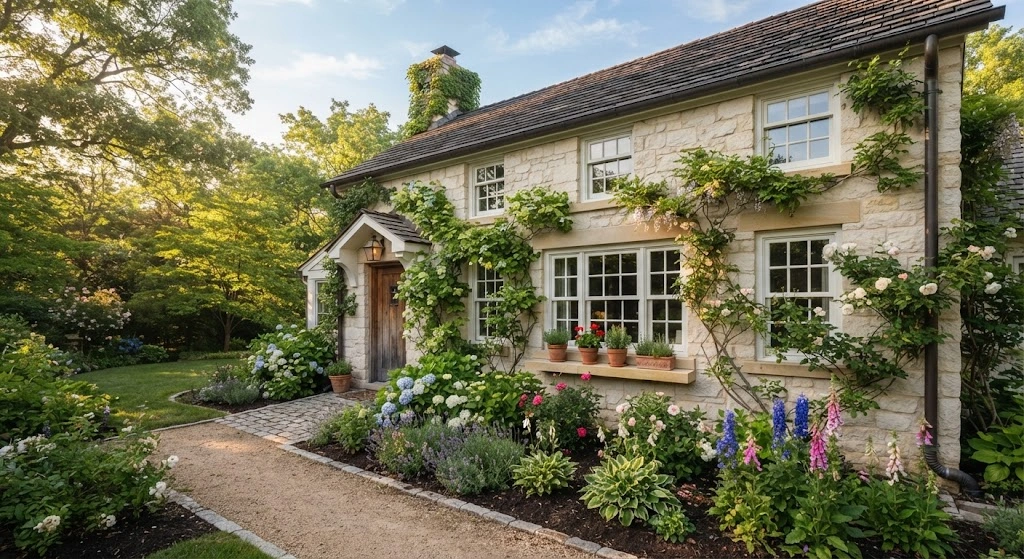
A broader sill can visually connect a window to nearby landscaping, particularly when the exterior has a cottage or garden-oriented character.
Rather than treating the stone as a place for large objects, think of it as a substantial architectural ledge that visually relates to flower beds, shrubs, or climbing plants below.
Avoid allowing plants or decorative containers to interfere with drainage or window operation. The architectural stone should remain the main feature.
Best for: Garden cottages, traditional homes, and low windows overlooking planted areas.
A Refined Limestone Sill With a Thin Drip Edge
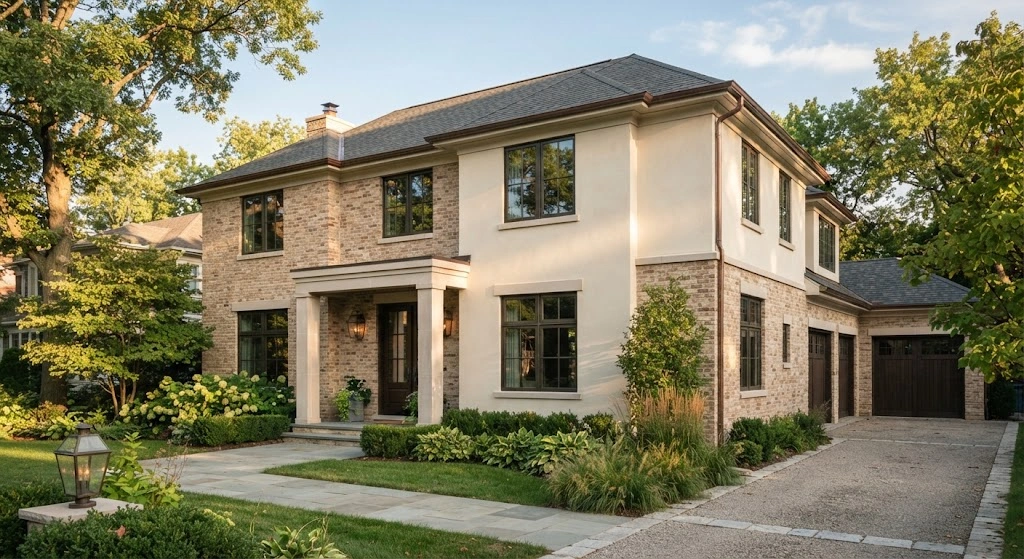
Sometimes a tiny detail makes the stone feel much more finished.
A narrow drip edge beneath the outer portion of the sill creates a crisp shadow and visually separates the stone from the wall below. On a simple rectangular sill, this small architectural feature can add depth without requiring elaborate molding.
It is particularly effective when the rest of the facade relies on clean, carefully controlled details.
Best for: Transitional, traditional-modern, and custom contemporary homes.
How to Choose the Right Limestone Window Sill for Your Home
The best limestone window sill isn’t necessarily the most decorative option. It is the one that feels connected to the architecture around it.
Start by looking at the window proportions. Large windows can generally support a more substantial stone profile, while smaller openings often look better with a thinner or more restrained sill.
Next, consider the facade material. Warm limestone can bridge brick, stucco, and warm-toned stone, while cooler gray limestone can complement contemporary masonry and darker window frames.
The projection matters, too. A modest projection creates a delicate shadow line; a deeper sill produces stronger architectural definition.
Finally, think about the home’s overall vocabulary. A carved sill may be appropriate for a formal traditional house but feel out of place on a minimalist facade. Likewise, an ultra-thin modern sill may look underpowered beneath a heavily detailed masonry window.
When selecting actual stone, also confirm the appropriate fabrication, flashing, joints, slope, and installation details for the specific wall and window assembly. Limestone is an architectural material, but it should work together with the home’s broader water-management and construction system.
Small Details, Big Curb-Appeal Impact
Window sills are easy to overlook because they occupy such a small part of a home’s exterior. Yet that small scale is exactly what makes them useful. A carefully selected limestone profile can sharpen a modern facade, soften a traditional one, add depth to flat walls, or connect several different exterior materials into a cohesive composition.
For a subtle update, start with a clean rectangular sill and let the natural stone provide the character. For a more architectural result, consider a molded, beveled, chiseled, or layered profile that echoes details already present on the house.
The strongest exterior designs don’t rely on one dramatic feature. They build visual quality through a collection of smaller details that work together—and limestone window sills can be one of those details.